


戦術的なグレードの組み込み可能なGNSS補助慣性航法システム

3DM-CV7-GNSS/INS
3DM-CV7-GNSS/INSは慣性航法技術の次の進化であり、非常にコンパクトで軽量なOEMフォームファクターで戦術的なグレードの性能を提供します。
このセンサーは、サイズ、重量、およびコストを第一に考慮するナビゲーションおよびローカリゼーション用途向けに特別に設計されています。
各ユニットは、全産業用温度範囲にわたって包括的なマルチポイント校正を受け、試験済みのアダプティブ拡張カルマンフィルターを活用することで、多様な運用環境にわたって最適な精度と安定性を保証します。
コアとなる慣性機能だけでなく、3DM-CV7-GNSS/INSは、GNSS補助用のオンボードGNSSレシーバー、洗練されたオリエンテーション・アルゴリズム、正確な内部時間管理、および適応性の高いイベント・トリガー・システムを統合しており、複雑なナビゲーション・アプリケーションを容易に実現します。
0.05°のロールとピッチ
わずか15.6gの軽量
| Document | タイプ | 言語 |
|---|---|---|
| 3DM-CV7-GNSS/INS Data Sheet | データシート | English |
| Micro D-to-USB Communication and Power Cable | Accessory Guide | English |
| Craft Cable with Micro DB9 and Flying Leads | Accessory Guide | English |
| Micro-D to RS232 Communication and Power Cable | Accessory Guide | English |
| 3DM-CV7-GNSS/INS User Manual (Online) | 取扱説明書 | English |
| C-Series Connectivity Board Interface Control Document | 設置マニュアル | English |
| GV7-CV7 Firmware Change Log | Release Note | English |
Sales documents
| Document | タイプ | 言語 |
|---|---|---|
| 3DM-CV7-GNSS/INS Outage Test Report | Whitepaper | English |
| Document | タイプ |
|---|---|
| 3DM-CV7-GNSS/INS CAD Model | CAD Step Files |
| MicroStrain 7-Series Inertial Sensor Firmware | Firmware |
| プロパティ | 値 |
|---|---|
| Type | Inertial Navigation (INS) |
| Performance Grade | Tactical Grade |
| Features | Accelerometer, Gyroscope, Magnetometer, Barometer |
| Random Walk | Accel: 29.5 µg/√/Hz, Gyro: 0.14 °/√hr |
| Bias Instability (Gyroscope) | 1.5 °/hr |
| Bias Instability (Accelerometer) | 18 μg |
| Hysteresis | Accel bias: 0.75 mg, Accel gain: 600 PPM, Gyro bias: 0.03 °/s, Gyro gain: 1000 PPM |
| Communication Port Type | Samtec FTS-105 (2x5) |
| Communication Interface | TTL serial, USB |
| Update Rate | IMU: 1000 Hz, EKF: 1000 Hz |
| Inputs/Outputs | 4xGPIO |
| Weight | 15.6 g |
| Weight | 0.55 oz |
| Size | 38 mm x 30 mm x 10.2 mm |
| Size | 1.49 in x 1.18 in x 0.40 in |
| Power Consumption | 0.896 W |
| Input Voltage | 3.2 V to 5.2 V |
| Minimum Operating Temperature | -40 °C |
| Maximum Operating Temperature | 85 °C |
| Minimum Operating Temperature | -40 °F |
| Maximum Operating Temperature | 185 °F |
| MTBF | 1327311 h |
| GNSS Constellations | GPS, GPS/QZSS, GLONASS, Galileo, BeiDou |
| GNSS Frequency Bands | L1C/A, L5, L10F, E1B/C, B1, B2 |
| GNSS Input(s) | Onboard Receiver(s) |
| Sensing Range (Accelerometer) | 4 g, 8 g, 16 g |
| Sensing Range (Gyroscope) | 250 °/s, 500 °/s, 1000 °/s |
| Sensing Range (Magnetometer) | 8 Gauss |
| Sensing Range (Pressure) | 1260 mbar |
| Accuracy | Roll/Pitch (dynamic): 0.05 °, Roll/Pitch (static): 0.05 °, Heading (dynamic): 0.25 ° |
| Ingress Protection Rating | Not Rated |
| Housing Material | Aluminum |
| Software | MSCL, ROS, SensorConnect, InertialConnect |
| Mounting Style | Embeddable, Screw Down, Precision Alignment |

NDAA Compliant
Deploy with confidence in government and defense applications.

ITAR-Free
Simplify your global operations with reduced export restrictions. ITAR-free classification streamlines international deployment and reduces regulatory complexity.

L1/L5 Support
Achieve superior positioning accuracy with dual-frequency GNSS reception. L1/L5 support provides enhanced performance in challenging environments and faster convergence times.

Dual Antenna Heading
Maintain precise heading determination even when stationary. Dual antenna configuration delivers reliable azimuth accuracy independent of vehicle movement or GPS velocity.

RTK/PPP/SBAS
Adapt to any precision requirement with comprehensive correction support. RTK, PPP, and SBAS compatibility ensures centimeter-level accuracy across diverse operational scenarios.

Access your sensor's comprehensive online user manual. Find detailed setup instructions, calibration procedures, troubleshooting guides, and technical specifications all in one convenient location.
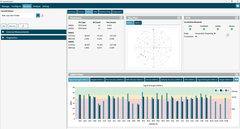
InertialConnect is the latest software solution for MicroStrain inertial sensors. With InertialConnect, you can easily configure your sensors, adjust parameters, upgrade firmware, and deploy preconfigured parameter files. You can also verify sensor outputs with intuitive visualizations, including times eries data, position data, and statuses.
InertialConnect is compatible with both PC desktop and Linux operating systems, making it your go-to solution for precision and efficiency in inertial sensor management.

SensorConnect is the next generation in desktop sensing software.
From configuration of nodes and starting networks, to collecting and analyzing data in real-time, SensorConnect provides a modern, powerful experience with our Wireless, Inertial, and Displacement products.
Using our intelligent data collection and graphing algorithms, you are able to visualize massive amounts of data instantly, and then zoom in on points of interest just as fast.
Built in MathEngine functionality allows for both real-time and post-processed math, such as generating FFTs, averages, RMS, etc.

SensorCloud is a unique sensor data storage, visualization, and remote management platform that leverages powerful Cloud computing technologies to provide excellent data scalability, rapid visualization, and user programmable analysis.
MicroStrain sensors can instantly upload their data to SensorCloud via an ethernet-connected WSDA-2000. Once uploaded, your data is securely stored in the Cloud and can be accessed from anywhere, or downloaded for offline use.
Configurable alerts can be set to help notify you of real-time event in your data.
MathEngine allows you to perform analytics on your data, all in the Cloud. Pre-built functions are available for ease of use, while IPython Notebooks allow advanced users to write custom scripts to be run on their data once, or on a schedule.

SensorCloud RTK is a multi-continent, IP-based RTK cloud network that delivers centimeter-level position accuracy from day one without complex setup, featuring network coverage across the U.S., Europe and beyond.
When paired with compatible MicroStrain navigation systems, it offers seamless scalability from development to production with professional technical support throughout.

The MicroStrain Communication Library (MSCL) is our open-sourced API that simplifies writing code to interact with our sensors. MIP SDK is a lightweight C/C++ library for interacting with MicroStrain G and C-series products via baremetal and resource constrained microcontrollers.
Both APIs are readily available and fully-documented on GitHub, featuring valuable tools such as full documentation, example code, and a quick start guide.

This will bring together HBM, Brüel & Kjær, nCode, ReliaSoft, MicroStrain and Discom brands, helping you innovate faster for a cleaner, healthier, and more productive world.
 6212-3006
 6212-3024
