Tescia
Tescia® is a repetitive testing solution that allows you to perform standardized tests on products, including data acquisition, monitoring and analysis, recording, storage and transfer of data during successive test runs.
Naval certification and sea trials are acceptance-critical stages in naval programmes, where equipment and vessels must demonstrate compliance with strict naval noise and vibration requirements. Standards such as MIL‑STD‑740 and MIL‑STD‑1474E define clear limits for airborne and structure-borne noise. Failure to meet these requirements can result in delayed acceptance, re-testing, and increased programme risk, ultimately affecting operational readiness.
During these phases, engineers must measure noise and vibration across complex, systems and multiple measurement paths – often under tight schedules and within limited sea-trial windows. Managing these measurements using separate tools and workflows increases setup effort, extends test duration, and raises the risk of inconsistent or incomplete results.
HBK enables a simpler, integrated approach. By combining synchronised measurement, real-time analysis, and structured workflows, all required data can be captured efficiently within a single, coordinated workflow – supporting component-level qualification, system integration, and full vessel sea trials.
Strict naval standards also require results that are accurate, repeatable, and fully traceable. HBK’s end-to-end testing solution supports reliable validation with real-time insight, automated analysis, and audit‑ready reporting, helping engineers identify issues early, act during testing, and reduce the risk of failed acceptance or unnecessary follow‑up trials.
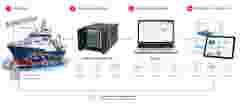
Naval certification and sea-trials rely on a proven measurement chain that links sensors, data acquisition, and analysis software into one coherent system. This integrated approach allows engineers to standardise testing across programme phases while scaling from equipment-level qualification to full-vessel sea trials.
Capture contact forces and accelerations directly from the pantograph head during normal train operation.
newLight® FS66HDL optical force sensors mounted on the pantograph for direct contact force measurement
FS65HDA optical accelerometers for pantograph force measurement and vibration measurement
Interconnection box, installed outside on the train roof, connects all sensors
Penetration cable with PTFE overlay links connection box to the roof gland inside the train
Acquire and synchronise optical sensor data continuously at up to 2,000 samples per second.
QuantumX MXFS/DI optical interrogator with eight connectors for synchronised, high-speed acquisition of all optical sensor channels
catman® data logger software for continuous, automated data recording during service
Calculate contact force, assess overhead line condition, and generate actionable maintenance outputs.
Automated contact force calculation between pantograph and overhead power line in accordance with EN 50317
Determine contact position of overhead power line along the pantograph contact strip length
Automated alarm events for abnormal contact forces or loss of contact
Outputs can be used to prioritise maintenance and conduct overhead line condition assessments
Together, this measurement chain provides a reference setup that teams can rely on throughout naval qualification testing – from component certification, through system integration, to final acceptance.
Tescia® is a repetitive testing solution that allows you to perform standardized tests on products, including data acquisition, monitoring and analysis, recording, storage and transfer of data during successive test runs.
The DAQ platform, reinvented. Scale to any size, simplify with one cable, and stay flexible with an open architecture. Built for any challenge.
Explore LAN-XI – a modular data acquisition system with DAQ modules, frames, front panels and accessories. This scalable DAQ platform can be configured and re-configured for a wide range of applications.
Our wide range of measurement microphones, preamplifiers, sound sources and other acoustic transducers deliver results you can depend on. HBK acoustic transducers are known throughout the industry for delivering unparalleled performance, highly accurate acoustic measurements, and stringent testing results - providing a peace of mind and a long-term return on your investment.
CCLD accelerometers are PE charge accelerometers (also refereed to as IEPE accelerometers) with integral preamplifiers that have output signals in the form of low impedance voltage output. Most HBK CCLD accelerometers are hermetically sealed to protect against environmental contamination, they have low susceptibility to radio frequency, electromagnetic radiation and low a impedance output due to the built-in amplifier. This allows the use of inexpensive, and long, coaxial cables.
Explore how HBK helps de-risk naval certification and speed up acceptance with real-time, end-to-end noise and vibration testing. This concise brochure outlines how to meet MIL-STD-740 and MIL-STD-1474E requirements using a unified measurement chain – from sensors to analysis – enabling faster, more informed decisions during harbour tests and sea trials.
Yes. HBK’s integrated system enables simultaneous measurement of airborne and structure-borne noise using synchronised data acquisition and real-time analysis, reducing test time while maintaining accuracy.
Yes. The solution is modular and scalable, supporting both component-level certification and full vessel sea trials with adaptable hardware configurations and workflows.
HBK provides the measurement capabilities, analysis methods, and reporting needed to support testing aligned with these standards when applied correctly within the defined test procedures.
HBK supports traceability through automated test execution, structured reporting, and full metadata capture, including calibration data and measurement conditions to ensure repeatability and audit readiness.
HBK enables automated workflows, consistent test execution, and real-time validation, helping identify issues early and reduce inconsistencies that lead to re-tests.
HBK enables real-time diagnostics and analysis, allowing engineers to detect machinery issues such as imbalance or wear during testing and take action before acceptance.
Naval certification and sea trials validate acoustic performance before acceptance, while self-noise monitoring extends this capability into continuous, in-operation monitoring. HBK supports both as part of an end-to-end lifecycle approach.