Machine builders face growing complexity as architectures become more modular, connected and performance driven. Long commissioning times, limited design flexibility and insufficient visibility into machine behaviour can increase costs, reduce scalability and impact reliability.
HBK addresses these challenges by integrating measurement, signal processing and open communication standards directly into machine architectures. Smart sensors with IO-Link provide calibrated data at the source in engineering units, reducing wiring effort and simplifying commissioning. Standardised interfaces and communication protocols enable modular, repeatable and scalable machine designs.
Edge amplifiers with embedded application-specific algorithms support real-time processing and decentralised control, improving machine stability and decision-making, particularly in weighing and force measurement applications. Combined IT/OT connectivity delivers real-time control and actionable diagnostics, enabling precise performance management and continuous machine condition monitoring.
Strain-gauge based, piezoelectric and MEMS sensor solutions measure force, torque, strain, pressure, vibration, motion or load directly within the machine.
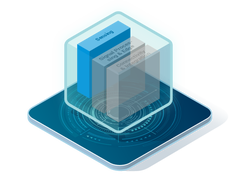
Industrial electronics and edge amplifiers process measurement data directly at the source.
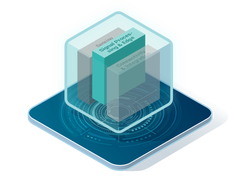
Open standard communication interfaces enable seamless integration into machine architectures and higher‑level systems.

See machine automation in action. Discover how HBK helped a leading machine builder transform a proven load cell into an intelligent IO-Link sensing solution, enabling real-time validation and seamless integration for advanced robotic systems.
HBK’s machine automation integrates sensing, control and communication directly into industrial machines to realise closed loop control and fully automate processes.
By providing real‑time physical feedback, machine automation reduces variability and enables more precise and repeatable machine operation.
Embedded sensing allows machines to measure physical phenomena directly, improving accuracy, repeatability and control while supporting smarter machine design.
Commissioning time is reduced by simplifying integration, minimising manual parametrisation and using standardised, modular architectures.
Smart sensors deliver calibrated data, integrate signal processing and reduce system complexity, enabling more efficient and scalable automation systems.
Scalability is achieved through modular architectures, standardised interfaces and reusable sensing and integration approaches.

This will bring together HBM, Brüel & Kjær, nCode, ReliaSoft, MicroStrain and Discom brands, helping you innovate faster for a cleaner, healthier, and more productive world.