arrow_back_ios

Main Menu

arrow_back_ios

Main Menu

arrow_back_ios

Main Menu

Fatigue Crack Growth Curve

Fatigue crack growth behaviour is commonly represented by a crack growth rate curve, which illustrates how cracks in a material propagate under cyclic loading.

This curve is typically divided into three regimes: Region I, where crack growth is very slow and influenced by the threshold stress intensity factor (∆Kth), below which no measurable growth occurs; Region II, the Paris regime, where crack growth follows a stable and predictable trend described by Paris’ law with its material-specific coefficient (C) and exponent (n); and Region III, where crack growth accelerates rapidly as it approaches the material’s fracture toughness (Kc), leading to final failure. 

AMCT fatigue crack growth curve
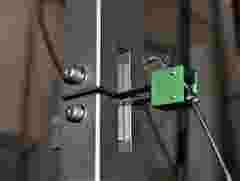
AMCT crack growth test with extensometer

Fatigue Crack Growth Testing

Fatigue crack growth testing typically begins with precracking to create a sharp, natural starter crack at the notch tip, ensuring realistic crack initiation. Traditionally, two main methods have been used: the K-increasing method to measure higher crack growth rates in Regions II and III, and the K-decreasing method to estimate low growth rates in Region I and to determine the threshold stress intensity factor (∆Kth). 

However, the K-decreasing method has been criticized for being non-conservative, often producing overly high ∆Kth values. To avoid such optimistic estimates, the AMCT adopts the CPCA (Compression-Precracking Constant Amplitude) method proposed by Prof. Newman [1]. The CPCA method mitigates issues associated with plasticity-induced crack closure, thereby enabling measurement of the effective crack growth rate across all three regions.

Fatigue crack growth testing allows engineers to design components with appropriate safety margins, establish inspection intervals, and apply damage tolerance approaches that improve durability and reliability in demanding applications such as aerospace, energy, and automotive industries.

[1] Newman Jr, J. C., & Yamada, Y. (2010). Compression precracking methods to generate near-threshold fatigue-crack-growth-rate data. International Journal of Fatigue, 32(6), 879-885. [Online] https://doi.org/10.1016/j.ijfatigue.2009.02.030
Key Benefits of Fatigue Crack Growth Testing

  • Provides key material properties for aerospace industry:
    • Paris coefficient & exponent (C & n)
    • Fatigue crack growth threshold (∆Kth)
    • Estimated fracture toughness (KIc)
    • Walker’s R-ratio exponent (p)
    • WholeLife / TotalLife parameter (ρ*)
    • Forman’s parameters
    • Austen’s parameters
  • Improve product durability and reliability with damage tolerance approach


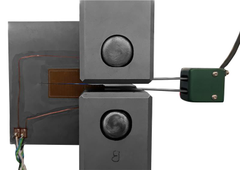
AMCT crack growth test with extensometer and fractire gauge (front view)
AMCT specimen with fracture guage and quantumX

Testing Capabilities

  • Crack length monitoring techniques
    • Fracture gauges
    • Crack opening displacement (COD) gauges
    • Cameras
  • Specimen geometries
    • Compact tension (CT)
    • Eccentrically-loaded single edge crack tension (ESET)
  • K-increasing method 
  • Compression-compression pre-cracking

Test to Standards

  • ASTM E647-24 - Standard Test Method for Measurement of Fatigue Crack Growth Rates
  • BS ISO 12108 : 2018 - Metallic materials - Fatigue testing - Fatigue crack growth method 
  • Tests are performed following a best-practice combination of the standards.

Compression-compression pre-cracking & constant amplitude loading approach
  • Eliminates plasticity-induced crack closure
  • Measure the effective ∆Kth
  • Test method suitable for all three regimes 

Results for CAE

  • Reassured with analysed data - We cover comprehensive data analysis of the testing results.
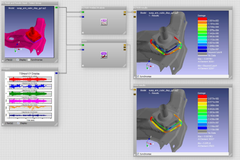
  • Results for CAE - We provide parameters that are ready-to-use in CAE & simulation. Data can be easily imported into nCode DesignLife:
    • Crack Growth: A conventional fracture mechanics approach to estimate fatigue life, featuring multiple growth laws, multiple looping algorithms, and an optional retardation model.
    • Whole Life: A modern approach which unifies the initiation and propagation stages by combining strain-life and fracture mechanics principles, alongside a multiaxial crack-tip plasticity model that accounts for mean-stress and overload retardation effects. Key Features: Fatigue Life Prediction and Test-CAE Correlation | HBK
  •  Confidence & Reliability - We provide design curves for product optimisation.
AMCT weld analysis workflow

Technical Papers

  1. Halfpenny, A., Bagni, C., Vervoort, S. and Chabod, A. (2025) ‘From The Paris Law To The ‘Total-Life’ Method: An Extensive Review Of Fatigue Crack Growth Laws And Models’, NAFEMS World Congress 2025, Salzburg, Austria. [Online]. Available: https://www.nafems.org/publications/resource_center/nwc25-0007000-paper/.
  2. Halfpenny, A., Bagni, C., Chabod, A. and Vervoort, S. (2025) ‘A comprehensive review of Fatigue Crack Growth laws and models’, Procedia Structural Integrity, 75, pp. 219-233.
  3. Halfpenny, A., Bagni, C., Chabod, A. and Vervoort, S. (2025) ‘ ‘Total-Life’ method: achieving accurate fatigue life predictions by combining strain-life and fracture mechanics’, Procedia Structural Integrity, 75, pp. 234-244.
ISO standards quality control assurance warranty business technology concept.; Shutterstock ID 1253334961

Accredited

HBK’s AMCT is an established fatigue testing facility with over 25 years of operational experience and ISO 9001:2015 certification.

Recommended for You