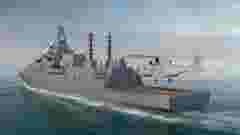
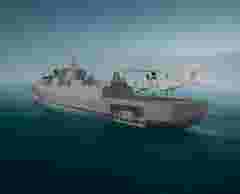

Naval equipment must comply with strict noise and vibration limits defined in standards such as MIL-STD-740 and MIL-STD-1474E. These requirements protect stealth performance, operational safety, and system reliability. HBK enables accurate, real-time assessment of both airborne and structure-borne noise – helping engineers verify compliance efficiently and with confidence.
Learn how automated, repeatable noise and vibration testing supports compliance with MIL-STD-740 and MIL-STD-1474E. Discover how Tescia® and Fusion-LN reduce operator dependency, minimise retest risk, and deliver traceable, audit-ready qualification results.
Explore how HBK helps de-risk naval certification and speed up acceptance with real-time, end-to-end noise and vibration testing. This concise brochure outlines how to meet MIL-STD-740 and MIL-STD-1474E requirements using a unified measurement chain – from sensors to analysis – enabling faster, more informed decisions during harbour tests and sea trials.
Yes. HBK’s integrated system enables simultaneous measurement of airborne and structure-borne noise using synchronised data acquisition and real-time analysis. This approach reduces test time while maintaining accuracy across all required frequency ranges.
Traceability is ensured through automated test execution, comprehensive metadata capture, and structured reporting. Measurement conditions, calibration data, and execution logs are recorded to support repeatability and audit reviews.
The solution is modular and scalable, supporting everything from component-level qualification to full sea trials. Hardware configurations and software workflows can be adapted to different vessel classes, test scopes, and programme requirements.
The solution is designed to support testing aligned with MIL-STD-740 and MIL-STD-1474E requirements. It provides the measurement capabilities, analysis methods, and documentation needed to assess compliance when applied according to the relevant standards. Of course, this testing is also a good base even if you don’t need measure to the Mil-STD's.
Re-tests are reduced through automated workflows, consistent execution sequences, and real-time validation. This minimises operator dependency and helps identify issues early, improving confidence in test results during sea trials.
Naval certification and sea trials focus on validating acoustic performance at defined programme milestones. Self-noise monitoring extends this approach by enabling continuous acoustic oversight during operation, usually to support Stealth but can also be used in commercial environments. HBK supports both, allowing programmes to manage acoustic performance across the full vessel lifecycle.
This will bring together HBM, Brüel & Kjær, nCode, ReliaSoft, and Discom brands, helping you innovate faster for a cleaner, healthier, and more productive world.
This will bring together HBM, Brüel & Kjær, nCode, ReliaSoft, MicroStrain and Discom brands, helping you innovate faster for a cleaner, healthier, and more productive world.