


FS65HDA
Durable accelerometers for harsh environments, ideal for railway vibration monitoring.
Read More

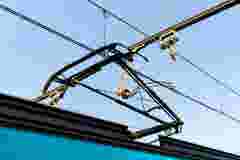
Every electrified rail network depends on reliable current collection between the pantograph and overhead power line. Small changes in contact force, vibration or component wear can quickly lead to infrastructure damage, increased maintenance costs, reduced network quality and availability, and costly service disruptions.
However, conventional inspections only provide periodic snapshots, making it difficult to detect developing issues before they affect operations.
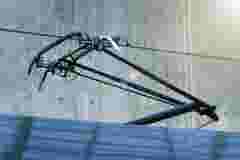
HBK’s solution enables continuous monitoring of pantograph-catenary interaction during normal train operation. Using passive fibre-optic force and acceleration sensors with no electricity or electrical components on the pantograph head, the system eliminates grounding risks and is inherently immune to electromagnetic interference (EMI), enabling condition-based maintenance that reduces inspections, service disruptions, infrastructure damage, and maintenance costs while improving current collection reliability.
The Challenge | How HBK Solves It |
Unexpected overhead line failures cause costly service disruptions that are difficult to anticipate with conventional inspections. | Continuously monitoring pantograph-catenary contact forces during normal service detects abnormal interaction and emerging infrastructure issues before they affect operations. |
Pantograph and catenary wear increases maintenance costs and reduces asset lifetime, but condition is difficult to track between scheduled inspections. | Continuous contact force and vibration monitoring enables condition-based maintenance strategies, reducing unnecessary inspections and extending the life of both pantograph and overhead line assets. |
High-voltage railway environments make accurate, long-term measurement challenging, often requiring complex monitoring systems that increase cost, maintenance effort, and lifecycle expenses. | Passive optical sensing technology requires no electricity in the high-voltage area, is immune to electromagnetic interference, and delivers reliable long-term measurements with reduced installation complexity and maintenance requirements. |
Conventional electrical measurement systems face significant challenges in high-voltage railway environments. Electromagnetic interference, shielding and grounding requirements, and increased maintenance effort all limit measurement reliability and increase system lifecycle costs.
HBK's optical sensing technology is designed to overcome these challenges directly:
Passive, non-conductive sensors and cables
Immune to EMI/RFI – data is transmitted using light, not electrical signals
Intrinsically safe, with no active devices in high-voltage environments
Reliable long-term operation with reduced maintenance requirements compared to electrical systems
Capture contact forces and accelerations directly from the pantograph head during normal train operation.
newLight® FS66HDL optical force sensors mounted on the pantograph for direct contact force measurement
FS65HDA optical accelerometers for pantograph force measurement and vibration measurement
Interconnection box, installed outside on the train roof, connects all sensors
Penetration cable with PTFE overlay links connection box to the roof gland inside the train
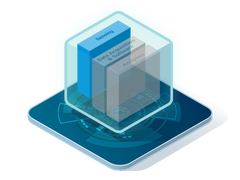
Acquire and synchronise optical sensor data continuously at up to 2,000 samples per second.
QuantumX MXFS/DI optical interrogator with eight connectors for synchronised, high-speed acquisition of all optical sensor channels
catman® data logger software for continuous, automated data recording during service
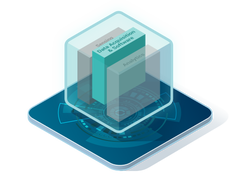
Calculate contact force, assess overhead line condition, and generate actionable maintenance outputs.
Automated contact force calculation between pantograph and overhead power line in accordance with EN 50317
Determine contact position of overhead power line along the pantograph contact strip length
Automated alarm events for abnormal contact forces or loss of contact
Outputs can be used to prioritise maintenance and conduct overhead line condition assessments
Discover the components and setup required for continuous optical monitoring of pantograph-catenary interaction, with practical examples from HBK experts.

Fully passive Fiber Bragg Grating (FBG) force sensor for high-voltage and harsh environments, ensuring safe and reliable measurements.

QuantumX is a universal, modular DAQ system delivering high‑precision measurement and flexible real-time data acquisition – ideal for vehicle and structural testing together with the catman DAQ software.
Fibre optic railway sensors (including FBG railway sensors) are passive, non-conductive, and immune to electromagnetic interference, making them ideal for high-voltage pantograph applications (e.g., 25 kV AC). They enable safe, reliable long-term measurements with limited grounding risks and no electrical interference.
No. Optical sensors transmit data using light instead of electrical signals, making them inherently immune to electromagnetic interference (EMI) and radio frequency interference (RFI) and well suited for reliable measurements in high-voltage railway environments.
The QuantumX MXFS optical interrogator supports high-speed dynamic measurements with acquisition rated up to 2,000 samples per second for all sensors, enabling detailed analysis of pantograph-catenary interaction and other dynamic railway events.
Yes. HBK's optical sensors, cabling, and pantograph monitoring solution are certified to EN 45545-2, the European standard for fire protection in railway vehicles, making them suitable for railway applications.
In accordance with EN 50317 pantograph-catenary interaction measurement practices, the system combines force and acceleration data for accurate pantograph contact force measurement. HBK uses FS66HDL optical force sensors together with FS65HDA optical accelerometers mounted on the pantograph, providing the information required to assess contact quality, pantograph dynamics, and current collection performance. The passive optical sensors enable accurate measurements in high-voltage railway environments without grounding risks or susceptibility to electromagnetic interference.

This will bring together HBM, Brüel & Kjær, nCode, ReliaSoft, MicroStrain and Discom brands, helping you innovate faster for a cleaner, healthier, and more productive world.
