Today’s products are expected to last longer, perform reliably under tougher operating conditions, and reach market faster than ever before.
Yet many durability and reliability issues still surface late in validation or even after release, when design changes become costly, disruptive, and difficult to implement. This happens when early design decisions rely on assumptions instead of understanding the physics of failure.
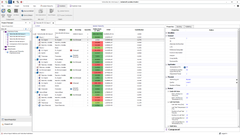
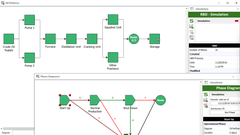
HBK enables Design for Reliability by helping teams apply reliability engineering throughout product development. With ReliaSoft reliability analysis software, you can quantify failure risk, evaluate design trade-offs, and track improvements using data from physical testing, accelerated life testing, and field performance.
This integrated approach ensures issues are identified and resolved early, enabling organisations to meet reliability targets with confidence.

From early assumptions to confident reliability decisions, HBK helps engineering teams embed reliability insight across the product development lifecycle – reducing risk, avoiding redesign loops, and delivering more reliable products.
Establish reliability targets early and identify where failures are most likely before designs are locked in.
This creates a clear foundation for all reliability-driven design decisions.
Capture the right data as designs mature so testing and field information can support meaningful analysis.
· Perform durability and fatigue testing, laboratory and accelerated life testing
Structured data enables faster, more accurate reliability evaluation.
Use analytical tools like the ReliaSoft software suite to apply life data analysis and reliability growth testing techniques that guide design improvements.
By closing the loop between testing and analysis, reliability becomes a measurable design outcome – not a late-stage validation exercise.
In this article, we dive into the essential principles and proven techniques that drive product reliability from concept to completion. Many organisations struggle to balance innovation with long-term reliability, often overlooking critical steps that can prevent costly failures down the line.
Challenged with new FMEA requirements? This webinar will discuss the changing landscape of design FMEAs, including Ford’s CSR and SAE, AIAG, and VDA FMEA requirements.
We will see how ReliaSoft software can support the approaches required in modern product design by many automotive OEMs. Topics discussed will include the use of generic and foundation FMEAs, performing and recording reverse FMEAs, and much more.
Design for Reliability (DFR) is a process in which a set of reliability engineering practices are utilized early in a product's design and integrated into the entire product development cycle. It is widely understood that the cost of addressing reliability issues increases significantly as a product progresses through the development cycle (e.g., it usually is much more expensive to provide support for an unreliable product than it is to improve a product's design).
Reliability should be considered from the concept and early design stages, using measured loads and assumptions that reflect real operating conditions.
End-of-line testing often reveals problems when design changes are costly. Early testing and analysis help prevent failures instead of reacting to them.
Measured loads replace assumptions with real data, enabling more accurate fatigue and lifetime predictions.
Yes. Identifying failure mechanisms and durability limits early significantly reduces the likelihood of field failures.
Physical testing provides real-world data, while reliability analysis converts that data into quantified risk, lifetime, and confidence metrics.
In most cases, yes. Lab testing enables controlled validation, while field data reflects actual usage conditions.