

Railway Wheels Out-of-Roundness
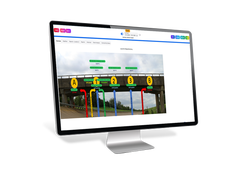
Discover our OOR module, built for precise, reliable measurements in Wayside Train Measurement Systems (WTMS) for the rail industry.
Read More

Railway operators face growing pressure to improve network availability, reduce maintenance costs, and extend the life of ageing infrastructure. HBK helps railway operators identify and prioritise emerging issues earlier by supplementing regular inspections with continuous monitoring, using integrated wayside monitoring, onboard train measurement systems, fibre optic sensing, and advanced analytics.
Unexpected wheel defects, rail deterioration, overhead line issues and track condition changes can develop between scheduled inspections, increasing the risk of costly failures and service disruption. Growing passenger numbers, heavier freight traffic, limited maintenance windows and stricter safety requirements make it increasingly important to have better visibility into asset conditions.
HBK enables a more data-driven approach by combining permanent wayside monitoring, onboard measurement, rugged data acquisition, fibre optic sensing and advanced analytics. This gives operators greater visibility into infrastructure and rolling stock condition, helping maintenance teams identify and prioritise emerging issues and make better-informed asset management decisions.
Capture critical parameters from railway infrastructure and rolling stock using electrical, optical, wireless and wayside sensing technologies.

Collect and synchronise measurement data using HBK data acquisition systems such as QuantumX, SomatXR and ARGOS.

Turn measurement data into actionable information using catman®, edge analytics, HBK Monitor 360 and ReliaSoft® XFRACAS.

Use asset condition and reliability insights to identify developing issues, prioritise maintenance and improve maintenance planning.


Read how HBK's integrated monitoring system enabled safe drill and blast excavation in complex geological conditions, strengthening risk management and ensuring performance.

The SomatXR data acquisition system enables extremely reliable and precise operation in harsh environments and is protected from humidity, dust, shock, and vibration. The modular DAQ system can be used in a variety of applications such as mobile vehicle testing, stationary measurements, and structural health monitoring.

QuantumX is a universal, modular DAQ system delivering high‑precision measurement and flexible real-time data acquisition – ideal for vehicle and structural testing together with the catman DAQ software.
Railway condition monitoring is the continuous measurement of infrastructure and rolling stock performance to detect developing faults before they lead to failures. By collecting data from tracks, wheels, pantographs, and other critical assets, operators can make maintenance decisions based on actual asset condition rather than fixed inspection schedules.
Predictive maintenance uses continuous monitoring data to identify early signs of deterioration, allowing maintenance to be performed only when necessary. This reduces unnecessary inspections, prevents costly failures, extends asset life, and improves maintenance planning.
HBK solutions monitor a wide range of railway assets including rails, sleepers, switches and crossings, bridges, tunnels, wheels, axles, bogies, pantographs, overhead contact lines, and complete rolling stock. Measurements can be performed using permanent wayside installations, onboard systems, or fibre-optic sensor networks.
Wayside systems assess the condition of passing trains by measuring wheel loads, impacts, and vehicle behaviour at fixed locations. Onboard systems continuously monitor track and infrastructure conditions during normal train operation. Combining both datasets provides a comprehensive understanding of the interaction between vehicles and infrastructure.
Yes. HBK solutions are designed to integrate with existing maintenance, asset management, and analytics platforms, allowing operators to incorporate monitoring data into their current maintenance workflows and digital railway initiatives.
Yes. HBK's monitoring solutions are engineered for demanding railway applications, including exposure to vibration, shock, moisture, temperature extremes, and electromagnetic interference. Fibre-optic sensing technology is particularly well suited for high-voltage environments such as overhead contact line monitoring.
Continuous monitoring can detect wheel flats, wheel out-of-roundness, excessive axle loads, rail strain, track degradation, pantograph contact issues, overhead line movement, structural fatigue, and other developing defects before they become safety or operational issues.
Continuous monitoring provides early warning of asset deterioration, enabling condition-based maintenance for railways that addresses problems before they affect operations. This reduces the likelihood of service disruption, infrastructure damage, and safety-critical failures while improving overall network reliability.
This will bring together HBM, Brüel & Kjær, nCode, ReliaSoft, MicroStrain and Discom brands, helping you innovate faster for a cleaner, healthier, and more productive world.