From in-vehicle testing to analytical insight, HBK supports every stage of the Road Load Data Acquisition (RLDA) process. Our integrated solutions combine sensors, rugged data acquisition, and advanced analysis to help you reliably capture, validate, and analyse complex load data - reducing uncertainty and accelerating engineering decisions.
The challenge of modern RLDA:
Engineering teams are under increasing pressure to deliver reliable product insights with fewer prototypes, tighter timelines, and more complex vehicle systems.
RLDA requires capturing real-world loads across a wide range of sensors and channels in harsh, unpredictable environments. These measurements must remain accurate, synchronized, and complete, even under demanding test conditions.
At the same time this data must support downstream workflows from laboratory tests to CAE simulation. Ensuring data quality while maintaining efficiency and avoiding costly re-testing remains a critical challenge.

RLDA is the process of measuring real-world loads and operating conditions directly from a vehicle. These measurements are used to understand how components behave in actual driving environments and to support product development through testing and simulation.
By capturing synchronized data across multiple sensors and channels, RLDA enables engineers to replicate real-world conditions in the lab and improve design accuracy and reliability.
HBK provides a complete, end-to-end RLDA solution - combining sensors, rugged, high-channel data acquisition, embedded measurement software and seamless connectivity to analysis and durability tools. From in-vehicle measurement through to data processing and insight, the workflow is designed to capture and carry data consistently across the full measurement chain – so its ready for downstream without rework. This enables teams to move faster, reduce risk, and make informed engineering decisions.
Accurate RLDA starts with high-quality, synchronized measurement at the vehicle. This means capturing strain, vibration, force, CAN, and electrical signals reliably across all channels, even in harsh real-world test conditions. HBK supports this with proven sensors, rugged data acquisition systems such as Fusion RX, and embedded measurement software that helps engineers configure, monitor, and validate signals close to the point of measurement. This reduces uncertainty and helps ensure data is ready for analysis, simulation, and test bench replication.
Re-testing is often caused by incomplete data, configuration errors, signal issues, or poor synchronization across measurement channels. HBK solutions help engineers validate data during acquisition through real-time monitoring, robust data handling, and connected acquisition workflows. By checking data quality early and ensuring measurements are stable, complete, and consistent, teams can reduce the risk of discovering problems only after the vehicle test has finished.
For high-channel, multi-sensor RLDA campaigns, engineers need a system that can capture diverse measurements accurately and keep all data synchronized under real-world test conditions. HBK’s RLDA solutions are built for complex in-vehicle testing, supporting strain gauges, accelerometers, load cells, CAN, and electrical signals in one connected setup. With rugged data acquisition systems such as Fusion RX, teams can scale to 200+ channels, adapt to different vehicle configurations, and maintain stable, reliable data capture across demanding test scenarios.
RLDA data captures the real loads and operating conditions a vehicle experiences in the field. Once validated, this data can be used to correlate CAE models, define representative durability tests, and support lab-based replication on test benches. HBK helps connect the workflow from vehicle measurement through to data processing and durability analysis, enabling engineers to move from captured road load data to confident simulation, validation, and fatigue decisions.
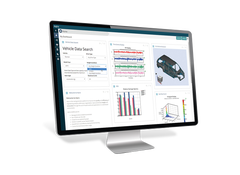
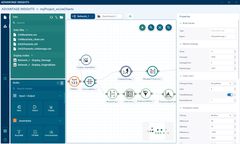
The key is connecting acquisition, validation, and analysis in one streamlined workflow. HBK combines Fusion RX with acquisition software, Aqira, Advantage Insights, and nCode for advanced durability and fatigue analysis. This helps engineering teams process large and complex datasets, handle different data types such as CAN, visualize results, correlate test and CAE data, and make faster, more confident design decisions.