

Road Load Data Acquisition
Elevate your vehicle testing with our RLDA solutions featuring Fusion RX – rugged, flexible, and reliable data acquisition for the toughest environments.
Read More

For more than four decades, HBK has driven the evolution of RLDA, shaping how engineers capture reliable, high-quality data in some of the harshest test environments. From the earliest Somat systems to today’s fully reinvented Fusion RX platform, this journey reflects continuous innovation, customer-driven development, and a relentless focus on first-time-right results.
The roots of modern RLDA trace back to a simple but ambitious goal: collect reliable data in environments that destroy conventional instrumentation.
In the 1980s, systems like the Somat 2100 series established HBK’s reputation for rugged mobile data acquisition – a pioneering step toward data acquisition that could survive – and deliver – under extreme real-world conditions. Shortly after, eDAQ emerged as a cornerstone platform for vehicle durability testing worldwide. It became the workhorse of RLDA, trusted across automotive, off-highway, and industrial applications.
This era defined the baseline, and these platforms laid the groundwork for what RLDA would eventually become. Ruggedisation was no longer optional – it was a requirement. The focus was survival, reliability, and proving that meaningful data could be captured outside controlled environments.
As testing programmes grew more complex, expectations grew with them.
Platforms like HBK’s eDAQXR expanded on the original eDAQ concept, introducing higher performance, more channels, and improved resilience. Meanwhile, SomatXR emerged as HBK’s modular and distributed ruggedised system, designed to thrive under extreme temperatures, vibration, and shock.
'Mobile testing didn’t just get harder – it got bigger and more complex. Teams needed scalability, long-term reliability, and confidence that their DAQ systems could keep pace with increasingly demanding durability cycles. HBK’s platforms had moved beyond early, focused applications and established themselves as essential tools for engineering teams worldwide.
By the mid-2020s, customers were clear: traditional RLDA systems were reaching their limits.
Standard DAQ systems struggled with the full realities of modern mobile testing as ever greater demands were placed on data acquisition. As vehicles generate more signals and require seamless integration of advanced bus data, the need for higher processing power, expanded memory, and streamlined workflows continues to grow. These evolving requirements are driving the next generation of DAQ solutions built to support faster, more efficient testing in the field.
Engineers needed systems that worked first time, every time.
Listening closely to customer feedback, HBK reached a clear conclusion: incremental improvement was no longer enough. Legacy RLDA platforms had reached their limits. The stage was set for a complete reinvention – one built explicitly for modern mobile testing realities.
The response to customer needs came in the form of Fusion RX, HBK’s next-generation platform engineered from the start for rugged, on-the-move data acquisition.
This wasn’t just an upgrade – we listened, and we rebuilt.
With Fusion RX established, RLDA began to shift from stand-alone instrumentation to an integrated digital ecosystem.
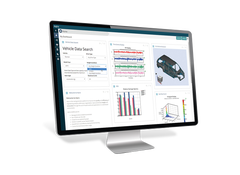
The introduction of Advantage Connect added a workflow layer, enabling seamless transitions from test to analysis. Standardised templates reduced manual configuration. Data moved faster, cleaner, and fully synchronised into analysis environments. The result was a connected RLDA ecosystem – DAQ, data processing, and analysis working end-to-end.
RLDA was no longer just about “capturing loads,” it was about accelerating insight.
Looking ahead, Fusion RX is positioned as the long-term successor to eDAQ, eDAQXR, and SomatXR – a platform, set to grow alongside customer needs and technological shifts.
Channel counts, processing power, and test complexity will continue to grow. Software-driven automation and autonomous testing capabilities will expand, and Advantage Connect will enable smarter workflows.
At the same time, RLDA’s reach continues to expand into new markets – from automotive and off-highway to rail, defence, electric vehicle (EV), and eMobility applications.
The future of RLDA is clear: defined by adaptability, digital integration, and continuously evolving platforms.
From the early rugged DAQ systems of the 1980s to today’s fully reinvented Fusion RX platform, HBK’s RLDA solutions have transformed to meet the realities of modern mobile vehicle testing – delivering connected, high reliability, first-time-right performance for the next generation of vehicle development.

This will bring together HBM, Brüel & Kjær, nCode, ReliaSoft, MicroStrain and Discom brands, helping you innovate faster for a cleaner, healthier, and more productive world.
