



Genesis HighSpeed (GenHS)
The GenHS DAQ system is a high‑speed measurement solution delivering modular Genesis data acquisition with powerful Perception software for fast testing.
Read More

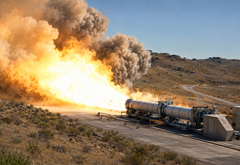
High-speed system tests are often destructive, non-repeatable, and expensive, making it absolutely crucial to capture accurate data on the first and only attempt.
Whether it's a helicopter crash landing, an explosion, or a rocket separation test, HBK solutions are designed to ensure you get the data you need, every time.
HBK offers high-speed data acquisition systems engineered for transient events. By combining hardware-based triggering, high sample rates, and secure local data storage, our solutions enable engineers to capture strain, acceleration, and pressure with complete confidence.
This proven approach provides the reliability needed for any high-energy, short-duration test where data integrity is paramount.
High-fidelity sensors capture the precise mechanical response of systems during short, high-energy load cases.
Transient-ready data acquisition systems capture and securely store every data point, with no need for a live PC connection.
Powerful software enables system setup, synchronised data review, and efficient reporting.

How do you measure and validate the effects of underwater blasting on critical infrastructure? Discover how HBK's high-speed data acquisition technology helped capture precise pressure and strain data during a major underwater blasting project on the Columbia River. Read the full case study now.
Evaluating the performance of complex structures requires accurate measurement data across the entire test setup. Discover how the University of Siegen used HBK technology to capture critical insights during large-scale structural and material testing for advanced research projects. Read the full case study now.
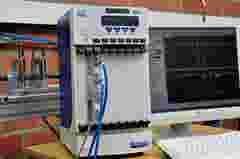
The GenHS DAQ system is a high‑speed measurement solution delivering modular Genesis data acquisition with powerful Perception software for fast testing.

GenHS input boards enable a real-time testing platform within a multi-channel DAQ system, offering versatile GenHS instrumentation with 20 kS/s to 250 MS/s sampling.

From fatigue testing of an aircraft wing, strain analysis of a printed circuit board, to structural monitoring of a bridge or residual stress measurement, HBK strain gauges for experimental stress analysis are used to determine the level of stress on a material.

If the peak load or deformation is not captured, the test data may be incomplete or unusable for certification. Because these tests are destructive and cannot be easily repeated, reliable triggering and high-speed data capture are essential.
Our systems use hardware-based triggering, onboard memory, and secure local storage. This ensures data is captured and stored locally in the DAQ mainframe during the event, so data collection is not dependent on having a live PC or network connection during the moment of impact.
Accurate correlation between sensors and high-speed cameras requires precise time synchronisation and deterministic hardware triggers. This guarantees that all strain, accelerations, and video data can be reviewed together with confidence after the test.
The easiest way to achieve this today is with PTPv2 synching methods for both DAQ systems and high-speed cameras.
Alternatively, HBK DAQ systems can send a defined trigger to the camera.
Tests commonly involve strain, acceleration, speed, displacement, and pressure measurements. These measurements are crucial for helping engineers understand structural response and performance during dynamic events.
Yes, data from these tests is critical for supporting certification, design validation, and regulatory documentation. This requires traceable, high-quality data that can be clearly reviewed and justified after testing is complete.
If data quality or completeness cannot be demonstrated, costly additional testing may be required, delaying certification and development timelines. Reliable measurement systems are designed to reduce this risk by ensuring that data capture is deterministic, repeatable across setups, and clearly documented.
Sample rate always refers to the sampling of a single channel. However, in high-channel-count system tests, the DAQ system must also store data from all channels. The throughput rate specifies the maximum combined data rate from all individual channels that the DAQ system can store continuously.

This will bring together HBM, Brüel & Kjær, nCode, ReliaSoft, MicroStrain and Discom brands, helping you innovate faster for a cleaner, healthier, and more productive world.
