Successful UAV missions depend on how the complete system performs under real-world conditions. Navigation, motion, propulsion, structures and payloads interact continuously: propulsion-induced vibration can affect inertial performance, changing loads can influence flight stability and structural behaviour, while GNSS degradation can expose navigation errors that remain hidden under nominal conditions.
HBK helps engineering teams measure and understand these interactions across the complete UAV system. By connecting physical measurement with testing and engineering analysis, teams can identify integration issues earlier, validate real-world behaviour and build greater confidence in flight performance, structural integrity and mission reliability.
From GNSS reliability and sensor confidence to propulsion, regulation and new approaches to manufacturing, UAV development is evolving fast.
Hear HBK experts discuss five engineering trends shaping the next generation of drones.
Engineering priorities change as a UAV moves from concept to operation. Explore how HBK supports each stage of the lifecycle and how measurement evidence generated along the way can feed back into better design, validation and future platform development.
UAV development starts by understanding how design choices will influence structural behaviour, dynamic performance, payload capability and durability before the platform reaches physical testing.
HBK helps engineering teams evaluate expected mission loads, vibration environments, structural response and fatigue behaviour through simulation, structural and durability analysis and measurement-informed engineering workflows. This early insight provides a stronger basis for UAV architecture decisions, more effective testing and reduced development risk.
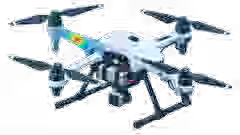
As UAV architectures move from concept to hardware propulsion, navigation, flight control, payload and lightweight structures must perform as one integrated platform with interactions that can be difficult to predict from component-level specifications alone.
HBK supports UAV development and system integration through OEM and embedded sensing, IMU and GNSS/INS integration, force, torque, load and strain measurement, vibration and shock sensing, and propulsion measurement. These complementary measurement domains help engineers understand how physical interactions affect motion, load distribution, navigation accuracy and structural behaviour while meeting the UAV size, weight and power constraints.

Before flight, UAV components and integrated systems must be evaluated against the vibration, shock, structural loads and dynamic excitation expected in real operating environments.
HBK supports ground-based validation through synchronised measurement, vibration testing, and engineering analysis, helping teams reveal structural vulnerabilities and propulsion-induced excitation earlier and build stronger measurement evidence for qualification and subsequent flight validation.

Flight testing provides the opportunity to understand how navigation, propulsion, structures, payload and flight-control systems behave under real-world conditions. Correlating these interactions is essential for validating performance, stability, and mission readiness.
HBK helps teams capture synchronised inertial, vibration, shock, strain, load, propulsion and electrical data. By connecting these measurements across the complete UAV system, engineers can compare simulation, ground-test and flight test results, identify integration issues and build confidence in mission readiness.

Operational UAVs must maintain reliable navigation, localisation, orientation and motion control as mission conditions change. GNSS degradation, vibration, disturbances and variable payloads can affect both flight performance and the physical state information used by autonomous systems.
HBK embedded IMU and GNSS/INS technologies and integrated sensing solutions support reliable positioning, orientation and motion control across a wide range of operating conditions. Combining reliable inertial information with physical measurement helps engineering teams understand payload and load effects and maintain predictable platform performance.
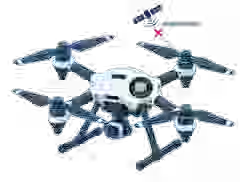
UAV engineering continues after deployment. Operational loads, vibration exposure and mission profiles influence structural fatigue, component durability and long-term platform reliability, creating valuable evidence for maintenance decisions and future development.
HBK helps engineering teams turn operational load, strain and vibration data into insight through durability analysis and reliability workflows. Understanding how platforms accumulate damage and perform over time can support more informed maintenance decisions, identify lifetime-limiting behaviours and feed real-world evidence back into simulation, design and validation.

UAV IMU selection should consider more than accuracy alone. Bias stability, alignment, noise, dynamic range, vibration sensitivity, environmental conditions, size, weight, power and system interfaces can all influence navigation and control performance. HBK IMU and GNSS/INS technologies combine high-quality inertial sensing with sensor fusion expertise to support reliable integration across a wide range of UAV platforms and operating environments.
UAV vibration testing combines accelerometers, multi-axis vibration measurement and structural dynamics analysis to identify excitation frequencies, resonances and vibration transmission paths. Measurements across the propulsion system, airframe and payload help engineers locate vibration sources and understand their impact on structural, sensor and flight performance. HBK supports both ground-based vibration testing and correlated flight measurements.
Representative UAV ground testing can expose structural resonances, propulsion-induced vibration, load effects and integration issues before flight. Correlating vibration, strain, load, propulsion and inertial measurements helps engineers reproduce critical operating conditions and identify system interactions earlier. This reduces late-stage troubleshooting and provides a stronger measurement baseline for UAV flight testing and validation.
Structural loads in lightweight UAV airframes can be quantified using strain gauges, force and load sensors combined with synchronised data acquisition. Measurements collected during representative ground tests and flight conditions reveal stress levels, load paths and fatigue-critical locations. HBK measurement and durability analysis solutions can use these data to support structural validation, fatigue assessment and life prediction.
UAV durability assessment uses measured loads, strain, vibration and mission profiles to understand the stresses accumulated by the platform over time. These data can support fatigue analysis, damage assessment and identification of lifetime-limiting components or operating conditions. HBK connects physical measurement with durability and reliability analysis to support design validation and lifecycle decisions.
Operational measurement provides evidence of the loads, vibration and dynamic conditions a UAV actually experiences during missions. Feeding this data back into simulation, durability analysis and validation helps engineers refine assumptions, improve test profiles and identify design improvements. This creates a measurement-driven feedback loop between UAV operation, engineering validation and future platform development.

This will bring together HBM, Brüel & Kjær, nCode, ReliaSoft, MicroStrain and Discom brands, helping you innovate faster for a cleaner, healthier, and more productive world.