MAIN MENU

Our customer is a pioneering biotechnology company that discovers, develops, manufactures, and commercializes medicines to treat patients with serious and life-threatening medical conditions. For more than 40 years, the company has been a leader in its field, using human genetic information to develop novel medicines. In ophthalmology, they developed groundbreaking therapies for retinal diseases. The success of these therapies relies not only on the drug itself but also on the precision and reliability of the delivery system used to administer it.

usp-icon

Our customer experienced variability in long-term performance of an ophthalmology drug delivery system, with limited visibility into failure modes, environmental impacts, and system-level reliability—posing a risk to consistent therapeutic delivery.

usp-icon

Implementation of a Design for Reliability (DfR) program using HBK’s ReliaSoft suite (XFMEA, Weibull++, BlockSim) to proactively analyse risk, predict shelf life, and model system-level performance.

usp-icon

This provided deep, data-driven insights into device reliability, enabling targeted design enhancements, ensuring consistent drug delivery, and providing robust, objective evidence to support successful and efficient regulatory compliance submissions.

Understanding Reliability Risks Across the Product Lifecycle

For an advanced ophthalmology drug delivery system, such as a pre-filled syringe or an autoinjector, ensuring that the correct dose is delivered safely and effectively every single time is a non-negotiable requirement. Our customer’s quality teams faced a significant challenge: ensuring the consistent long-term performance of the device.

The core issues were:

1. Limited Visibility into Failure Modes: While standard testing could verify basic functionality, it was difficult to proactively identify all potential failure modes that might emerge over the product’s multi-year shelf life or under different clinical use scenarios.

2. Unknown Environmental Impacts: The device could be exposed to a range of temperatures and humidity levels during shipping, storage, and handling. The long-term impact of these environmental stresses on component degradation and overall device function was difficult to quantify.

3. Complex System-Level Reliability: The device is a system of interacting components (e.g., plunger, barrel, seal, needle). A minor degradation in one component could impact the entire system, but it was challenging to model these interactions and understand the overall system reliability.

4. Regulatory Compliance Risk: To gain and maintain regulatory approval (e.g., from the FDA), manufacturers must provide robust, objective evidence that the device will perform as intended throughout its entire lifecycle. Insufficient data creates significant compliance and timeline risks.

Environmental reliability testing

A Proactive Approach to Reliability Engineering

To address this, we helped our customer implement a comprehensive Design for Reliability (DfR) program, using the HBK ReliaSoft suite as the analytical core to build a deep, data-driven understanding of the delivery system’s reliability.

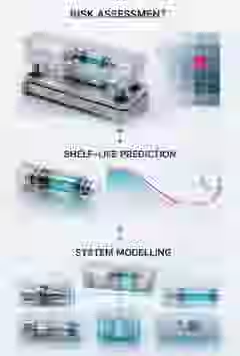
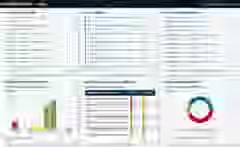
1. Proactive Risk Assessment with XFMEA: The process began with XFMEA (Failure Mode and Effects Analysis). Cross-functional teams systematically analyzed the device design to identify all potential failure modes (e.g., “seal leaks,” “incomplete dose delivery,” “needle clogs”), their potential effects on the patient, and their possible causes. This process created a risk-based roadmap for where to focus testing and design efforts.

2. Predicting Shelf Life with Weibull++ Accelerated Life Testing: It is impossible to wait 3 years to see if a device survives its shelf life. Using Accelerated Life Testing (ALTA), engineers designed tests that subjected the device to elevated stresses, such as higher temperatures. By analyzing how quickly failures occurred at these high-stress levels, ALTA’s advanced models could accurately predict the device’s reliability under normal storage conditions over its entire intended shelf life.

3. Quantifying Reliability with Weibull++: The data from ALTA and other life tests were analyzed in Weibull++.


This tool allowed engineers to:

• Model the failure distribution to understand how the device was predicted to fail over time (e.g., early life, random, or wear-out).

• Calculate the probability of successful operation for any given time point.

• Determine a statistically backed B10 life (the time at which 10% of units are expected to fail), a critical metric for reliability.


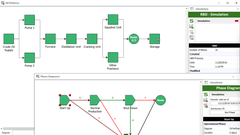
4. Modeling System Performance with BlockSim: The entire delivery system was modeled in BlockSim. Each critical component identified in the XFMEA was represented as a block, with its reliability characteristics defined by the Weibull++ analysis.


This system-level simulation enabled our customer to:

• Understand how individual component reliability contributed to the overall system’s ability to deliver therapy successfully.

• Identify the “weakest links” in the design and run “what-if” scenarios to see the impact of improving them.

• Provide a quantitative prediction of system reliability for the regulatory submission.

Delivering Confidence in Every Dose

This integrated DfR approach provided critical insights and tangible benefits for our customer.

• Evidence-Based Design Improvements: The analysis pinpointed the specific components and failure modes that posed the greatest risk to system reliability. This allowed for targeted, data-driven design enhancements that delivered the maximum benefit.

• High Confidence in Long-Term Performance: The predictive models from ALTA and Weibull++ gave engineering teams a high degree of statistical confidence that the device would meet its reliability targets throughout its required shelf life, long before real-time testing was complete.

• Robust and Efficient Regulatory Submissions: Instead of relying solely on pass/fail test results, our customer could provide regulatory bodies with comprehensive reliability models and statistical predictions. This demonstrated a deep understanding of the product and helped streamline the approval process.

• Enhanced Patient Safety: By proactively identifying and mitigating potential failure modes, our customer significantly reduced the risk of device malfunction, ensuring that patients consistently receive the intended therapeutic benefit.

Integrated reliability engineering workflow

Conclusion

For combination products in ophthalmology, where precision and dependability are paramount, ensuring device reliability is fundamental to ensuring patient safety and therapeutic efficacy. By leveraging the predictive and analytical power of the HBK ReliaSoft DfR suite, our customer was able to move beyond traditional testing to a proactive, science-based approach. This allowed them to build a deep, quantitative understanding of their device, engineer robustness into the device, and ultimately deliver on their mission to provide groundbreaking medicines that patients and physicians can trust.

Technology Used