AI workloads are placing increasingly greater demands on power, cooling, and critical infrastructure. As systems become more interconnected, even minor failures can have significant operational and financial consequences. Data center infrastructure is becoming more complex - higher compute density, increasing power requirements, and more complex cooling systems are making downtime more difficult to predict and more costly when it occurs.
To maintain availability, operators need more than isolated monitoring tools or component-level data. They need a system-level understanding of infrastructure performance, dependencies, and risk. HBK helps data center teams quantify uptime risk, evaluate infrastructure resilience, and make evidence-based decisions that improve the availability and reliability of power, cooling and other critical digital infrastructure.

Quantify Uptime Risk
Model infrastructure dependencies, evaluate redundancy strategies and identify the factors that have the greatest impact on system availability.
Validate Critical Infrastructure
Use engineering-grade testing and measurement to verify the performance of power, cooling, and supporting infrastructure.
Understand System-Level Risk
Understand how infrastructure dependencies affect availability and identify the issues that have the greatest impact on uptime.
Prioritise Uptime-Critical Actions
Use reliability and operational insights to focus maintenance and investment decisions where they will have the greatest impact on uptime.
Our team can quickly ingest a data centers system architecture and historical data to quantify top risks to datacenter downtime risk and assess data-readiness for a digital twin solution.
AI workloads are increasing the complexity of data center infrastructure, creating new dependencies across power, cooling, networking, and control systems. Traditional approaches based on spreadsheet estimates, fragmented tools or component-level alarms are no longer enough to understand availability risk.
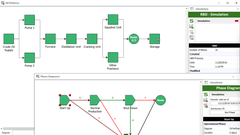
Using ReliaSoft BlockSim and RAM (Reliability, Availability and Maintainability) Digital Twins, HBK helps organisations model infrastructure dependencies, evaluate redundancy strategies and quantify outage risk to support more confident uptime decisions. A RAM Digital Twin helps teams understand which investments will deliver the greatest improvement in availability and resilience. During the operational phase, the digital twin model is used to monitor the performance of critical systems and effectiveness of downtime mitigation strategies.
Learn how AI workloads are changing reliability requirements and how reliability engineering can help organisations understand and reduce availability risk.
This white paper explores how the rapid rise of AI workloads is redefining uptime expectations in modern data centers, making “five-nines” availability (99.999%) a critical financial and operational requirement rather than just an aspirational goal.
See how system-level reliability modelling can be used to evaluate redundancy strategies, quantify outage risk, and support more confident uptime decisions. In this webinar, we explore how simulation-driven RAM analysis enables engineers to better understand system behaviour, quantify availability risks, and make informed design and operational decisions earlier in the lifecycle.
Discover how high-resolution monitoring, engineering-grade measurement and advanced analytics help operators improve visibility into cooling, and infrastructure performance.
Advanced insights to achieve greater levels of uptime at the lowest practical cost.
RBD - Reliability Block Diagram
FTA - Fault Tree Analysis
URD - Universal Reliability Definition
RCM - Reliability Centered Maintenance
FMEA - Failure Mode and Effects Analysis
RAM - Reliability, Availability, Maintainability
Whether you're evaluating infrastructure designs, improving operational visibility, or reducing downtime risk, HBK can help you make more confident uptime decisions across the data center lifecycle.
HBK provides a suite of tools for comprehensive data center monitoring, including the Genesis HighSpeed DAQ system for real-time electrical power analysis, QuantumX and digiBOX platforms for high-speed temperature measurements, and a combination of accelerometers, Fusion-LN, and BK Connect® software for structural and mechanical performance testing.