Condition-based monitoring (CBM) underpins predictive maintenance, but implementation challenges can limit its effectiveness. Here, HBK’s Guga Gugaratshan explores how engineers can strengthen data integrity, avoid common pitfalls, and apply AI analytics to enable early anomaly detection and smart predictive maintenance decisions.
Vibration-based condition monitoring (CBM) has become a cornerstone of predictive maintenance strategies across modern industry. From rotating machinery and turbines to pumps and conveyors, the ability to detect early-stage faults through vibration analysis enables operators to reduce unplanned downtime, extend asset life, and optimise maintenance schedules. However, while the technology is well established, successful implementation remains far from straightforward.
In practice, many CBM programmes fall short of expectations – not due to a lack of data, but because of how that data is captured, interpreted, and integrated into wider operational workflows. Common challenges include poor sensor selection, inconsistent mounting practices, inadequate baseline definition, and a failure to account for real-world operating conditions such as load variability, temperature, and electromagnetic interference. These issues can compromise signal integrity, leading to misleading results, false alarms, or missed fault detection altogether.
At the same time, the rapid evolution of sensing technologies – including MEMS-based accelerometers, optical sensing methods such as Fiber Bragg Grating (FBG), and high-temperature piezoelectric materials – is expanding what is possible in harsh and complex industrial environments. Coupled with advances in data acquisition, edge processing, and AI-driven analytics, condition monitoring is shifting from isolated measurement systems toward fully integrated, intelligent asset performance platforms.
Yet, this transition also introduces new complexities. Engineers must balance scalability with data quality, ensure interoperability across systems and maintain confidence in long-term measurements through rigorous calibration and verification processes. Ultimately, the effectiveness of any CBM strategy depends on a holistic approach – one that considers not just the sensor, but the entire measurement chain and decision-making ecosystem.
In this Q&A, Guga Gugaratshan explores the key technical considerations, common pitfalls, and emerging innovations shaping vibration-based condition monitoring, offering practical insights for engineers and reliability professionals working to build more robust and actionable monitoring programmes.

Guga Gugaratshan: One of the most common pitfalls is treating condition monitoring as a “fit and forget” exercise or “sensor install” rather than a condition monitoring programme. Successful condition based monitoring depends on a clear understanding of the failure modes being monitored, appropriate sensor selection for the application and environment, correct installation, and well-defined alarm strategies. Too often, systems are deployed without sufficient consideration of machine dynamics, operating speed ranges, or environmental conditions, resulting in data that is difficult to interpret or, worse, misleading.
Another frequent issue is underestimating data quality. High data volumes do not automatically translate into actionable insight. Without robust signal integrity, proper filtering, and validated baselines, engineers may struggle to distinguish real degradation from normal operational variability.
Another common pitfall is neglecting the baseline and consistency disciplines required to make trend analysis meaningful. Reliable condition monitoring depends on establishing baseline data under normal steady-state operating conditions – such as defined load and speed – or under a clearly defined “standard test condition” for assets that operate under variable regimes. Future measurements must then be compared against this baseline. It is equally important to recognise that measurement results are inherently influenced by operating conditions. Variations in load, speed, or environment can significantly affect vibration signatures, so data should be acquired as consistently as practicable to ensure observed changes reflect true asset behaviour, rather than normal operational variability.
Finally, CBM initiatives frequently underperform when monitoring data is not seamlessly integrated into asset performance management and operational workflows. Without this integration, valuable insights remain siloed, reducing their ability to influence timely decisions, optimise maintenance strategies, and deliver measurable business impact.
Guga Gugaratshan: Transducer selection, location, attachment, and data collection are core determinants of measurement consistency, meaning accuracy isn’t just a software problem; it starts at the sensor and how or where it is installed. Even the most advanced analytics can’t compensate for poor input data. Selecting a sensor with the appropriate frequency range, sensitivity, and environmental rating for the application is essential to capturing meaningful measurements.
Equally important is how the sensor is mounted. Inadequate mounting stiffness or poorly prepared surfaces can introduce resonance, attenuation, or phase errors that distort the measured vibration. In industrial environments, this often leads to false alarms or missed early-stage fault indicators.
For demanding or hard-to-access applications, advanced technologies such as Fiber Bragg Grating (FBG) optical sensors, wireless accelerometers, or piezoelectric sensors, designed specifically for high temperatures, can provide consistently reliable data where conventional sensors struggle. So, in conclusion, sensor choice determines what you could detect, and mounting determines what you actually detect reliably.
Guga Gugaratshan: Using an accelerometer with an insufficient frequency range can lead to misleading condition monitoring results, particularly in high-speed machinery. For instance, a general-purpose sensor limited to 0 – 1 kHz may fail to capture high-frequency vibration components (typically in the 5 – 20 kHz range) that are critical for detecting early-stage bearing defects such as micro-spalling or lubrication breakdown. As a result, the collected vibration data may appear smooth and stable, creating a false sense of machine health while degradation is actively progressing.
This issue is well documented in vibration analysis literature, where high-frequency measurements, often captured using techniques such as envelope detection, are essential for early fault detection in rolling element bearings (Randall, 2011; Jardine, Lin, & Banjevic, 2006). Consequently, improper sensor selection can delay fault identification until the damage becomes severe and more easily detectable at lower frequencies, increasing the risk of unplanned downtime. This example underscores a fundamental principle in condition monitoring: sensor bandwidth directly determines diagnostic capability – if the relevant frequency content is not measured, the fault effectively does not exist in the data.
Guga Gugaratshan: Environmental conditions have a major influence on long-term measurement stability. Elevated temperatures can cause sensor drift or premature failure if the transducer is not designed for high-temperature applications. Moisture ingress and humidity can also degrade insulation resistance and introduce noise over time.
Electromagnetic interference (EMI) is another critical factor, particularly in industrial environments with variable speed drives, high power motors, or welding equipment. Poorly shielded EMI sensitive systems could exhibit noise that masks low level fault signatures.
Explosive environments can also raise many safety concerns that translate into ATEX requirements for the measurement chain.
To address these challenges, robust sensor designs, such as high-temperature accelerometers, FBG optical sensors immune to EMI and passive, and wireless solutions that eliminate long cable runs, can significantly improve data reliability in harsh environments.
Guga Gugaratshan: One of the biggest challenges is interoperability. Condition monitoring data often resides in silos, separate from maintenance management systems or operational data platforms. Additionally, multi-parameter measurement often requires technology synchronisation and communication through many different industrial protocols. Without integration, valuable insights may not translate into timely maintenance actions.
Another challenge is scalability. As monitoring programmes grow, managing data volume, system configuration, and alarm thresholds across large networks of assets becomes increasingly complex.
Modern CBM solutions are therefore moving beyond stand-alone measurements toward integrated ecosystems, where vibration data feeds directly into asset health monitoring platforms such as HBK Monitor 360, maintenance planning tools, and enterprise systems. AI-native cloud-enabled platforms and AI-driven analytics play a key role in making this integration scalable and sustainable. We need to pay a lot of attention to the data layer and the decision layer to be successful in the CBM programmes.
Guga Gugaratshan: Calibration and verification are essential for maintaining long-term confidence in CBM data. Calibration is the formal process that ensures that vibration measurements are accurate and comparable over time. As sensors and measurement chains are exposed to mechanical stress, temperature variations, and aging, their characteristics can drift. Without periodic calibration and verification, it becomes difficult to distinguish whether observed changes in vibration data are due to actual machine condition or shifts in sensor performance. Even if drift is typically small, it is not reliable to assume that the measurement system remains stable without proper validation.
Regular calibration – whether performed inhouse or via accredited services – helps ensure traceability and consistency across measurement points. Equally important is system level verification, where signal paths, connectors, and data acquisition chains are checked to confirm overall integrity.
A disciplined calibration and verification strategy supports reliable trend analysis, which forms the foundation of effective predictive maintenance.
Guga Gugaratshan: We take a system level approach to signal integrity, combining robust sensor design, high quality cabling or wireless transmission, and advanced signal conditioning. Optical sensing technologies, for example, are inherently immune to electromagnetic interference, making them well suited for electrically noisy environments. They are also intrinsically passive, contributing for their direct application onto explosive environments.
For applications where cabling is impractical or costly, our wireless sensing solutions enable reliable data acquisition while reducing installation complexity and maintenance costs. In extreme temperatures, high-temperature vibration sensors enable reliable long-term monitoring of assets such as rotating shafts, turbines, fans, and bearings. Together, these technologies help ensure that vibration data remains accurate, stable, and trustworthy, even in harsh industrial conditions.
Guga Gugaratshan: Next-generation sensors are significantly expanding the scope of condition monitoring. Advances in MEMS technology are enabling smaller, lower power, and more cost-effective sensors, making it feasible to monitor a wider range of assets at scale.
Optical accelerometers offer exceptional measurement stability, wide dynamic range, and immunity to electromagnetic interference. These characteristics make them particularly attractive in harsh or high-voltage conditions.
Where extreme temperatures are involved, HBK’s proprietary gallium ortho phosphate (GaPO4) piezoelectric crystals enable reliable and accurate measurement at temperatures up to 700°C, and even higher for certain applications.
These sensor technologies support comprehensive CBM strategies, providing reliable, precise measurements for advanced analytics to detect faults early, with confidence.
Guga Gugaratshan: Avoid “apples-to-oranges” comparisons. ISO 20816‑1 frames evaluation criteria in terms of vibration magnitude and change in vibration and provides guidelines for setting operational limits, implying that interpretation must track not just levels but meaningful change under defined conditions. Also, ISO 13373‑2 recommends procedures for processing, presenting, and analysing vibration signatures, covering both time-domain and frequency-domain approaches and noting that diagnostic refinement can involve changing operational conditions. Practically, this means analysts should use consistent processing and, when needed, adjust operating state deliberately to confirm a diagnosis.
Another key piece of advice is to focus on trends rather than isolated data points. Vibration levels naturally fluctuate with load, speed, and operating conditions, so context is essential when interpreting changes.
It’s also important to avoid over reliance on generic alarm thresholds. Machines behave differently, and meaningful limits should be based on baseline data and application specific knowledge.
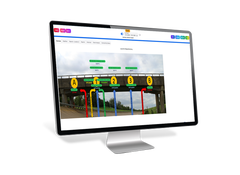
Finally, consider using AI powered monitoring software such as HBK Monitor 360 to support condition monitoring and predictive maintenance through automated anomaly detection, asset lifetime prediction, risk prioritisation, and actionable recommendations that enable faster, data driven decision making.
Guga Gugaratshan: One of the most significant trends is the growing use of artificial intelligence and machine learning to automate fault detection, diagnosis and predictive maintenance. Emerging technology trends, Industrial AI or Physical AI, will dominate this market. Rather than relying solely on predefined rules, AI-driven systems or physics informed AI system will quickly analyse huge volumes of measurements to learn normal machine behaviour and identify subtle anomalies to help deliver actionable insights.
Solutions such as HBK Monitor 360 exemplify this shift by enabling technologies that support Industrial AI (or Physical AI) – integrating multi-sensor data with AI-driven analytics to deliver meaningful, real-time insights. By combining physics-based measurements with advanced machine learning, these platforms enable predictive maintenance, enhance operational safety, and significantly reduce unplanned downtime and maintenance costs. Rather than simply providing raw data, they translate complex signals into actionable intelligence, empowering organisations to move beyond traditional condition monitoring toward true asset performance optimisation and data-driven decision-making.
In parallel, the field is experiencing rapid growth in wireless sensing technologies and deeper integration of condition-based monitoring (CBM) into broader digitalisation and Industry 4.0 ecosystems. Advances in low-power electronics, edge computing, and industrial IoT (IIoT) platforms are enabling scalable deployment of wireless sensor networks, reducing installation costs and expanding monitoring coverage to previously inaccessible or rotating assets. At the same time, CBM is increasingly being embedded within enterprise asset management (EAM) and digital twin frameworks, allowing vibration and multi-sensor data to be contextualised with operational and process information for more accurate diagnostics and prognostics. Research shows that such integrated approaches significantly enhance maintenance decision-making, enabling earlier fault detection, improved resource allocation, and reduced lifecycle costs (Jardine, Lin, & Banjevic, 2006; Lee, Bagheri, & Kao, 2015). As a result, predictive maintenance is becoming more accessible, scalable, and impactful – shifting from isolated monitoring systems to a core capability within data-driven, intelligent industrial operations.
Featured in All Instrumentation Industry (pp. 28 – 30) April 2026 – All Instrumentation Industry