MAIN MENU

Railway maintenance teams are being asked to achieve more with the infrastructure they already have. Keep trains moving. Maintain safety and reliability. Respond to issues earlier. And do all of this while managing aging assets, limited maintenance windows and the cost of taking track out of service.

At the same time, monitoring technology is evolving. But introducing new technology doesn't always mean replacing everything that is already in place.

When better monitoring doesn't have to mean starting again

Monitoring railway assets is only useful when the information it provides can support better maintenance decisions. But upgrading measurement capabilities can sometimes mean introducing new equipment, new processes and new ways of working.

That can make the path to better data more complicated than it needs to be.

An alternative is to build on the systems and knowledge already available.

This is the approach behind Argos newLight. Rather than replacing an existing Argos setup, it adds fiber-optic measurement capabilities to the platform. 

Existing Argos backend, analytics and reporting tools can remain in place, while new Fiber Bragg Grating (FBG) sensors provide an additional way to measure railway assets.

For maintenance and operations teams, this means evolving an existing monitoring approach rather than starting from scratch.

Addressing the challenges of railway environments

Railway infrastructure presents some demanding conditions for measurement. Traction currents, lightning, and electromagnetic interference can create challenges for traditional electrical sensors.

This is where fiber-optic measurement can make a difference.

The FBG sensors used by Argos newLight are inherently immune to electromagnetic interference. This makes them suitable for environments where electrical interference is a concern and helps provide reliable measurement data.

Installation can also be an important consideration. 

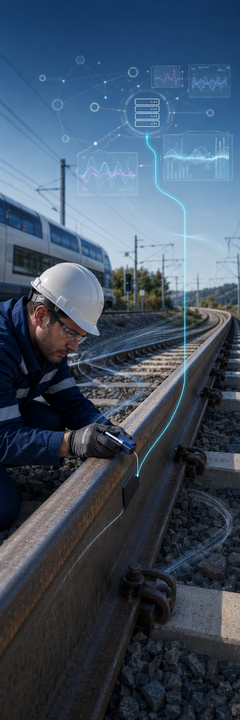
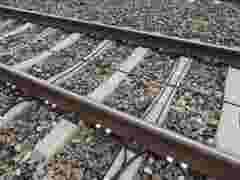
The sensors bond directly onto the existing rail, avoiding the need to replace sections of rail or carry out welding. The system can therefore be installed during routine maintenance windows, without requiring full track possession for the bonding step.

For operators, reducing installation complexity can mean less disruption and greater flexibility when introducing or expanding monitoring capabilities.

The system also supports connections of up to 1 km between trackside sensors and equipment cabinets, providing additional flexibility when planning installations.


Monitoring that can evolve with your needs

Railway monitoring requirements aren't necessarily fixed. Different locations, assets and applications can call for different approaches — and priorities can change over time.

A monitoring system therefore needs to be able to adapt.

Argos newLight is modular and scalable, allowing monitoring capabilities to be expanded as requirements or budgets evolve.

Two FBG sensor options are available:

  • FBG Pad (Flat) is a robust, low-profile sensor that bonds directly to the rail web and is suited to upgrading existing tracks, including electromagnetically challenging areas.

  • FBG Tape (Profiled) is an ultra-thin, flexible sensor that follows the rail web profile and is designed for protection and long-term durability, including applications with heavy axle loads.

The important point isn't simply the choice of sensor.

It's having the flexibility to select the approach that fits the application while keeping the measurements within the same Argos environment.

From measurements to maintenance decisions

The value of monitoring isn't in collecting more data for its own sake.

It's in being able to use that data to understand what is happening to your assets, and decide where maintenance attention is needed.

With Argos newLight, the Argos platform can support several railway monitoring applications:

  • WIM (Weigh-in-Motion) provides information on wheel and axle loads. 

  • WILD (Wheel Impact Load Detection) helps identify harmful dynamic wheel impacts.

  • OOR (Out-of-Roundness) helps monitor wheel profiles and identify wear patterns.

  • RBM (Running Behavior Measurement) provides insight into train behavior on the track, including issues such as hunting.

  • LONG (Longitudinal Force & Braking Analysis) provides information on braking and traction forces. 

Combined with HBK Monitor360 analytics, these measurements can provide continuous, objective insight into the condition and behavior of wheels, vehicles, and infrastructure.

That insight can support a shift towards condition-based maintenance, helping teams make decisions based on the actual condition of their assets rather than relying only on fixed inspection schedules.

Extending railway asset life with predictive monitoring
Argos light brochure mockup

Extend Asset Life, Measure the Truth and Predict the Future

Discover ARGOS® newLight, a fiber-optic sensor extension that brings reliable, EMC-immune railway monitoring to the proven ARGOS® platform. Enable smarter maintenance decisions, improve asset availability and extend the life of wheels, vehicles and infrastructure.

What can better insight mean for railway operations?

Moving towards condition-based maintenance isn't simply about having more information. It's about using information to make maintenance more targeted.

By identifying issues earlier, teams can better prioritize maintenance activities and plan interventions around actual asset conditions.

This can help support several operational priorities:

Reduce time to market picto

Monitoring asset condition can help identify issues earlier and maximize the lifetime of wheels, vehicles and infrastructure. In one customer application, wheel lifetime increased from around 1 million to 1.5 million kilometers.

Reliability icon

Continuous monitoring can support earlier identification of issues and more effective maintenance planning, helping reduce unexpected failures and operational disruption.

Cost reduction picto

Simpler installation, reduced infrastructure changes and more targeted maintenance can contribute to lower project and lifecycle costs.

Picto mission Blue

Objective, continuous measurements give maintenance teams a stronger basis for deciding what needs attention and when.

Building on experience

Technology is only part of the equation. Railway operators also need confidence that their monitoring systems are supported by the right expertise.

HBK brings more than 35 years of experience in wayside train measurement, together with in-house FBG sensor development and a dedicated railway team.

From sensors and data acquisition to algorithms, software and support, HBK provides the complete system from a single supplier.

Evolution doesn't always require replacement

Modernizing railway monitoring doesn't necessarily mean replacing the systems already in place.

Sometimes, the smarter approach is to build on what already works, extending existing capabilities with new technology where it can deliver the most value.

With Argos newLight, railway teams can add fiber-optic measurement to their existing Argos platform, helping address challenging measurement environments, simplify installation and gain continuous insight into asset condition and behavior.

The goal isn't simply to collect more data. It's to make better use of the data you already have, and turn measurement into more informed maintenance decisions.

Related Content