Engineering test and simulation data are highly contextual. To use it, engineers must be able to see the complete picture: Where, when, and how was it gathered? Which team gathered it, for what purpose? Which instruments were used, and how reliable are the measurements? Where is the data even stored, and who owns it?
That complexity makes managing and analysing engineering data challenging for many organisations. But it also makes engineering data particularly powerful and capable of providing detailed, nuanced, timely insights. In turn, these insights can make product development faster, more accurate, and more efficient, even when handling data at high volumes.
With the right tools and processes in place, organisations can go beyond simple test data management and unlock something much more impactful: engineering data intelligence.
In this Q&A, HBK’s Jon Aldred (Director of Product Management) and Mitchell Marks (Director of Automotive Strategy and Business Development) explore why engineering data management needs to evolve – and how organisations can take the next step.
Jon Aldred: The challenge comes from the volume, variety, and velocity of the data.
Let’s start with volume and velocity. The ability to acquire data continues to grow. Whether from connected products, vehicles, aerospace systems, or test environments, organisations are generating significantly more information faster than ever before.
However, the variety of the data creates its own challenges. Product development involves many disciplines, teams, data sources, and data types. In addition to this, simulation, testing, and validation activities all generate data in different formats and from different systems. Both of these things naturally create silos and make analysis difficult.
As a result, the percentage of data that organisations are actually able to use effectively is often relatively small. While engineering teams possess enormous amounts of information, turning it into actionable insight remains a significant challenge.
Mitchell Marks: Building on Jon's point, another challenge is simply knowing what data exists and how it could be used beyond its original purpose.
Much of the data that organisations collect is used for one specific task, but its value elsewhere often goes unexplored. Engineering data is an incredibly valuable asset that is underutilised.
There is also a growing knowledge gap within organisations. Engineers are increasingly asked to wear multiple hats, while subject matter experts have limited time available. As a result, organisations often lack the deep expertise needed to fully leverage the information they collect.
Teams can quickly become overwhelmed by the amount of data available and struggle to determine what is useful, what can be reused, and what insights can be extracted. As a result, valuable engineering information often goes unused, or it takes longer than necessary to generate meaningful outcomes.
Mitchell Marks: When I hear traditional data management, I think of finance data, business data, or other relatively structured forms of information.
Engineering data is fundamentally different because it carries a massive context layer.
Sensor selection and placement matter. Metadata matters. Asset information, software versions, test conditions, and configuration details all matter. Engineering data comes in highly specialised formats and varies significantly in quality and usefulness.
To successfully manage engineering data, organisations need to understand what the data represents, how reliable it is, and how it can be used. Once that foundation is established, modern tools such as AI and machine learning can begin to generate value from it.
Engineering data intelligence is about transforming complex engineering data into information that can actually be used to support decision-making and innovation.
Jon Aldred: Engineering data intelligence goes beyond simply storing files and retrieving them later.
It requires understanding what is contained within the data, interpreting proprietary engineering formats, and capturing the metadata that provides context. Organisations need to understand what makes the data important and which characteristics describe it.
While test data management focuses on organising and managing information gathered from tests, engineering data intelligence broadens the scope. First of all, it encompasses simulation data, validation data, and other engineering information that supports the product development process.
Secondly, achieving intelligence requires analytics, metrics, and automated calculations that help characterise the data and make it searchable, accessible, and meaningful. This is where teams move beyond management and begin extracting value from engineering information.
Mitchell Marks: One important point is that successfully managing engineering data already requires a certain level of intelligence. Engineering data is inherently complex, and effectively managing it requires tools that help users understand and navigate that complexity. They need mechanisms to assess quality, annotate data, identify useful information, and avoid wasting time on irrelevant datasets.
The larger the volume of data, the greater the need for intelligent ways to summarise, explore, and understand it.
Jon Aldred: Engineering organisations use a wide variety of tools, technologies, and file formats. Many of those tools create proprietary data formats, while different engineering domains collect information for different purposes.
Durability teams, NVH teams, ride and handling teams, and validation teams often operate independently, creating natural silos around their data.
The consequence is that information becomes difficult to find, reuse, and share. In many organisations, locating test data still requires finding the engineer who originally performed the test and asking them where the data is stored and how it should be interpreted.
That approach is not scalable. It creates inefficiencies, limits collaboration, and prevents organisations from fully leveraging valuable engineering knowledge.
Mitchell Marks: In addition to organisational silos, there are historical reasons why data became isolated.
Much engineering data was originally collected to generate a report, support a certification activity, or satisfy a regulatory requirement. Once that action was completed, the underlying data was often stored away and never revisited.
Today, however, organisations have access to new tools that make data more accessible and useful. Analysis can be democratised, dashboards can be automated, and information can be reused in ways that were not previously possible.
As a result, organisations are increasingly recognising that large amounts of engineering data represent untapped value. Data that was originally captured for a single purpose can often support many other activities across engineering and product development.
Mitchell Marks: The importance is enormous because data quality directly affects trust.
Organisations must be able to assess measurement uncertainty, test quality, and the reliability of their engineering information. Without confidence in the quality of data, it becomes difficult to trust subsequent analysis or decision-making.
Metadata provides the context needed to understand what happened during a test. Without that context, data can become useless to anyone other than the person who originally collected it.
Structure presents another challenge. Global organisations often have different teams, locations, conventions, and working practices, which can create inconsistencies in how information is organised.
Poor quality, poor structure, and inadequate metadata can lead to wasted time, incorrect conclusions, and difficulty reusing engineering information in the future.
Jon Aldred: Organisations invest enormous amounts of time and money collecting engineering measurements.
However, data only becomes valuable when users understand what it represents. Without context, metadata, and descriptions, engineering data becomes little more than a collection of ones and zeros.
HBK helps customers generate vast amounts of engineering information every day through sensors, data acquisition systems, and simulation technologies. The challenge is ensuring that information remains understandable, accessible, and useful long after it has been collected.
Engineering data intelligence provides the structure and context necessary to transform raw measurements into valuable engineering knowledge.

Jon Aldred: The key benefit is democratisation.
Organisations need standardised ways of processing data so that engineers are not individually creating their own methods and workflows. Standardisation improves consistency, quality, and repeatability.
When analysis is automated, it becomes available to a wider range of users rather than only a handful of specialists. This allows organisations to scale expertise more effectively.
At the same time, automation frees subject matter experts from repetitive work so they can focus on innovation, improving processes, and solving higher-value engineering challenges.
This creates a double benefit: broader access to engineering knowledge and more effective use of expert resources.
Mitchell Marks: For me, one of the biggest advantages is eliminating inefficient workflows.
Engineers frequently download data from one system, open it in a proprietary tool, export it to another application, and then move it again to create the analysis or report they need.
That process consumes significant time and introduces unnecessary complexity.
By bringing multiple data sources, analysis capabilities, and reporting tools together into a common environment, organisations can streamline workflows and make engineering information more readily available to those who need it.
Jon Aldred: Engineering organisations rely on many different tools and technologies, so any data management solution must accommodate that reality.
An open system provides flexibility. It works with different formats, integrates with existing processes, and allows organisations to adapt the platform to their own needs.
Aqira supports that flexibility through capabilities such as scripting, integration, and support for diverse engineering workflows. Rather than operating as an isolated tool, it functions as part of a broader engineering ecosystem.
One particularly important aspect is that Aqira does not require organisations to move all of their data into a proprietary repository. Data can remain where it already exists while Aqira indexes, connects, and analyses it in a standardised way.
This enables organisations to preserve their existing investments while improving accessibility, collaboration, and engineering insight.
Mitchell Marks: Openness is also about governance, traceability, and standardisation.
When organisations operate across multiple tools and vendors, maintaining control of processes becomes increasingly difficult. Teams can easily lose visibility into where data resides, which version is correct, and how information has been analysed.
By providing a central framework for accessing data and executing workflows, Aqira helps simplify those processes and establish a more reliable foundation for engineering data management.
Strong governance and traceability are essential building blocks for effective engineering data intelligence.
Mitchell Marks: There's no AI without IA – information architecture.
These technologies are only as good as the information they receive. Poor inputs produce poor outputs, while well-structured information enables powerful outcomes.
Structure, metadata, data quality, and information architecture are essential foundations for creating trustworthy engineering AI workflows.
Jon Aldred: We're only at the beginning of what AI will be able to do.
AI is extremely powerful when it is applied to well-defined engineering information.
What it cannot realistically do is solve engineering problems by simply ingesting massive quantities of raw data with no context.
The key is structure. Teams must organise engineering data and create meaningful metrics that describe it. Once those metrics exist, AI can help identify relationships between data from tests, simulations, vehicles, and other engineering activities.
Engineers must first identify what is meaningful. Metrics, KPIs, metadata, and engineering expertise provide the framework that allows AI to identify trends, relationships, and outliers.
Engineering data intelligence creates the context that AI requires to generate useful results.
Mitchell Marks: Equally important is maintaining a connection to physics-based understanding.
Subject matter experts must help develop the standards, methodologies, and analytical frameworks that sit behind AI systems. Machine-speed execution is valuable, but good results still depend on sound engineering principles.
Organisations need expertise in both information architecture and engineering to realise trustworthy value from AI.
Jon Aldred: Shorter product development cycles are driving increased reliance on simulation. Organisations want to perform more work virtually, reduce physical prototypes, and move validation activities so that they occur earlier in the development process.
That creates an important question: how much confidence should engineers place in simulation?
Engineering data intelligence helps bridge the gap between simulation and physical testing by creating a common source of truth.
Simulation engineers and test engineers need access to the same information and need confidence that they are working from the same data. Without that alignment, teams risk making decisions based on different assumptions and different datasets.
Engineering data intelligence provides the structure, metadata, and accessibility required to bring the virtual and physical worlds together throughout the product lifecycle.
Mitchell Marks: This concept sits at the heart of smart testing.
Every measurement is wrong—some are useful. The same can be said for simulation.
Simulation provides speed and flexibility, while physical testing provides validation and confidence. Engineering data intelligence allows organisations to evaluate both types of information together, so they can understand where confidence levels are high and where uncertainty remains.
That enables better simulations, more efficient testing, improved trust in results, and ultimately shorter development schedules.
It also creates the foundation required for AI and machine learning to generate meaningful engineering insight.
Jon Aldred: Engineering has been described as the art of the approximate. Every simulation is wrong, and every test is wrong—they are simply wrong for different reasons.
Engineering data intelligence helps organisations understand uncertainty, variation, reliability, and confidence. It acts as an enabler that brings physical testing and simulation together, breaks down organisational silos, and supports smarter engineering decisions across the product lifecycle.
Engineering teams are never short of data; the true challenge is understanding the data they have and turning it into trustworthy knowledge that can drive confident decisions.
To achieve this, organisations need a way to build collaboration, structure, and context into their data analysis processes.
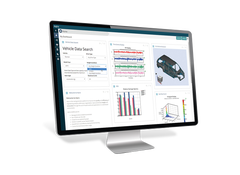
This is what Aqira was built for: providing an intuitive, web-based platform that unites engineering processes, encapsulates expertise, and drives collaboration across physical test and CAE simulation departments.