“Bird strikes can have fatal consequences for aviation”, says Geert Luyckx, who supervises the laboratory’s contribution to E-Break. “A collision with a bird doesn’t itself necessarily cause a lot of physical damage, but even a slight imbalance in an aero engine can eventually lead to severe damage to and failure of the engine. Investigating the consequences of bird strikes in aviation has been part of extensive test procedures for many years.”
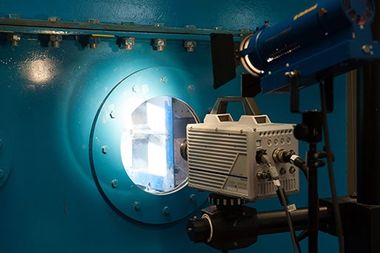
The department has gained a considerable reputation for analysing the consequences of bird strikes. A test facility was built in 1997 in the context of ‘Experimental simulation of birdstrike on airplane parts’ (part of the European BRITE-EURAM II project). Initial simulations were only of strikes by birds weighing 500 grams, but the facilities have been expanded for the new project to handle impacts by birds of 1.8 kilos, equivalent to the weight of a duck. There are also tests with weights of four kilos, equivalent to a goose. Although the aviation industry conducts tests using real birds, the laboratory in Ghent uses blocks of gelatine, which have similar mass and behaviour. The gelatine is cast in a bullet-shaped mould and then shot at the test object. The tests are standardised and are carried out in accordance with the specifications of aircraft manufacturers such as Airbus.