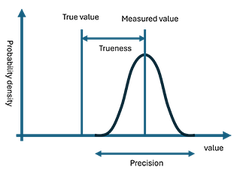
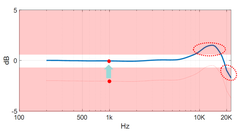
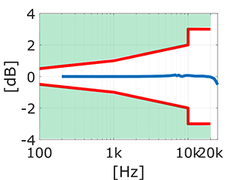
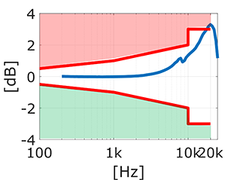
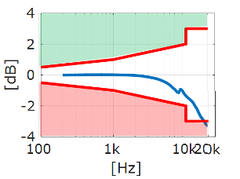
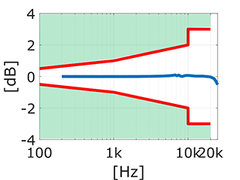
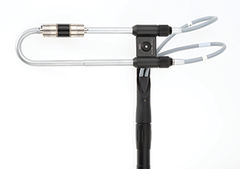
A lower-quality microphone will be unstable when exposed to temperature or static pressure changes and humidity, resulting in widespread non-repeatability. Lower-quality microphones also often result in less true and less precise measurements. This leads to fluctuating data, which is particularly problematic if your business relies on accurate sound measurements for product development, quality control, or compliance with standards. Imagine trying to precisely adjust a product with the help of measurement microphones that have poor trueness and precision. This would be a very challenging task.
The main limitation of an acoustic measurement setup is, with very few exceptions, the measurement microphone. Because it is the first link in the measurement chain and the real interface to the physical phenomena observed, the trueness and precision of the total chain will never outperform the microphones, regardless of how the rest of the measurement chain is designed.
In short, no matter how hard you try, it will be challenging to adjust your product with better trueness and precision than the weakest link in the measurement chain: the microphone you are measuring with.
Trying to compensate regularly for sensitivity deviation only partially solves the problem. First it is time consuming, and it often results in deviations in the high-frequency response.