


Système de navigation inertielle assistée par GNSS au niveau tactique, prêt à l'intégration

3DM-CV7-GNSS/INS
Le 3DM-CV7-GNSS/INS représente la nouvelle génération de la technologie de navigation inertielle, offrant des performances au niveau tactique dans un format OEM exceptionnellement compact et léger.
Ce capteur a été spécialement conçu pour les applications de navigation et de localisation où la taille, le poids et le coût constituent des critères essentiels.
Chaque appareil fait l'objet d'un calibrage complet en plusieurs points sur toute la plage de températures industrielles et intègre notre filtre de Kalman adaptatif étendu, qui a fait ses preuves, garantissant ainsi une précision et une stabilité optimales dans divers environnements d'exploitation.
Au-delà de ses fonctionnalités principales en matière de navigation inertielle, le 3DM-CV7-GNSS/INS intègre des récepteurs GNSS embarqués pour l'assistance GNSS, ainsi que des algorithmes d'orientation sophistiqués, une gestion interne précise du temps et un système de déclenchement d'événements hautement adaptable, permettant de mettre en œuvre facilement des applications de navigation complexes.
0,05° de roulis/tangage
Léger, avec un poids de seulement 15,6 g
| Document | type | langue |
|---|---|---|
| 3DM-CV7-GNSS/INS Data Sheet | Caractéristiques techniques | English |
| Micro D-to-USB Communication and Power Cable | Accessory Guide | English |
| Craft Cable with Micro DB9 and Flying Leads | Accessory Guide | English |
| Micro-D to RS232 Communication and Power Cable | Accessory Guide | English |
| 3DM-CV7-GNSS/INS User Manual (Online) | Manuel d'utilisation | English |
| C-Series Connectivity Board Interface Control Document | Notice de montage | English |
| GV7-CV7 Firmware Change Log | Release Note | English |
Sales documents
| Document | type | langue |
|---|---|---|
| 3DM-CV7-GNSS/INS Outage Test Report | Whitepaper | English |
| Document | type |
|---|---|
| 3DM-CV7-GNSS/INS CAD Model | CAD Step Files |
| MicroStrain 7-Series Inertial Sensor Firmware | Firmware |
| propriété | valeur |
|---|---|
| Type | Inertial Navigation (INS) |
| Performance Grade | Tactical Grade |
| Features | Accelerometer, Gyroscope, Magnetometer, Barometer |
| Random Walk | Accel: 29.5 µg/√/Hz, Gyro: 0.14 °/√hr |
| Bias Instability (Gyroscope) | 1.5 °/hr |
| Bias Instability (Accelerometer) | 18 μg |
| Hysteresis | Accel bias: 0.75 mg, Accel gain: 600 PPM, Gyro bias: 0.03 °/s, Gyro gain: 1000 PPM |
| Communication Port Type | Samtec FTS-105 (2x5) |
| Communication Interface | TTL serial, USB |
| Update Rate | IMU: 1000 Hz, EKF: 1000 Hz |
| Inputs/Outputs | 4xGPIO |
| Weight | 15.6 g |
| Weight | 0.55 oz |
| Size | 38 mm x 30 mm x 10.2 mm |
| Size | 1.49 in x 1.18 in x 0.40 in |
| Power Consumption | 0.896 W |
| Input Voltage | 3.2 V to 5.2 V |
| Minimum Operating Temperature | -40 °C |
| Maximum Operating Temperature | 85 °C |
| Minimum Operating Temperature | -40 °F |
| Maximum Operating Temperature | 185 °F |
| MTBF | 1327311 h |
| GNSS Constellations | GPS, GPS/QZSS, GLONASS, Galileo, BeiDou |
| GNSS Frequency Bands | L1C/A, L5, L10F, E1B/C, B1, B2 |
| GNSS Input(s) | Onboard Receiver(s) |
| Sensing Range (Accelerometer) | 4 g, 8 g, 16 g |
| Sensing Range (Gyroscope) | 250 °/s, 500 °/s, 1000 °/s |
| Sensing Range (Magnetometer) | 8 Gauss |
| Sensing Range (Pressure) | 1260 mbar |
| Accuracy | Roll/Pitch (dynamic): 0.05 °, Roll/Pitch (static): 0.05 °, Heading (dynamic): 0.25 ° |
| Ingress Protection Rating | Not Rated |
| Housing Material | Aluminum |
| Software | MSCL, ROS, SensorConnect, InertialConnect |
| Mounting Style | Embeddable, Screw Down, Precision Alignment |

Conforme à la NDAA
Deploy with confidence in government applications.

Sans ITAR
Simplify your global operations with reduced export restrictions. ITAR-free classification streamlines international deployment and reduces regulatory complexity.

Assistance L1/L5
Achieve superior positioning accuracy with dual-frequency GNSS reception. L1/L5 support provides enhanced performance in challenging environments and faster convergence times.

En-tête à double antenne
Maintain precise heading determination even when stationary. Dual antenna configuration delivers reliable azimuth accuracy independent of vehicle movement or GPS velocity.

RTK/PPP/SBAS
Adapt to any precision requirement with comprehensive correction support. RTK, PPP, and SBAS compatibility ensures centimeter-level accuracy across diverse operational scenarios.

Accédez au manuel d'utilisation en ligne complet de votre capteur. Trouvez des instructions de configuration détaillées, des procédures d'étalonnage, des guides de dépannage et des spécifications techniques en un seul endroit pratique.
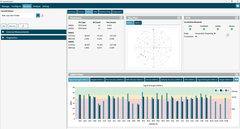
InertialConnect is the latest software solution for MicroStrain inertial sensors. With InertialConnect, you can easily configure your sensors, adjust parameters, upgrade firmware, and deploy preconfigured parameter files. You can also verify sensor outputs with intuitive visualizations, including times eries data, position data, and statuses.
InertialConnect is compatible with both PC desktop and Linux operating systems, making it your go-to solution for precision and efficiency in inertial sensor management.

SensorConnect is the next generation in desktop sensing software.
From configuration of nodes and starting networks, to collecting and analyzing data in real-time, SensorConnect provides a modern, powerful experience with our Wireless, Inertial, and Displacement products.
Using our intelligent data collection and graphing algorithms, you are able to visualize massive amounts of data instantly, and then zoom in on points of interest just as fast.
Built in MathEngine functionality allows for both real-time and post-processed math, such as generating FFTs, averages, RMS, etc.

SensorCloud is a unique sensor data storage, visualization, and remote management platform that leverages powerful Cloud computing technologies to provide excellent data scalability, rapid visualization, and user programmable analysis.
MicroStrain sensors can instantly upload their data to SensorCloud via an ethernet-connected WSDA-2000. Once uploaded, your data is securely stored in the Cloud and can be accessed from anywhere, or downloaded for offline use.
Configurable alerts can be set to help notify you of real-time event in your data.
MathEngine allows you to perform analytics on your data, all in the Cloud. Pre-built functions are available for ease of use, while IPython Notebooks allow advanced users to write custom scripts to be run on their data once, or on a schedule.

SensorCloud RTK is a multi-continent, IP-based RTK cloud network that delivers centimeter-level position accuracy from day one without complex setup, featuring network coverage across the U.S., Europe and beyond.
When paired with compatible MicroStrain navigation systems, it offers seamless scalability from development to production with professional technical support throughout.
The MicroStrain Communication Library (MSCL) is our open-sourced API that simplifies writing code to interact with our sensors. MIP SDK is a lightweight C/C++ library for interacting with MicroStrain G and C-series products via baremetal and resource constrained microcontrollers.
Both APIs are readily available and fully-documented on GitHub, featuring valuable tools such as full documentation, example code, and a quick start guide.
Robot Operating System (ROS) is an open-source, meta-operating system for your robot. It provides the services you would expect from an operating system, including hardware abstraction, low-level device control, implementation of commonly-used functionality, message-passing between processes, and package management. ROS can be used in building and simulating robotics applications, as well as unmanned ground vehicles and simultaneous localization and mapping (SLAM). MicroStrain has an open source License free (MIT License) series of drivers specifically designed and tested for ROS.
PX4 is an open source flight control software for drones and other unmanned vehicles. The project provides a flexible set of tools for drone developers to share technologies to create tailored solutions for drone applications. PX4 provides a standard to deliver drone hardware support and software stack, allowing an ecosystem to build and maintain hardware and software in a scalable way. PX4 is fully supported on MicroStrain’s 3DM-CV7 family of inertial sensors.
Le 3DM-CV7-GNSS/INS est un système de navigation inertielle assisté par GNSS ultra-compact de qualité tactique qui intègre des fonctionnalités de navigation avancées en seulement 15,6 grammes et 38 x 30 x 10 mm. Il est équipé de récepteurs GNSS à double fréquence intégrés étroitement couplés, ce qui en fait la prochaine évolution de la technologie de navigation inertielle pour les plateformes à espace restreint.
L'intégration étroitement couplée signifie que le GNSS et les capteurs inertiels fonctionnent ensemble au niveau de mesure brut, offrant ainsi des performances supérieures à celles des systèmes faiblement couplés. Cette approche permet une navigation plus précise, une meilleure gestion des pannes GNSS et des performances robustes dans les environnements difficiles où les signaux GNSS peuvent être faibles ou intermittents.
Le 3DM-CV7-GNSS/INS comprend des récepteurs GNSS à double fréquence intégrés pour une navigation entièrement autonome, tandis que le 3DM-CV7-INS nécessite une entrée GNSS externe. La version GNSS/INS fournit une solution tout-en-un avec une intégration étroitement couplée, éliminant le besoin de récepteurs GNSS séparés et simplifiant l'intégration du système.
Le système comprend des récepteurs GNSS à double fréquence intégrés prenant en charge les fréquences L1/L5 pour une précision accrue et un suivi robuste des signaux. Le GNSS intégré permet un positionnement autonome sans nécessiter de récepteurs externes, tandis que l'architecture étroitement couplée garantit des performances de fusion de capteurs optimales.
Les récepteurs GNSS embarqués fournissent :
Oui, l'IMU de qualité tactique avec filtre de Kalman étendu avancé assure une navigation précise pendant les pannes GNSS. L'architecture étroitement couplée assure une meilleure gestion des pannes GNSS par rapport aux systèmes faiblement couplés, garantissant ainsi une navigation continue dans des conditions difficiles.
Le 3DM-CV7-GNSS/INS est idéal pour :
Absolument. Le système comprend des algorithmes d'orientation sophistiqués, une gestion interne précise du temps et des systèmes de déclenchement d'événements hautement adaptables conçus pour des applications de navigation complexes. Sa taille compacte et ses performances de niveau tactique en font un outil idéal pour la robotique autonome nécessitant une navigation fiable.
Le filtre de Kalman étendu adaptatif éprouvé permet une fusion sophistiquée des capteurs entre les récepteurs GNSS intégrés et l'IMU de qualité tactique. Il s'adapte automatiquement à l'évolution de la dynamique, garantit une précision et une stabilité optimales dans divers environnements opérationnels et fournit des performances de navigation supérieures.
Le système combine des capteurs inertiels de qualité tactique, des récepteurs GNSS à double fréquence, une intégration étroitement couplée et un filtrage adaptatif pour maintenir la précision dans les environnements difficiles. L'étalonnage multipoint complet sur toute la plage de températures industrielles garantit des performances constantes quelles que soient les conditions opérationnelles.
Oui, dans le cadre de la gamme de produits MicroStrain by HBK, le 3DM-CV7-GNSS/INS est conforme à la norme NDAA, ce qui le rend adapté aux applications du gouvernement américain et des infrastructures critiques nécessitant des solutions de navigation sécurisées.
Le 3DM-CV7-GNSS/INS établit de nouvelles références avec son poids de 15,6 grammes, ses dimensions de 38 x 30 x 10 mm, ses performances de niveau tactique, son GNSS à double fréquence intégré, son intégration étroitement couplée et sa classification sans ITAR, offrant des capacités inégalées dans un boîtier aussi compact.
 6212-3006
 6212-3024