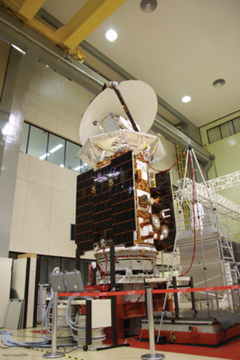
The European Space Agency (ESA) is always striving to stay at the very forefront of space mission and launch technology.
But doing so means its testing requirements are constantly evolving; new technology and approaches mean new forms of tests, under new conditions, with new requirements for precision.
At the same time, ESA has a duty to protect the well-being of its people – which makes absolute reliability essential. As a result, the agency has a policy of preventatively replacing or refurbishing facility after it reaches the end of life (EOL) stage. Doing so allows ESA to maintain extremely high levels of reliability in its space test facilities.
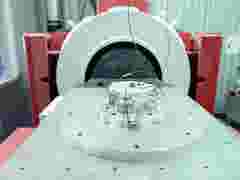
It was a combination of these requirements that led ESA to explore an upgrade for its HBK V964 water-cooled electrodynamic shaker.
Vibration testing is crucial for ensuring that every component, subsystem, and system in a piece of equipment can survive the intense vibrations of launch and space exploration.
This form of testing is used in a wide range of applications, including:
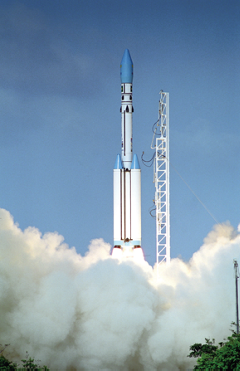
- Launch simulation, modelling the impact of intense vibrations that occur during takeoff for space vehicles.
- Qualification testing to meet regulatory standards for reliability of hardware in harsh environments.
- Flight acceptance testing (FAT), an aspect of final quality checks which ensures that space vehicles and their individual components meet necessary performance criteria.
- Design validation for analytical models and simulations, ensuring that the spacecraft’s structural and functional design exhibits the behaviours that are expected under a variety of loads.
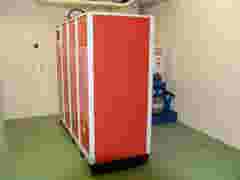
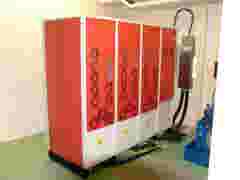
This particular shaker’s amplifier had reached the end of its 20-year lifespan, having been used for thousands of hours.
Equally, new forms of space technology brought with them a new demand for testing the vibration of components and equipment under much higher g-levels than were previously required. To get accurate results from these tests, ESA needed a shaker that could handle the strain – and still deliver results that its engineers could rely on completely.
For both of these reasons, ESA concluded that its shaker needed an upgrade, so that it could continue gathering reliable, accurate, and complete test data.
But this task wouldn’t be completely straightforward. The V964 shaker, while still powerful, was more than 40 years old, which would make finding a compatible amplifier difficult.
ESA needed help finding a product that would meet its requirements for compatibility, robustness, and precision. So the team reached out to ENMO – our trusted partner and provider of HBK’s measurement solutions in the Benelux region – for support.