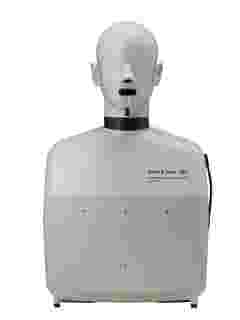
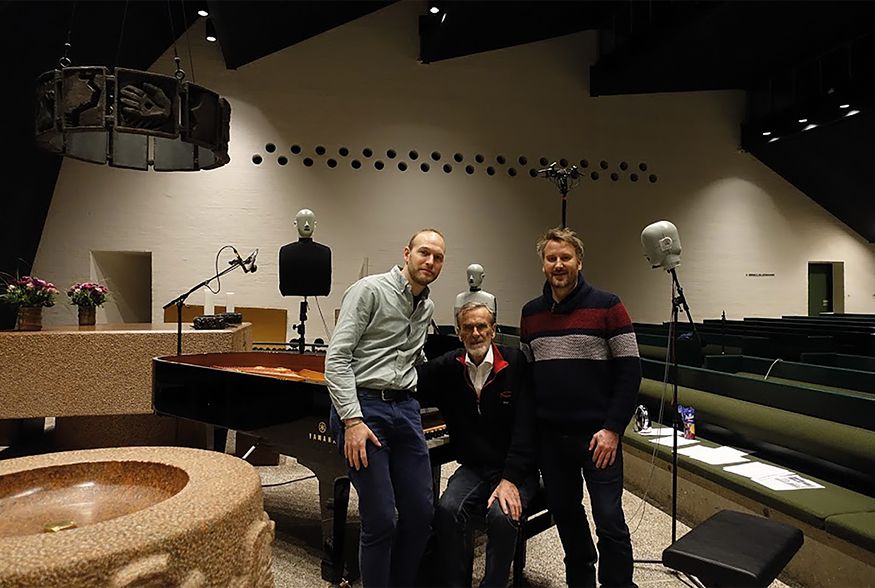
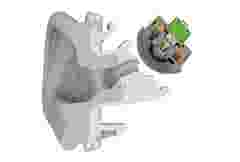
We discovered that High-frequency HATS Type 5128 at the chosen ambient position gives a good sense of 3D and a super-clear sound image, including rich detail of the grand piano’s sound and with precise room information. Compared to Sound Quality HATS Type 4100, Type 5128 gives very precise location information, proven by panning the HATS within the sound field and noticing the ease, or not, of small details following the same movement. With Type 5128 the details are sharper and give a deep 3D-experience, especially noticed in the reverberant information that is more precise and defined than the other HATS.
Sound Quality HATS Type 4100 produces a very open, detailed soundscape with plenty of spatial information, with maybe a slightly muddy representation of reverberant sounds.
HATS Type 4128 lies between the other two regarding depth and details; better than Type 4100, but not as intense as Type 5128.
Overall, it seems that having Type 5128 as the main receiver is the best choice, giving our recordings well-defined details and spatial information. However, when using Type 5128 in a close-miking situation it seems that the sound recorded is too focused and doesn’t, for example, capture the full timbre of the piano. Type 4100 and Type 4128 appear to be better for close-miking where the level of the direct source is more dominant than the reverberant sounds.
Binaural recordings made with the sound quality HATS moving in the room provide a very fine, smooth sense of a sound source traversing the space. We will use these recordings that contain motion information as source material for new digital compositions.
By using a close-miked recording as a source, we will test whether digital binaural plugins in the mixing chain can reproduce the same quality of sound and space information as a Brüel & Kjær HATS recording at a set location. The plug-in allows us to spatially move the source in x- and y-planes, so we can virtually move it from being by the piano to the same spot where the HATS was in order to make direct comparisons. The last step will be to down-edit the recordings of the four compositions to make twin-tracks in both stereo and binaural formats. For best effect, the binaural format should be played through headphones to reproduce the music with a clear sense of 3D space – listeners should feel that their ears replace the HATS ears.