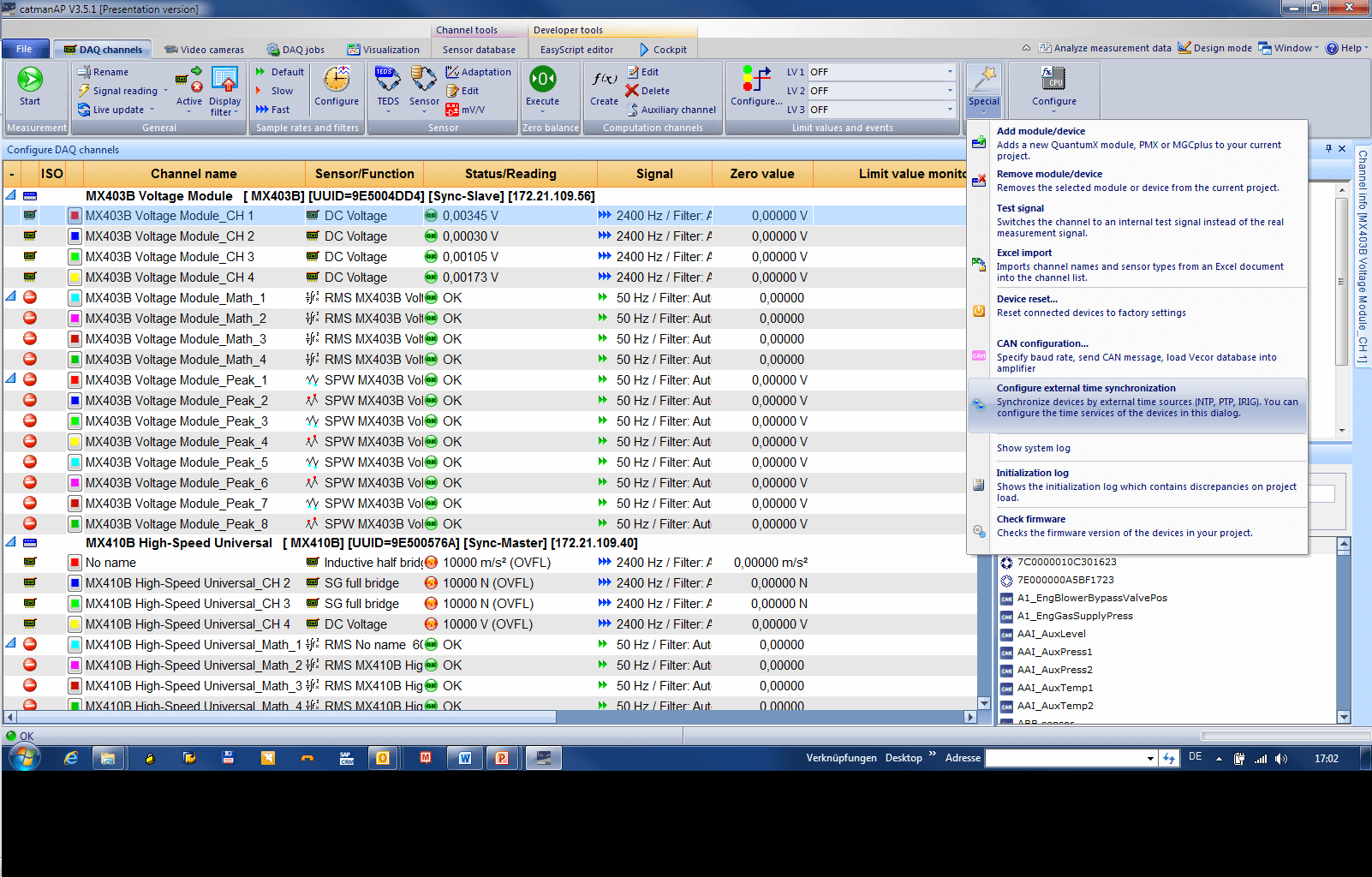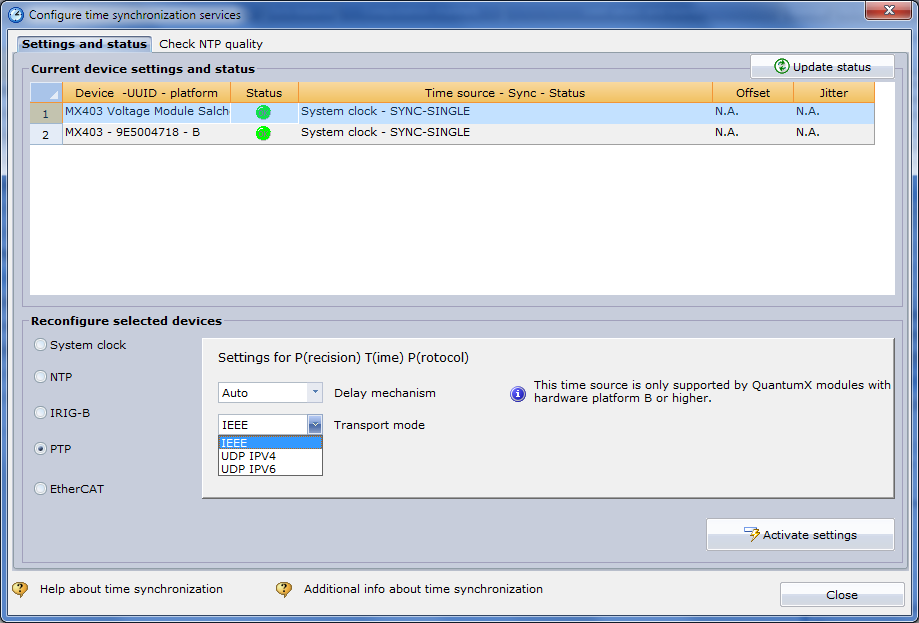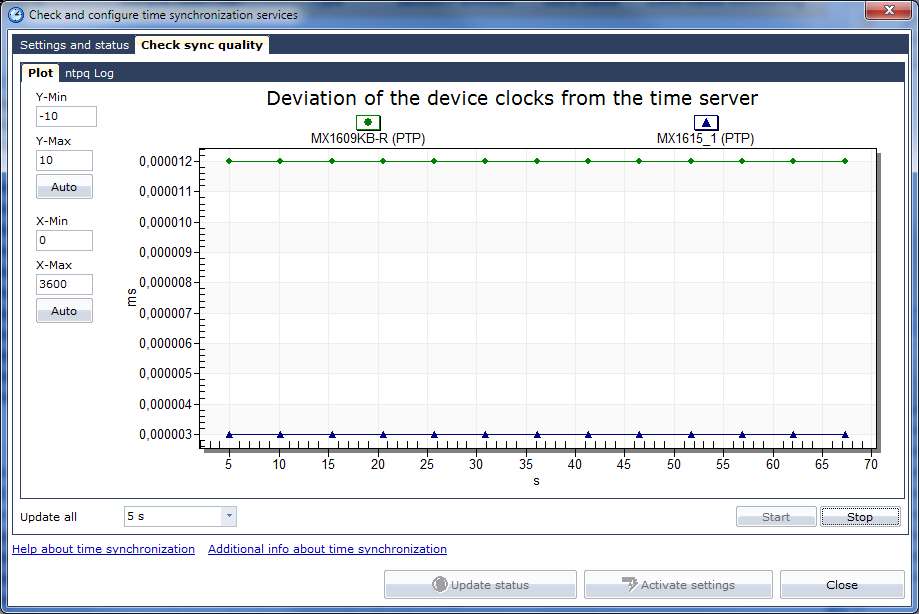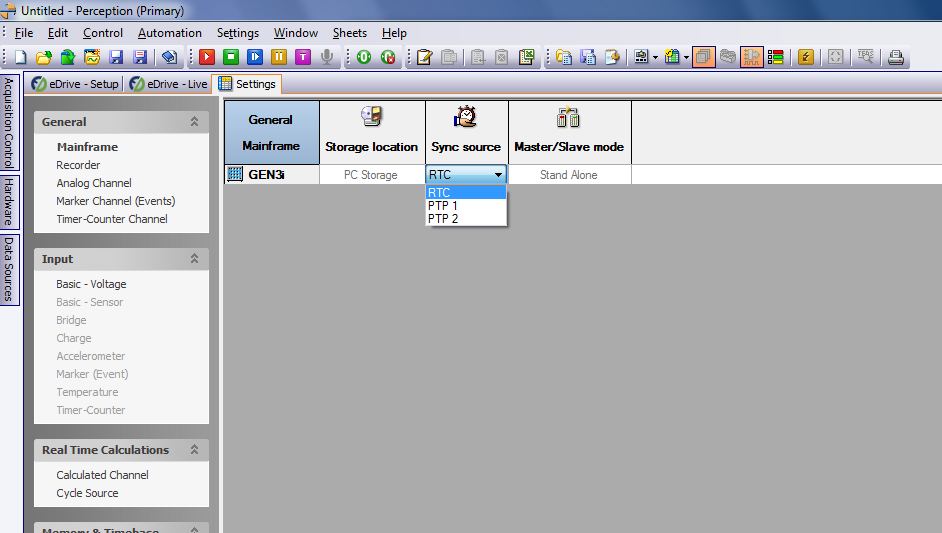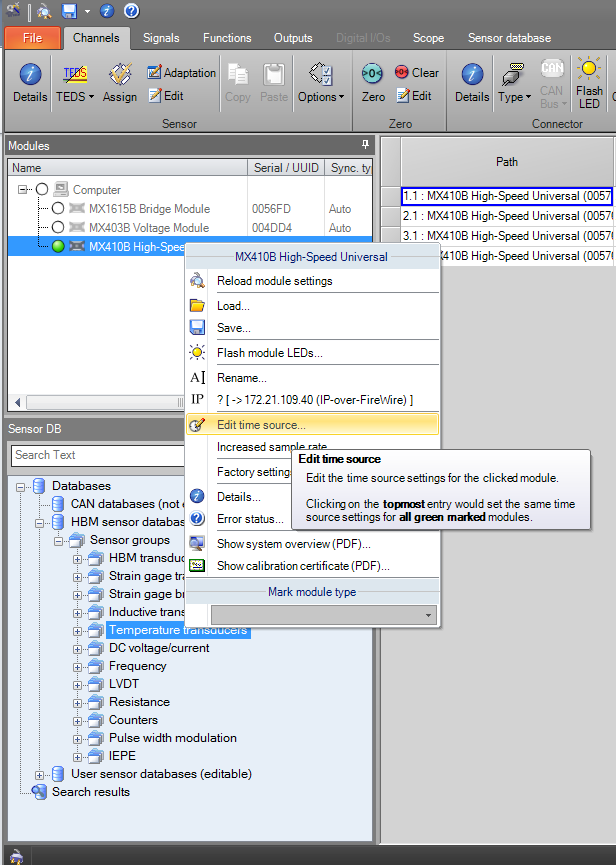
Absolute time is needed when measurement data needs to be mapped to a certain real-life event or when two or more DAQ systems are not on the same network. An example where absolute time might be relevant is when the load influence of a train crossing a bridge needs to be monitored and identification of the train would be required to support any further activities such as overload warning. The absolute time is explicitly available when it is represented by a clock.
An absolute time source can be:
Most test and measurement applications or processes can use a relative system time, particularly when a test is reproducible and the relative timing of the signals to each other matters the most. If needed at all, absolute time might be part of the META data or integrated in the file name itself, for example 2015-08-03_RLDA-test_Viper_No12.
Sometimes time accuracy is mixed up with reaction, latency or real-time. Real-time ability can be reached by using for example real-time busses like EtherCAT, ProfiNET, EtherNET/IP or many other proprietary field busses.
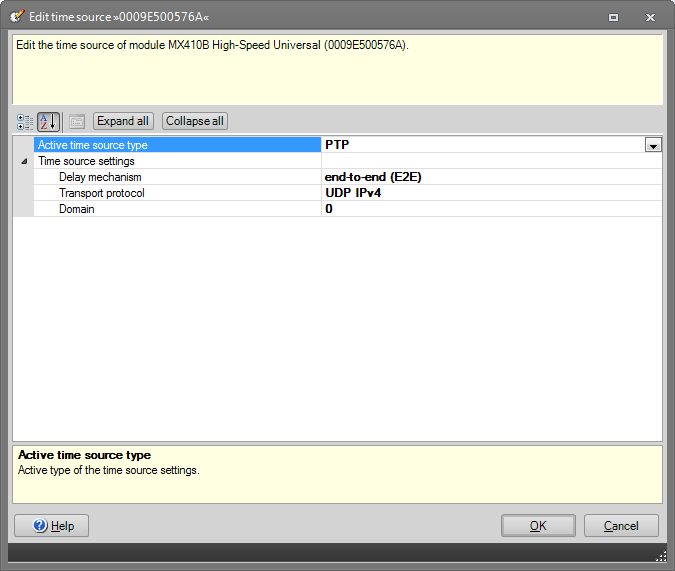
PTP is an international standard specified in IEEE1588 and revised in 2008 with version 2. The Precision Time Protocol (PTPv2) is a network-based time synchronization communication protocol that can be used to synchronize clocks of different device types, providing time accuracy in the sub-microsecond range. PTPv2 is based on Ethernet. Compared to NTP, PTPv2 is embedded in the physical layer and thus we talk about true hardware-based time stamping for precise time synchronization of all participants in an Ethernet network.
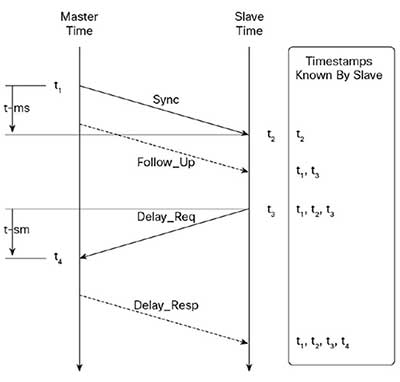
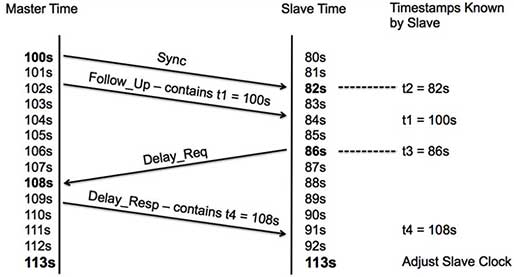
PTPv2 is a relative time sync mechanism. One participant is selected to work as the master clock, which delivers time sync messages to all slaves. The sync process starts with a time sync telegram to the network. All participants (slaves) calculate the time difference (delay) between their local time and the given master clock and adapt step by step to a time difference less than 2 µs. For example, assume that the PTP source sends a PTP message advertising a time of 1:00:00 pm. The problem is that this message will take time to reach its destination. If the PTP packet took 1 second to reach its source, it would be 1:00:01 pm, when the source receives a PTP packet indicating 1:00:00 pm. So the network latency needs to be compensated, which is achieved through a series of messages exchanged between master and slave clocks, as shown in the next Figure.
Here is a list of some typical applications that highlight the benefits of PTP: