




MAIN MENU
usp-icon

Our customer must deliver maximum reliability in increasingly complex cordless tools, ensuring professional users experience unparalleled uptime on demanding jobsites.

usp-icon

By implementing a comprehensive Design for Reliability (DfR) program using HBK’s ReliaSoft suite, our customer proactively predicted risk, modeled system performance, accelerated validation, and scientifically proved the toughness of its designs.

usp-icon

This data-driven approach provided objective evidence of jobsite reliability, accelerated innovation without compromise, reduced warranty costs by 11%, and reinforced their brand by ensuring the unwavering trust of trade professionals.

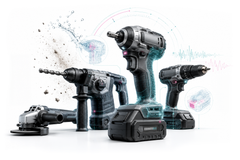
Our customer is a leading manufacturer of heavy-duty power tools, hand tools, and accessories for professional users worldwide. Their brand is synonymous with reliability, durability, performance, and innovation. With revolutionary products, they cemented their position as a leader in the transition to jobsite-wide cordless solutions. The company’s mission is to provide products designed to withstand the toughest jobsite conditions and deliver consistent, trade-focused performance.

The Challenge

Reliability isn't just a feature for our customer; it's the foundation of their entire brand identity. A tool failure on the job site doesn't just mean a warranty claim; it means lost time, lost productivity, and a potential loss of trust for a professional tradesperson.


This unwavering commitment to reliability presents several key challenges:

  1. Extreme Jobsite Conditions: Our customer’s products are subjected to drops from height, constant vibration, concrete dust, water intrusion, and extreme temperatures. They must be designed to not just survive, but thrive in these environments. 
  2. Increasing System Complexity: The shift from simple corded tools to sophisticated cordless systems introduces immense complexity. Modern tools are an integrated system of advanced batteries, brushless motors, complex electronics and software. This creates countless new potential failure modes. 
  3. Rapid Innovation Cycles: The market demands constant innovation. Our customer must introduce new, more powerful, and smarter tools at a rapid pace, putting immense pressure on traditional, time-consuming testing and validation methods. 
  4. Upholding the Brand Promise: Any perceived decline in quality would be catastrophic for the brand's hard-won reputation as industry leaders in delivering reliable & durable products.

The Solution

To conquer these challenges, our customer standardized a robust Design for Reliability (DfR) culture throughout its global engineering process, using the HBK ReliaSoft suite as the analytical backbone for this initiative. This allowed their teams to replace assumptions with data and systematically engineered reliability into every product.

  1. Proactive Risk Mitigation with XFMEA: From the earliest concept stages, engineers used XFMEA to analyze potential failure modes. Whether it's the trigger assembly on a new impact driver or the battery contacts on their larger tools, this process identified risks so they can be designed out before prototypes are even built.
  2. Total System Modeling with BlockSim: A cordless tool is more than its motor. Using BlockSim, engineers created a reliability model of the entire system -battery, electronics, motor, and mechanicals. This allowed them to see how the reliability of a single component (like a switch) affects the overall tool uptime, ensuring that they focus their efforts on the most critical parts. 
  3. Jobsite Simulation with Accelerated Life Testing (ALT): No one can wait five years to see if a tool lasts. The ALT module helped engineers design tests that simulated years of harsh jobsite use in a matter of weeks. By applying increased stresses like heat, vibration, and load, they rapidly gathered data on a product’s long-term reliability and durability. 
  4. Lifetime Insights with Weibull++: Data from ALT and field returns are fed into this tool which analyzed the data to precisely model the expected life of a component and predicted its failure rate over time. This provided the hard evidence needed to confirm that a tool meets its reliability targets. 
  5. Tracking Toughness with the Reliability Growth Module: As prototypes are tested ("torture-tested"), they inevitably reveal weaknesses. As engineers implemented design fixes, the Reliability Growth module was used to track the improvement in the tool's reliability, providing quantifiable proof that the product is getting tougher and will be ready for launch.

Results & Impact

Integrating this DfR strategy at our customer delivered tangible results that directly reinforced their market leadership.

  • Scientific Proof of Reliable & Durable: Instead of just claiming it, our customer used statistical data to prove it. This provides deep internal confidence and a powerful marketing message.
  • Faster Innovation, Guaranteed Toughness: Accelerated testing allowed for quicker validation of new designs, enabling a faster pace of innovation without ever sacrificing the core promise of durability.
  • Reduced Warranty Costs: By systematically identifying and eliminating failure modes before launch, the number of tools returned for repair dropped by 11%, directly impacting the bottom line.
  • Unbreakable Customer Loyalty: For a professional, a tool that never quits is invaluable. By consistently delivering products that withstand real-world abuse, our customer has built a level of trust and loyalty that competitors find difficult to break.

Conclusion

In the world of professional trades, tools are not disposable - they are the instruments of a livelihood. For our customer, upholding their brand promise is paramount. By leveraging the comprehensive analytical power of the HBK ReliaSoft suite, they transformed reliability from a simple goal into a rigorous, data-driven science. This ensures that every product bearing the company name is not just designed to do the job, but engineered to survive the job site, today and tomorrow.

Technology Used