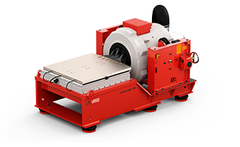
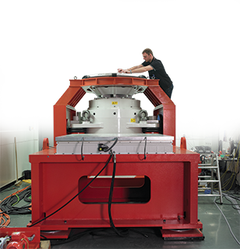


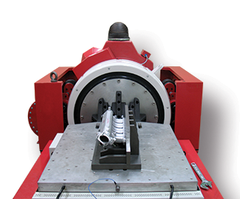
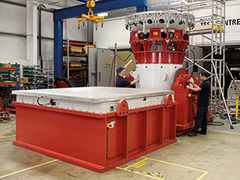

Selecting a vibration test system isn’t just a purchasing decision – it’s an engineering judgement call that directly affects product reliability, test accuracy, and long-term operational efficiency. Whether you're validating a new design, running production tests, or simulating harsh real-world environments, the right system ensures your results are meaningful and repeatable.
This guide breaks down the essentials of choosing a vibration system that fits your application, your payload, and your performance requirements.
A vibration system must do one thing exceptionally well: deliver controlled, predictable mechanical motion. But the demands placed on that system vary dramatically depending on the test. From high-displacement low-frequency sweeps to high-g random profiles, the system must be capable of producing the required motion without distortion, instability, or overload.
Choosing the wrong system can lead to:
Getting the selection right from the start saves time, money, and engineering effort.
Every vibration system selection begins with two sets of information:
Beyond the payload and test profile, several practical considerations influence system selection. These are:
System Force Capability
Can the system move the largest expected payload at the highest required test levels? This is the fundamental sizing question.
Performance Limits
Every system has constraints:
Your test must fit comfortably within these limits – ideally with 20 – 30% headroom.
Payload Support
Large or top-heavy payloads may require:
Ignoring support requirements can lead to armature sag, distortion, or damage.
Operating Environment
Where the system will live matters:
A system that’s perfect on paper may be impractical in your facility.
Application Type
Is this a general‑purpose test facility or a dedicated production setup?
This recorded webinar offers a concise introduction to shaker testing, covering vibration testing fundamentals, shaker systems, and typical applications, along with practical insights from a live Q&A session.
To illustrate the selection process, the original document uses the LDS V830‑335 SPA10K as a reference system. Its key performance metrics include:
These values represent the system’s maximum capabilities – and they form the basis for determining whether it can handle a given test.
The document outlines two detailed sizing workflows:
Both follow the same philosophy:
Choose a system you believe is suitable – then prove it with calculations. Always aim for 20 – 30% spare capacity.
This ensures the system isn’t constantly operating at its limits, which improves reliability and reduces maintenance.
Selecting a vibration test system is part science, part engineering judgement. The key is to:
A well-chosen system delivers accurate, repeatable results – and protects both your equipment and your product.