A system in a challenging environment
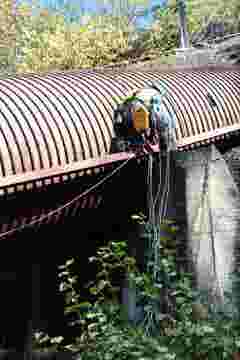
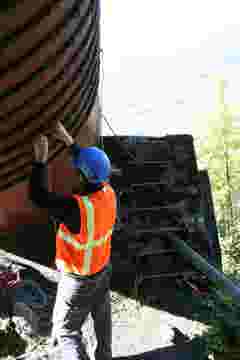
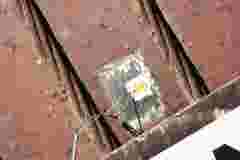
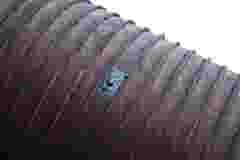
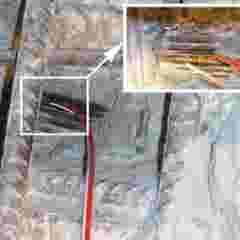
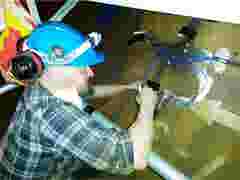
Monitoring was provided by traditional foil strain gauges. These strain gauges, 16 in total, were installed with the support of a company specializing in works on these kinds of sites, which require safety precautions for technicians exposed to falling hazards, etc. "In order to access the deformation data of interest to us, we positioned strain gauge in generator configuration along the penstock, to the right of the penstock supports, supplemented with 2 strain gauges (located at 3 o'clock and 9 o'clock) 2 m uphill from each support. We mathematically combine the data provided by these different strain gauges to arrive at the desired synthesis values," adds Claire Pérot.
The water running through the penstock originates from the glacier and is around 5ºC (41ºF), in both summer and winter. It does not vary much, so there are no major temperature compensation issues to deal with, except when EDF needs to empty the penstock. In summer, the ambient temperature can rise to 30ºC (86ºF), or even higher. So taking temperature readings on the penstock allows us to compensate for variations in extensometric measurements.
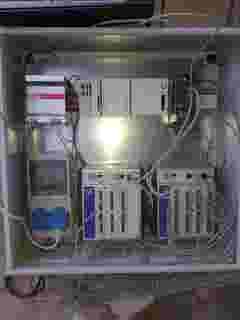
"The strain gauges are wired in half-bridge circuits with a thermal compensation strain gauge to take temperature variations into account. Because of the significant distance between the strain gauges and the control unit (up to 80 m at the greatest distance), it was necessary to compensate for line lengths, which we did by using a 5-wire circuit," explains Pascal Chaffot of HBK France's Engineering department, who was in charge of implementing the application. In addition to the penstock temperature mentioned above, measurements were also taken for the ambient air temperature and the control unit's internal temperature.