OGOWin: offshore wind farm
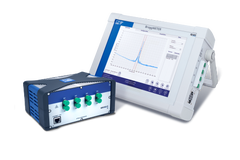
Has the wind turbine the ability to withstand the loads it is subjected to at sea? That was the challenge facing HBK, when the company provided testing and measuring equipment for the first prototype of an offshore wind turbine with a jacket support structure within the framework of the OGOWin research project.
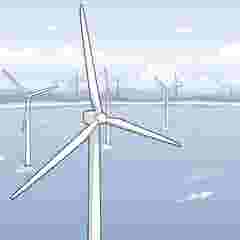
Offshore wind farms comprise many wind turbines installed far off shore in the open sea and permanently producing clean current. This is an attractive concept which, however, is not easy to implement because of the stresses resulting from wind, waves and saltwater to which the materials used are subjected. For this reason, the German Federal Ministry for the Environment, Nature Conservation and Nuclear Safety (BMU) subsidizes the research and optimization of disarrayed foundation structures for offshore wind power plants (OGOWin) regarding material usage, the assembly process and new manufacturing methods for the carrying structure of wind power plants.
Prior to the actual use of the foundation structures on the sea bed, the OGOWin project focuses on onshore research of the offshore plants. The two main components of a wind power plant are the carrying structure (jacket + tower) and the actual nacelle with the rotor blades for generating electric power from the wind. The OGOWin project focuses on the jacket as the object of study. Researchers aim at minimizing material usage, because steel is expensive and a jacket weighs about 350 tons. In addition, the status of the wind power plant is to be continuously monitored. Maintenance cycles and the residual service life are inferred from the results.