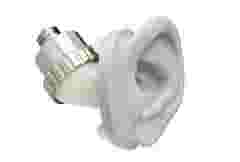
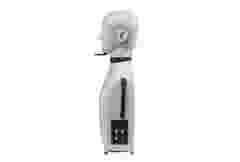
We collected the geometries of a large population of human ears using MRI scanner technology. The full ear canal geometry including the bony part adjoining the eardrum was captured. By post-processing all the data, we were able to determine an average human ear canal geometry.
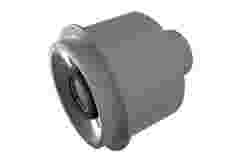
The new ear has an anatomically correct ear canal with an angled eardrum simulator positioned exactly at the location of the eardrum to closely match the human ear. A new design of the pinna interior structure was used to create a more robust ear capable of withstanding more wear and tear. The transition between the soft part (the silicone ear) and the hard material (the end of the ear canal where you attach the eardrum simulator) was designed to retain the transition from the soft to the bony part of the human ear canal.
We also added a soft silicone band all around the ear for better sealing of over-the-ear headphones. A new click-on system, with a quick release of the ear simulator, allows for easy ear switching if needed. Finally, we designed a new mechanism to quickly attach and detach the new eardrum simulator from the ear, enabling the use of custom outer ear and ear canal geometry.