Measured quantities for the approval of railway vehicles
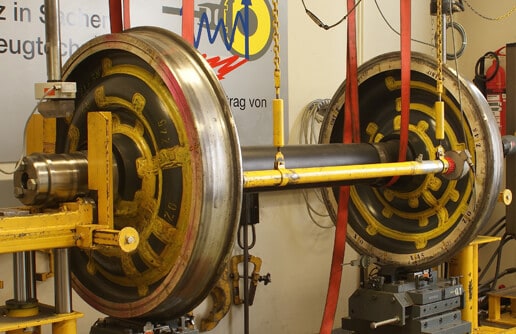
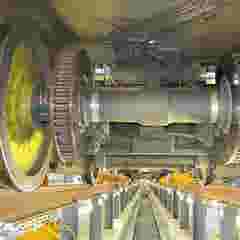
Wheel-rail forces are among the important measured quantities for the approval of railway vehicles. It is essential to measure these forces during operation; this requires the use of measuring wheelsets. Both the vertical and lateral force component need to be determined. DB Systemtechnik has developed special, strain-gage based measuring wheelsets for these measurements. The forces acting between wheel and rail cause deformation of the wheels and wheelset shaft, which is measured by the strain gages. Based on the interdependencies between force and resulting strain determined by an elaborate calibration procedure, complex software is used for online conversion into the force components Q (wheel-rail contact force), Y (constraining force in the curve) and Tx (forces in the longitudinal direction resulting from braking and starting torque as well as differences in rolling radius). At the Minden test center, strain gages are installed on the bright metal wheelsets converting them into precise test and measurement equipment. Depending on the geometric characteristics of wheels and shaft, two major methods of measurement are available - one taking into account the wheels and shaft as strain gage installation points, the other one using the strain data from the wheels exclusively. Both methods of measurement involve installation of up to 96 strain gages on the wheelset and their connection in full-bridge configuration. Signal lines are led into the hollow axle through a hole. The complete electronics including amplifiers and signal transmission is located at the end of the axle. When the strain gages, the signal lines and the electronics have been installed, the measuring wheelset needs to be calibrated. For this purpose, the complete wheelset is integrated into a specially developed test bench. It enables both vertically and horizontally precisely defined forces to be applied to the wheels without mutual interference and the response of the full bridges to be determined. Another important means of acquiring measurement data for analyzing dynamic vehicle characteristics are accelerometers installed on the levels of the unsprung masses (mainly the wheelset) and - if available - the first spring stage and the second spring stage. They measure the accelerations occurring on these levels in lateral, vertical as well as longitudinal direction and, depending on the spring stage, in different frequency ranges. Relative displacements form the third major group of measured quantities. In general, they only play a subordinate role in the approval of vehicles, however, they often are considered indicators for understanding specific vehicle characteristics. The Dynotrain project expressly chose to use them as major quantities to enable the simulation models of the vehicles under test to be compared with the measurement results taking into account the incorporated test variations. Last but not least, there is the group of measured quantities describing the track. The following values were continuously recorded:
Longitudinal profile (every 16 cm)
Track alignment (every 16 cm)
Super elevation (every 16 cm)
Track gage (every 25 cm)
Track cross profile left/right (every 25 cm).