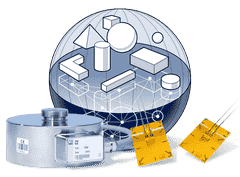
Since its earliest days, the internet has connected people to other people. However, an emerging part of the internet doesn’t connect people to other people; it connects people to things. For instance, barcodes and scanners connect packages to the internet so they can be tracked until they reach their destination. In industry, internet-connected equipment allows companies to have more control and insight over their production processes. As this so-called Internet of Things (IoT) grows, it is going to become more and more dependent on transducers, which sense information that can then be uploaded to the internet.
At its most basic, a transducer is a device that converts one type of energy into another. There are two kinds of transducers; sensors and actuators.
Sensors are transducers changing a physical impact into an output signal. This may be a thermocouple giving out a measurable change in voltage if heated up or down. Charge occurs if a force is introduced into a piezoelectric force washer.
Tranducers are enabling industry to leverage big data, analytics and machine learning technologies in various processes. Specifically, transducers can detect signs of performance and machine degradation, increasing the efficiency and mitigation of breakdowns. Using Big Data techniques and transducer technology, companies can spot previously-hidden factors across the entire production cycle. This results in breaking down barriers between engineering, manufacturing and support departments. The Industrial Internet of Things is still in its infancy, so there are still many opportunities for companies to realize a first-mover advantage. This cresting wave of disruption will likely create all-new groups of leaders and followers.
While analytics and other Big Data technologies might be the ‘brains’ of the IIOT, transducer systems are the nervous system; continuously gathering information and streaming data to processing centres. Industrial internet systems depend on sensors for continuous, accurate information to measure pressure, temperature, volume, orientation and other parameters.
A lot of attention has been given to the roles of automation and machine learning in future industrial technology. However, software advancements will only provide limited capabilities without cutting-edge sensor technology.
Consider the following examples of industrial transducer technology: