

Repair
Fast, certified repairs using original parts to keep your equipment accurate and reliable.
Read More

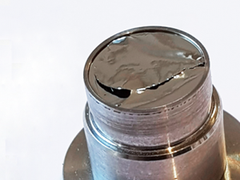
Our microphones are assembled in cleanroom environments to prevent contamination by microscopic particles. Any particle or contamination trapped inside the microphone will compromise the microphone stability. When the diaphragm is punctured, particles enter the microphone body, and restoring the original cleanliness and precision would require more effort than manufacturing a new unit.
Repairing a microphone would involve:
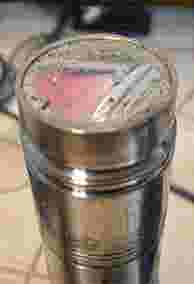
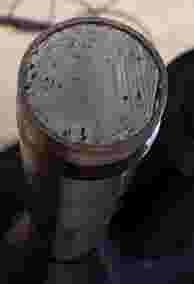
Even with all this effort, the new diaphragm and parts would alter the microphone’s sensitivity and frequency response. This means the technical specifications would no longer match the original, leading to inconsistencies in measurement data, even if the serial number remains the same.
In short, repairing a microphone is not cost-effective and compromises data integrity. That’s why replacing it with a new unit, complete with a new serial number, is the best way to ensure consistent, high-quality measurements.
Think of a high-precision microphone not as a simple piece of hardware, but as a finely-calibrated scientific instrument. Just as you wouldn't patch a surgeon's scalpel, we don’t repair these microphones. This ensures that every measurement you take is as accurate and reliable as the first.

HBK microphone cartridges are suited for a wide range of measurement applications. Four types of microphones define the sound field and adaptability for specific environments, industries, and measurement conditions, and are referred to as free-field, pressure-field, diffuse-field, and special microphones. HBK microphone cartridges are supplied in 1 inch, 1/2 inch, 1/4 inch or 1/8 inch diameter size, and require a microphone preamplifier.

Special microphones designed for specific measurement applications. HBK provides special microphone types ranging from outdoor microphones, surface microphones, array microphones, and probe microphones. Each microphone provided with ranging adaptability for specific environments and measurement conditions.

A microphone set combines a HBK microphone cartridge paired with the ideal microphone preamp (preamplifier). Each microphone set carries a unique ID and a memory chip, sealed to form a single unit – also called a TEDS microphone. TEDS technology enables easy setup and reliable measurement results.

This will bring together HBM, Brüel & Kjær, nCode, ReliaSoft, MicroStrain and Discom brands, helping you innovate faster for a cleaner, healthier, and more productive world.
