

Is IO-Link just an interface for simple, switching sensors?
Read More

In today’s fast-paced industrial landscape, the pressure is on. Manufacturers face relentless demands for tighter tolerances, higher product quality, and minimised measurement uncertainty, all while trying to keep costs down. At the heart of this challenge lies the sensor technology that underpins countless processes in mechanical and plant engineering. Strain gauge-based sensors have long been the backbone of industrial measurement, essential for measuring force, weight, and torque. But as the industrial world evolves, the traditional way of using them is beginning to show its age.
Traditionally, setting up a measurement system was a complex task. It involved a passive sensor, a high-quality measurement cable, and a separate amplifier to digitise and process the signal. This measurement chain was not only cumbersome to install but also susceptible to signal interference, and it required significant space in control cabinets. While functional, this approach is increasingly at odds with the modern need for streamlined, cost-effective, and data-rich operations.

The new generation of smart sensors represent a major leap forward by combining the sensing element, amplification, signal processing, and a communication interface into a single, compact unit. This integration is powered by IO-Link, an open-standard (IEC 61131-9) communication protocol designed to meet the needs of modern automation.
IO-Link creates a standardised point-to-point connection between a sensor and an IO-Link master, which then acts as a gateway to your existing PLC and IT systems. The benefits of this approach are immediate and substantial:
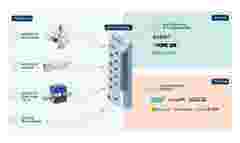
Explore how IO-Link and digital sensors boost performance, cut downtime, and simplify integration. Don’t miss the tech shaping tomorrow’s automation.
Watch now and transform your processes.
The true power of smart sensors with IO-Link lies in their ability to process data at the source. Instead of flooding the PLC with raw data streams, these sensors can perform complex calculations internally. With HBK’s IO-Link solutions, domain-specific algorithms for force, load, and torque applications are executed directly inside the sensor.
This means the sensor can provide concise, actionable results – such as peak force, a checkweigher result, or calculated power – directly to the control system. This “pre-processing” has two major advantages: it frees up valuable computational resources on the PLC and reduces network traffic, leading to a more efficient and responsive system.
Furthermore, these sensors boast impressive performance capabilities. For example, the HBK IO-Link force sensors feature an internal sampling rate of 40 kHz, allowing them to capture high-dynamic events and perform advanced statistical analysis for process control and sensor health monitoring.
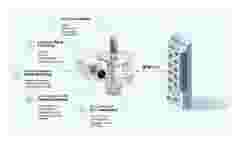
Investing in HBK sensors with IO-Link is more than just a modernisation step; it’s a strategic move that delivers a lower total cost of ownership (TCO) and a high return on investment (ROI). The reliability of your processes is enhanced through built-in sensor health monitoring, where the sensor continuously tracks its own mechanical and thermal loads and triggers an alert if pre-set limits are exceeded.
By upgrading to this technology, companies can achieve immediate cost savings on components and labour while building a more robust, intelligent, and flexible manufacturing environment. As industries continue their journey toward smarter manufacturing, HBK’s broad portfolio of IO-Link capable sensors and considerable expertise make them a trusted partner for creating the factories of the future.
Smart sensors with IO-Link transform manufacturing by combining intelligence, flexibility, and simplicity – delivering actionable data, streamlined integration, and future-proof reliability.





This will bring together HBM, Brüel & Kjær, nCode, ReliaSoft, MicroStrain and Discom brands, helping you innovate faster for a cleaner, healthier, and more productive world.
