

arrow_back_ios

Main Menu

arrow_back_ios

Main Menu

arrow_back_ios

Main Menu

Your innovation redefine Healthcare, our sensors make it possible

Overcome the challenges of modern healthcare—miniaturisation, precision, compliance, and real-time data—with cutting-edge solutions.

Enhance the reliability, safety, and performance of your medical devices—even in the most demanding conditions—with advanced, custom-integrated sensors.

Transform your visionary ideas into smart medical devices with a trusted partner and a team of experienced sensor experts

Precision Sensing for Medical Devices

  • Force Sensors & Miniature Force Transducers: Measure interaction forces between instruments and patients to enable precise control, haptic feedback, and force-limited motion in surgical and rehabilitation devices.
  • Load Cells: Measure patient weight and applied loads in medical beds, imaging and rehabilitation equipment—ensuring safe handling, accurate positioning, and reliable performance under strict hygiene requirements.
  • Multi-Axis Force / Torque Sensors: Capture multi-directional forces and torques to monitor tool–tissue interaction and joint loads in surgical robots and rehabilitation systems.
  • Torque Sensors: Monitor drive torque in robotic joints and motorised medical devices to ensure smooth motion, detect overloads, and protect critical components.
  • Inertial Sensors – IMU (Inertial Measurement Units): Provide real-time motion and orientation data to track instruments, stabilise medical robots, and support precise positioning.
if Medical picto

How Can HBK Custom Sensor  Drive Innovation in Your Medical Devices?

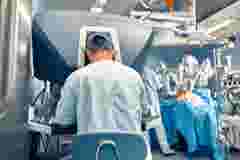
Robotic-assisted surgery depends on precise force feedback for improved control and safety.

  • Multi-axis measurement quantifies directional forces and torque applied to surgical instruments, enhancing precision
  • Force and torque measurements monitors vibrations and applied forces on tissues, reducing accidental damage
  • Miniaturised sensors improve sensitivity, providing optimal force feedback for remote procedures
  • Enabling hepatic feedback loops for seamless robotic integration in the Operating room
Engineer checks medical robot

The durability and performance of prosthetic devices (hips, knees) depend on precise force and load measurements.

  • Force measurement, using strain gauges, analyses real-time stress on implants to optimise longevity and functionality
  • Load measurement evaluates variations in pressure to ensure the implant adapts to patient needs

These sensors provide real-time feedback on movement and force, enabling personalised adjustments for enhanced comfort and usability.

In Robotics Development Laboratory: Engineers and Scientists Work on a Bionics Exoskeleton Prototype with Person Testing it. Designing Wearable Exosuit to Help Disabled People, Warehouse Workers

Medical wearables rely on high-precision sensors to track physiological parameters.
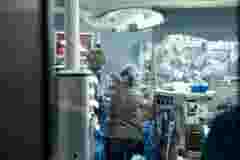
  • Force measurement analyses movement, step count, and posture for rehabilitation and fitness applications
  • Strain measurement continuously monitors cardiac contractions for advanced cardiovascular tracking
  • Pressure measurement assesses chest and abdominal movements to evaluate respiratory rate and depth, particularly in sleep apnoea patients
  • Load measurement detects excessive pressure on specific body areas to prevent pressure sores in immobile patients
Carrying out an operation using a robot, a robot surgeon with manipulators, a modern operating room, surgeons people perform an operation using a surgeon's robot through the control panel

Imaging equipment requires precise sensors to ensure reliable results while maximising patient comfort.
  • Force measurement optimises breast compression in mammography for the best image quality with minimal discomfort
  • Strain and load measurements assess stress on joints, implants, and prosthetics to enhance musculoskeletal disorder diagnosis
  • Sensor technology monitors forces applied during diagnostic procedures, improving safety and accuracy
Carrying out an operation using a robot, a robot surgeon with manipulators, a modern operating room, surgeons people perform an operation using a surgeon's robot through the control panel

Life-supporting cardiovascular and respiratory devices require precise monitoring for patient safety.

  • Strain and force measurements track mechanical loads on implantable heart pumps, ensuring optimal performance and durability
  • Pressure and flow measurements maintain proper cardiovascular device function
  • Load measurement continuously monitors chest and abdominal movement to adjust respiratory support, managing conditions such as asthma and sleep apnoea.
Machine Engine Development Engineer Working on Computer at His Desk, Talks with Female Project Manager. Team of Professionals Working in the Modern Industrial Design Laboratory

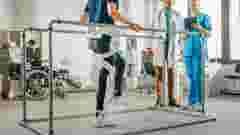
Motion analysis and force tracking are crucial for rehabilitation and injury prevention.
  • Force and load measurements evaluate muscle and joint movements, optimising physical therapy exercises
  • Strain measurement analyses gait patterns, detecting functional imbalances
  • Multi-axis measurement provides detailed posture and movement tracking, enhancing therapy effectiveness and preventing poor ergonomic habits
Doctor and nurse looking at a man who walks with the help of a medical robot

Medical fluid management systems require precise monitoring for accurate drug delivery.

  • Pressure measurement ensures stable and precise insulin pump flow
  • Load and strain measurements provide real-time blood flow and pressure tracking in dialysis circuits, preventing dangerous fluctuations
  • Advanced sensors regulate intravenous (IV) infusions, ensuring optimal medication administration
Scientist using pipette to dispense liquids.

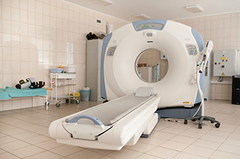
Medical lifting and weighing systems require high-precision sensors for patient and caregiver safety.
  • Load and force measurements control the forces applied during patient transfers, reducing injury risks
  • Weight measurement in hospital beds enables continuous weight monitoring without moving the patient, improving care in intensive care and rehabilitation units
computer tomography diagnostics in medical center

Engineering Precision for the Future of Medical Technology

Step 3- Product Requirements defined

As the demand for advanced healthcare solutions grows, innovation is key to enhancing patient comfort and improving medical efficiency. HBK is at the forefront of this transformation, empowering original equipment manufacturers (OEMs) to develop cutting-edge medical technologies with precision-engineered sensor solutions.

Why Partner with HBK?

  • Seamless custom sensor development – Collaborate with our medical sensor experts to define your goals, design tailored sensor solutions, and optimise prototype costs efficiently
  • Accelerate innovation with rapid prototyping – Get functional test samples and performance-optimised custom strain gauges quickly, reducing time-to-market
  • Effortless scale-up from prototype to production – Transition smoothly with lean processes and automated techniques that ensure high-quality, efficient production

Every medical OEM innovation is unique. Our custom sensor solutions are designed to meet your specific technological and environmental requirements while providing real-time feedback loops for unmatched precision, safety, and efficiency.

Ready to build the future of healthcare robotics together?

Strain Gauge Technology Driving Healthcare Innovation

Discover how strain gauge technology enhances the performance, safety, and customisation of medical devices.

Explore our white paper to learn about different types of strain gauges, their role in precision healthcare, and strategies to overcome integration challenges.

Optimise device designs and improve patient outcomes in areas such as autoclave-resistant devices, hospital beds, and cardiovascular health.

Download now and stay ahead!

OEM Medical devices and equipment brochure - mockup

You may also be interested in...

FAQ | Answer to your questions about HBK Custom Sensors Solution for Medical

Yes, it is possible to convert almost any part into a sensor or to design a new custom sensor from scratch.

When a catalog sensor is not suitable, existing components of a system can be strategically modified to function as active sensors. Alternatively, a high-performance sensor can be created to fit the equipment with minimal to no modifications to the overall system.

Sensors can be customized to withstand a range of conditions for medical autoclave and off-road applications. Sensors can be designed for a wide array of challenging environmental conditions, including high temperatures, pressure, and the presence of corrosive fluids.

Expert design engineers consider environmental conditions from the design phase, selecting appropriate coating materials and sensor construction to suit the application.

With capabilities and resources to provide rapid prototypes in low volumes at partner pricing, HBK engineers utilize FEA to optimize components during the design phase. This approach reduces the number of physical prototypes, resulting in the development of superior products in the shortest time possible.

Adherence to the highest international standards and certifications, customer audits, and processes like PAPP approval ensures trustworthy and repeatable processes. Additionally, custom test plans can be developed and executed to meet unique testing requirements.

We have world class manufacturing facilities and logistics teams in Germany, North America and China to support you with your high-volume request. We can move seamlessly into series / volume production. Sensor development and production are closely interconnected: transfers from engineering to production are performed accurately and effectively utilizing our highly experienced teams and global footprint. .