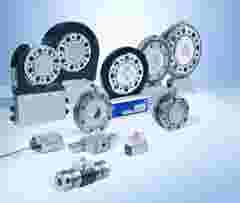

Torque Measurement Tips & Tricks
Precisely measuring and acquiring torque is critical. Learn more about the most important basics of torque measurement!
Read More

Selecting the right torque sensor is a critical step for achieving accurate, reliable, and efficient measurements. Whether for R&D, production, or end-of-line testing, the right sensor can be the key to unlocking innovation and ensuring quality. With over 80 years of experience, HBK offers a comprehensive portfolio of torque sensors and considerable expertise to help you find the perfect fit for your application – from automotive and e-mobility to marine, wind power, and industrial test benches.
This guide provides practical advice, technical details, and actionable steps to help you navigate the selection process and choose the best sensor for your needs.
Precision is the foundation for increasing efficiency and saving resources. In today's competitive landscape, the ability to measure with high accuracy is not a luxury, but a necessity. High-accuracy torque sensors enable engineers to detect even the smallest variations in their systems. This is crucial for optimising electric drives and gearboxes.
In R&D, high-accuracy, high-bandwidth sensors unlock development potential by revealing subtle effects and "crumbs" that drive innovation. In production and end-of-line testing, they ensure that products meet stringent quality and compliance standards. Furthermore, the ability to selectively measure small fluctuations, such as torque ripple in electric motors, allows engineers to diagnose and monitor a wider range of parameters, leading to improved performance, reduced vibration and noise, and higher efficiency.
Choosing a sensor is often a balance between performance and cost. HBK simplifies this with a “GOOD-BETTER-BEST” approach, allowing you to find a sensor that fits both your application’s requirements and your budget.
The perfect sensor is the one that best fits your specific application, striking the right balance between performance and cost.
The first step is to understand the context of your measurement. Different applications have unique demands. Ask yourself:
HBK offers solutions for a wide spectrum of applications, from robust transducers for simple tasks to high-precision digital systems for demanding R&D.
Based on your application, determine the level of accuracy and bandwidth you need. As mentioned, higher accuracy and bandwidth are crucial for detecting subtle effects like torque ripple and dynamic loads. Use the "GOOD," "BETTER," "BEST" framework to guide your choice based on your needs and budget (see our portfolio snapshot below).
Easy integration is crucial for reducing setup time, minimising errors, and ensuring reliable data acquisition. Consider both mechanical and electrical integration:
A well-integrated system streamlines data acquisition, reduces programming effort, and leads to faster commissioning and higher system stability.
Environmental factors can significantly affect measurement accuracy and sensor lifespan. Consider the following:
HBK’s sensor designs ensure high accuracy in linearity and hysteresis, even under demanding operational conditions.
Professional calibration is essential for guaranteeing measurement accuracy. A calibration certificate ensures your results are traceable, verifiable, and compliant with quality management standards and technical expertise according to ISO 17025 and ISO 9001. Calibration also helps you calculate the measurement uncertainty for your specific application and reduces downtime caused by inaccurate sensors. HBK offers DAkkS-accredited calibration and working standard calibration up to 400 kNm.
If a standard product doesn’t meet your needs, HBK can design and manufacture custom sensors to your specifications. This includes sensors with special interfaces, flexplate sensors for test drives, or high-torque transducers for marine, wind power and railway applications.
To simplify your search, HBK offers online tools to help you find the right product:
By following the steps above, you can confidently select a sensor that delivers reliable data, reduces operational risks, and supports your company’s innovation and efficiency goals. With a harmonised measurement chain from a single supplier – from the sensor to the amplifier and software – you can be sure of achieving the best possible results.
HBK has led torque measurement innovation for over 80 years — from non‑contact transducers to high‑precision systems and world‑class calibration capabilities. Discover how our technologies deliver maximum precision and reliability across applications ranging from automotive and aviation to wind power and marine.
Download the brochure to explore the full torque portfolio.
Here is a snapshot of HBK’s versatile torque sensor portfolio:
| Model | Accuracy | Torque Range | Speed (rpm) | Key Features | Typical Applications |
T12HP | BEST | Up to 10 kNm | Up to 22,000 | High bandwidth, digital, max precision | R&D, e-mobility, NVH, drivetrain |
T110/T100 | BETTER | Up to 10 kNm | Up to 25,000 | Very high bandwidth, high precision Flexible, bridges the gap, digital | Drivetrain, R&D e-mobility, end-of-line, test benches, NVH |
T40/T40Lite | GOOD | Up to 10 kNm | Up to 24,000 | Robust, versatile, cost-effective | Industrial, end-of-line test benches production, NVH |
T40MS, T40HS series | GOOD | Up to 2 kNm | Up to 45,000 | Robust, versatile, high speed | Industrial, production, e-mobility. |
T40FM, T40FH series | GOOD | Up to 400 kNm | Up to 8,000 | Robust, high torque versatile, cost-effective | Industrial, production, test bench |
T210, T22 | GOOD | Up to 1 kNm | Up to 30,000 | Compact, low torque, easy integration | Small motors, actuators |
By choosing HBK, you get more than just a sensor. You gain a partner with:
Selecting the right torque sensor is a strategic decision that directly impacts the quality and reliability of your measurements. By systematically evaluating your application’s needs and leveraging the expertise and tools available from HBK, you can ensure you get the best fit for your technical, operational, and business requirements. This empowers you to accelerate product innovation and achieve reliable, high-quality results with confidence.


Rely on the highest precision and best performance from the worldwide market leader in torque measurement. Find the torque sensor, and interface module that you need to achieve precise results suitable for your application.

This will bring together HBM, Brüel & Kjær, nCode, ReliaSoft, MicroStrain and Discom brands, helping you innovate faster for a cleaner, healthier, and more productive world.
