arrow_back_ios

Main Menu

arrow_back_ios

Main Menu

arrow_back_ios

Main Menu

Black and white portrait of Matthias Simolka, Technical Solution Engineering at TWAICE

Christian Röthel

Sales Manager

Christian Röthel earned his Ph.D. in Physics from Graz University of Technology, specializing in X-ray analysis and crystallography, which gave him deep expertise in material structures and advanced measurement techniques.

In 2018, he joined Piezocryst, starting as a Key Account Manager. Leveraging his technical background and customer-focused approach, Christian transitioned into leadership roles.

For the past five years, he has been responsible for Product Management and leading the Sales Team at the company’s Graz office, driving innovation and delivering high-performance sensor solutions to global markets.

In December 2024, HBK (as part of parent company Spectris) acquired Austrian-based Piezocryst Advanced Sensorics. Now integrated into the HBK family, Piezocryst has produced high‑precision piezoelectric pressure and vibration sensors since the 1950s, supporting demanding automotive, aerospace, energy, and industrial applications. The integration strengthens HBK’s capabilities in advanced sensing technologies while maintaining alignment within its broader measurement‑technology family.

Hydrogen combustion environments present unique challenges for pressure sensing –extreme temperatures, rapid thermal gradients, and high vibration can cause conventional sensors to fail. HBK addresses these issues with gallium phosphate (GaPO₄) technology, a material that maintains stable piezoelectric properties up to 1,000°C and resists hydrogen-induced degradation, making it ideal for turbine development, combustion monitoring, and other high-stress applications. Christian Röthel, Product and Sales Manager at Piezocryst by HBK, shares insights into how this technology is shaping the future of extreme environment measurement.


General Technology Questions

Conventional sensors struggle due to hydrogen’s extreme conditions:

  • High temperatures degrade conventional materials, causing sensitivity loss or total failure
  • Thermal gradients create false signals in pyroelectric materials
  • High vibration leads to mechanical degradation and signal distortion
  • Flame speeds up to eight times faster than natural gas, demand greater measurement range and faster response
  • Long-term hydrogen exposure causes embrittlement or sensitivity loss in standard sensing elements and housings
  • Remote sensing setups such as stand-off tubes suffer from signal attenuation and limited frequency response

GaPO₄, a single-crystalline material, is engineered for high-temperature, hydrogen environments:

  • Stable piezoelectric coefficient (4.5 pC/N – twice quartz) up to 1,000°C
  • No pyroelectric effect – prevents false readings during temperature shifts
  • No phase transition – maintains performance up to 1,000°C, unlike quartz
  • Proven hydrogen resistance – no degradation after hundreds of hours at 500°C in 100% H₂

GaPO₄-based sensors eliminate known weaknesses of alternatives:

  • Quartz: Loses piezoelectric properties at high temperatures (α–β phase transition)
  • Piezoceramics: Suffer “popcorn” depolarisation and pyroelectric interference
  • GaPO₄: Delivers stable, interference-free performance across extreme temperature ranges and hydrogen exposure

  • Pressure sensitivity: 95 pC/bar with smallest serial deviation
  • Temperature range: Continuous operation to 700°C without cooling
  • Insulation resistance: best in class high temperature insulation @700°C >1E+06 Ω
  • Form factor: Miniaturised designs down to 5 mm diameter (M5 or 10 – 32 UNF threads)
  • Vibration and thermal resistance: Maintains signal fidelity under extreme gradients and shock

Per Engineering Report FM7487:

  • Test: 100 h continuous exposure, 500°C, three bar, 100% H₂
  • Results: Sensitivity stable at 94 – 95 pC/bar; insulation >1E+11 Ω; no dielectric breakdown
  • Mechanical integrity: No weld degradation, layer damage, or loss of gas tightness
  • Conclusion: No degradation of any functional part took place due to hydrogen exposure

  • Longitudinal mode (disk): Maximum robustness for extreme pressure and vibration
  • Transversal mode (bar): Optimised geometry for higher sensitivity in precision applications
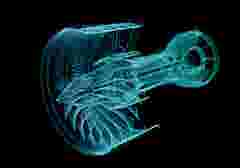
3D image of a turbine from a jet engine

Piezocryst by HBK Precision in Extreme Hydrogen Environments

Explore our white paper Why Piezocryst’s Direct Measurement Expertise Sets a New Standard and learn how our technology delivers precise hydrogen-engine combustion monitoring by capturing stable pressure data in extreme conditions, ensuring turbine reliability, safety, and predictive maintenance.

Application and Installation

  • Combustion monitoring: Direct combustor liner measurement for hydrogen, sustainable aviation fuels (SAF), and advanced fuels
  • Turbine development: Thermo-acoustic analysis, condition monitoring, and AI-based predictive maintenance
  • High-stress environments: Aerospace, energy, and other extreme heat/vibration applications

Select models measure:

  • Pressure variations
  • Acceleration/vibration
  • Temperature
  • Ignition events
  • Optical access and flame detection, which reduces complexity, mounting points, and maintenance while providing richer datasets

  • Miniaturised for tight spaces – fits into existing plugs or structures
  • Flexible installation without impacting system dynamics
  • Compatible with existing DAQ systems
  • Low weight for sensitive or mobile platforms

Reliability and Maintenance

  • Long-term calibration stability in high heat without cooling
  • Consistent, drift-free data for AI/condition monitoring
  • Proven hydrogen durability ensures long life cycle performance

  • Over 20 years in the world’s most advanced gas turbines
  • Direct combustor liner deployments in extreme operating conditions
  • Developed through customer collaborations to solve “impossible” measurement challenges

  • Laser vibrometry: Identifies resonances and mechanical interactions
  • Thermal cross-sensitivity testing: Profiles and minimises heat effects vs. other technologies
  • Endurance testing: Long-term hydrogen exposure at high temperature/pressure and rapid temperature cycling to simulate years of operation
  • Comparative analysis: Benchmarked against other piezoelectric technologies

Strategic and Technical Questions

  • Global support and service through HBK’s network
  • Seamless integration with HBK’s test and measurement solutions
  • Ongoing R&D investment ensures innovation
  • Focused expertise in high-temperature sensing backed by HBK’s scale
  • Enhanced manufacturing capabilities and quality systems
  • Broader application knowledge across aerospace, automotive, and energy sectors
  • Integrated solutions combining Piezocryst sensors with HBK data acquisition and analysis systems

  • Reduced system complexity eliminates need for cooling systems, remote mounting, and complex signal conditioning
  • Lower total cost of ownership through extended sensor life and reduced maintenance
  • Elimination of measurement uncertainties reduces development time and improves engine efficiency

  • Critical for meeting emissions standards in power plants, also for hydrogen and sustainable fuel applications
  • Enables optimisation of combustion processes for maximum efficiency and minimum emissions
  • Supports compliance with increasingly strict aviation and power generation environmental requirements

  • Advanced multi-parameter sensing capabilities
  • Enhanced AI-ready sensor designs for predictive analytics
  • Expansion into new extreme environment applications

  • Validated performance and combustion stability with hydrogen, Sustainable Aviation Fuel (SAF), and other alternative fuels
  • Critical for optimising combustion of fuels with different flame speeds and characteristics
  • Enables development of next-generation low-emission combustion systems

Our specialisation in turbine development and combustion monitoring provides:

  • End-to-end solutions for engine development and testing
  • From component testing to extreme environment monitoring
  • Enhanced ability to support sustainable fuel development programmes
  • Custom sensing capabilities, which complement Piezocryst’s specialised crystal growing expertise as well as its prototyping capabilities, are essential in achieving our performance and agility
  • Global manufacturing presence through HBK’s network
  • Shared R&D resources for next-generation sensor development
  • Cross-pollination of piezoelectric material science knowledge

Related Content