arrow_back_ios

Main Menu

arrow_back_ios

Main Menu

arrow_back_ios

Main Menu

Turn Field Forces into Farming Intelligence

Agricultural machinery performance depends on accurate measurement in harsh field conditions. HBK supports OEMs with custom force, torque, load, and inertial sensors that deliver reliable, repeatable data from planting to harvesting.

From downforce and draft load measurement to PTO torque, yield sensing, and soil interaction analysis, HBK sensors help manufacturers build more precise, efficient, and robust machines for modern precision agriculture.

Precision Sensing for Smart Agriculture

  • Load Cells: Enable accurate weighing of seeds, fertiliser, and harvested crops in planters, spreaders, and harvesters—ensuring reliable dosing and yield measurement under vibration, temperature variation, mud, and washdown conditions.
  • Force Sensors & Force Pins: Measure planting downforce, drawbar loads, and hydraulic cylinder forces to control soil engagement, maintain consistent seed depth, and adapt implements to changing soil conditions.
  • Torque Sensors: Monitor drivetrain and PTO torque in traction and harvesting systems to optimise power transmission, detect overloads, improve fuel efficiency, and protect mechanical components in harsh field environments.
  • Inertial Sensors – IMU (Inertial Measurement Units): Provide real-time attitude, vibration, and motion data to stabilise machines, maintain tool alignment, and compensate for uneven terrain during planting and harvesting.
  • INS / GNSS  Inertial Systems : Deliver reliable navigation, stability, and motion data—even in GNSS-degraded environments such as slopes, foliage, or near infrastructure—supporting autonomy and accurate yield monitoring.
Green energy picto

From Yield Growth to Sustainable Performance

“By 2050 we will need to produce 60 per cent more food (than 2012) to feed a world population of 9.3 billion” wrote José Graziano Da Silva, Director-General of the Food and Agriculture Organization of the United Nations. [SOURCE: https://www.un.org/en/chronicle/article/feeding-world-sustainably]

Earlier methods of increasing food output have certainly been successful: cereal crop production, for example, doubled between 1960 and 2000. But the methods chosen during that time were not sustainable. “Collateral damage includes land degradation and deforestation, over-extraction of groundwater, emission of greenhouse gases, loss of biodiversity, and nitrate pollution of water bodies” notes the Food and Agriculture Organization (FAO).

The challenge therefore is to find sustainable ways to increase agricultural production by using techniques that are more in tune with ecosystems and minimizing the use of external inputs such as fertilizers or pesticides.

chevron_left
chevron_right

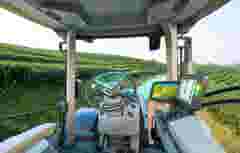
The first wave of innovation in precision farming put more information into the tractor cab, so that the driver could operate tools – such as plough, fertiliser, seeder, pesticide spreader and harvester – more effectively.

The second wave of innovation focussed on creating feedback loops between the automated tools so that the tractor operator’s role was simpler and they could focus their attention on a  small number of really significant decisions. In the background, the automated systems constantly gather data to provide new insights and improve decision making.

In the third wave of precision agriculture, the operator no longer has to spend their day in the cab. In fact, in some autonomous vehicles already on the market, there may no longer even be a cab where the operator can sit. This stage of evolution is a major game-changer. Instead of being a limiting resource, the skilled agricultural worker now becomes an economic multiplier, capable of managing multiple automated agricultural robots simultaneously.

Future developments in precision agriculture will see increased use of autonomous farm vehicles.- This will be accompanied by improved wireless data transmission and data acquisition from smarter, smaller Unmanned Aerial and Unmanned Ground Vehicles (UAVs and UGVs, respectively). In addition to monitoring crop and soil conditions, these smaller vehicles also monitor the status of farm equipment, allowing farmers to improve machine servicing and maintenance cycles for improved uptime.

Remote management of agricultural activities, through automation using wireless sensors and the Internet of Things, is the new horizon in agriculture. But it is not reserved for the wealthy economies, or the biggest agribusinesses. Technology and ideas will permeate and spread through an industry, as water soaks through soil.

The initial waves of technology were produced by the major manufacturers who had the R&D resources to experiment, and the vision to create new approaches, aimed at the large-scale farms who could afford to invest in them. But the future of precision agriculture will undoubtedly shared with others: with high-volume manufacturers who develop smart solutions to serve global niches; and with a huge number of small and innovative manufacturers, who create smaller devices, at lower prices points, that address the needs of the smaller farmer. In the developing world, reports the FAO, there are roughly 500 million small farms producing more than 80 percent of the world’s food. That’s a market too big for entrepreneurs and innovators to ignore.

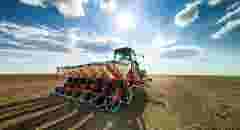
Precision agriculture is one of the methods that enables farmers to meet the increasing worldwide demand for food. It uses sensing technologies to gather actionable data from multiple sources. Analysing the data and applying the insights gained means farmers can adapt to environmental conditions and use resources more efficiently.

Data on inputs (seed, fertilisers, pesticides, fuel and energy, water, etc.) can be combined with accurate GPS location, climate or weather data to deliver actionable insights for effective decison-making. Combining these analyses with, and comparing them to, data about outputs (yields, harvest quality, market price), enables farmers to think in greater detail, and act at a significantly higher level of efficiency and effectiveness.

In addition to optimizing yields, precision agriculture also enables farmers to minimize negative environmental effects:

  • reduce carbon dioxide emissions through improvements in fuel and energy efficiency,
  • reduce nitrous oxide released from soil by optimizing the use of nitrogen fertilizers,
  • reduce the use of chemical fertilizer and pesticides by pinpoint application,
  • eliminate nutrient depletion by monitoring and managing soil health,
  • control soil compaction by minimizing equipment traffic,
  • maximize the efficient use of water.

In practice, precision farming requires a combination of machinery equipped with sensors; a data collection infrastructure; and processing equipment to make sense of it all. Hardly surprising then, that the first to adopt these technologies were agribusinesses with sufficient capital available to invest. The large-scale farms that invested early in precision farming have seen handsome paybacks in terms of crop yields.

As the technologies become more widespread, they become more affordable. Smaller farms are now able to benefit from precision farming as well, using tools built into smart phones, relevant applications, and smaller-sized machinery. What’s more, these technologies are contributing to solutions that extend beyond farms, including pollution, global warming, and conservation.

New Possibilities with Automation


Producing more food with less land and fewer resources is one of agriculture’s greatest challenges. Automation and precision farming are turning this challenge into an opportunity.

Connected machines, intelligent sensors, and data-driven systems enable precise seeding, optimised input dosing, accurate yield monitoring, and higher machine efficiency—reducing fuel consumption, costs, and CO₂ emissions.

Discover how automation is reshaping modern agriculture and unlocking sustainable performance at scale.

HBK rugged in-vehicle torque solutions brochure - mockup
Grant Eisenhut, OEM Sensors Business Development Manager, HBK

You may also be interested in....


Need Help? We’re Here for You!


Whether you have questions, need more information, or are ready to start working with us, we're here to help. Our team is dedicated to providing you with the best service and personalized solutions that meet your needs. Don’t hesitate to reach out – we’re just a click away!

Contact us today, and let's explore how we can make things happen for you. We look forward to connecting soon!

Lady cut out reading a newsletter on tablet