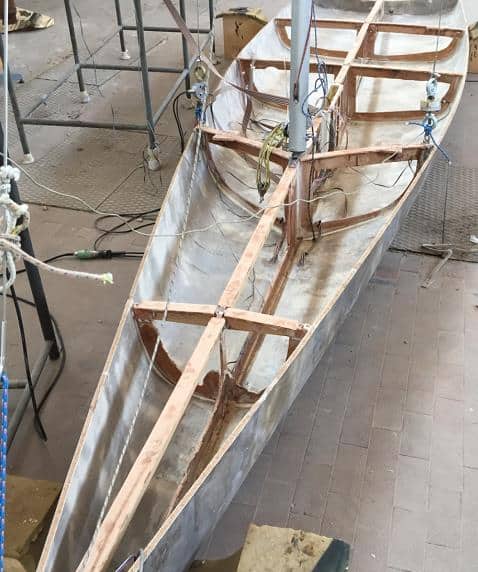
This study has been carried out within a framework of
research activities regarding the innovative design and manufacturing of a small sailing yacht (called LED - Linen Epoxy Dinghy). These activities have been performed at the Dipartimento di Ingegneria Chimica, Gestionale, Informatica e Meccanica of the
University of Palermo, in cooperation with the Facoltà di Ingegneria e Architettura of the University of Enna Kore. The purpose was to
evaluate the strain field of a 15' SKIFF type sailing yacht by using strain gauges, and compare the experimental evaluation with the prediction of a Finite Element Method (FEM) model.
Due to the application of the load system,
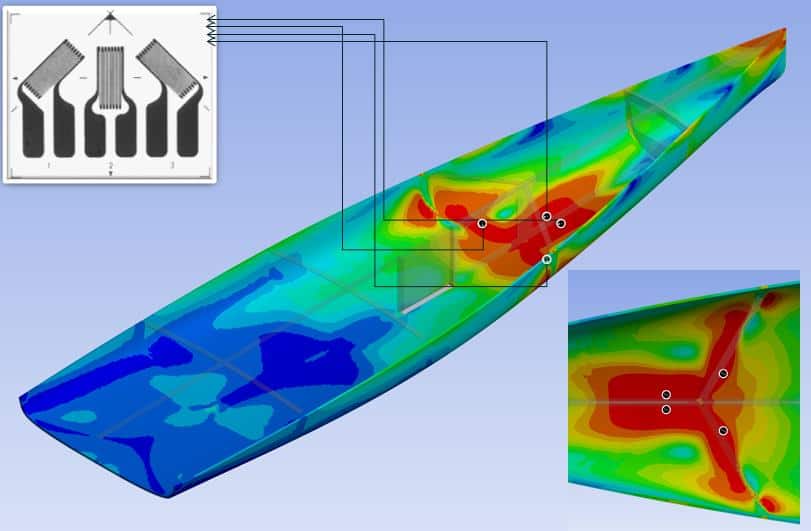
FEM results obtained from preliminary numerical simulations identified the most critical deformed areas, located in the hull (fig.1), and in
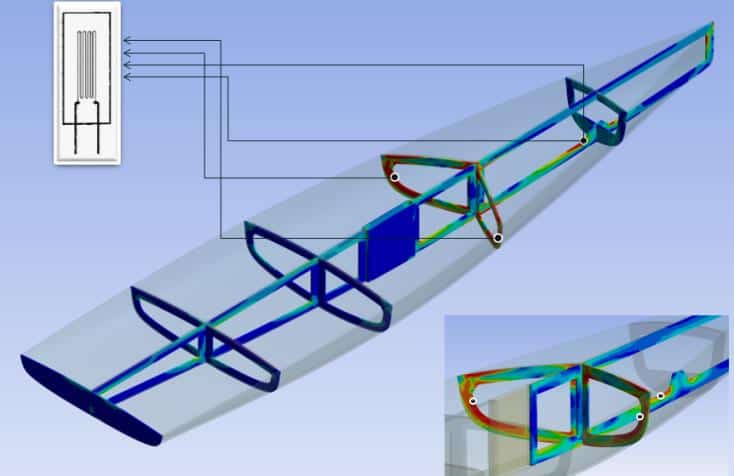
transversal and longitudinal internal stiffeners (fig.2). The hull material is in particular a sandwich structure composed by Flax Reinforced Plastic skin laminates and by agglomerated cork as core.
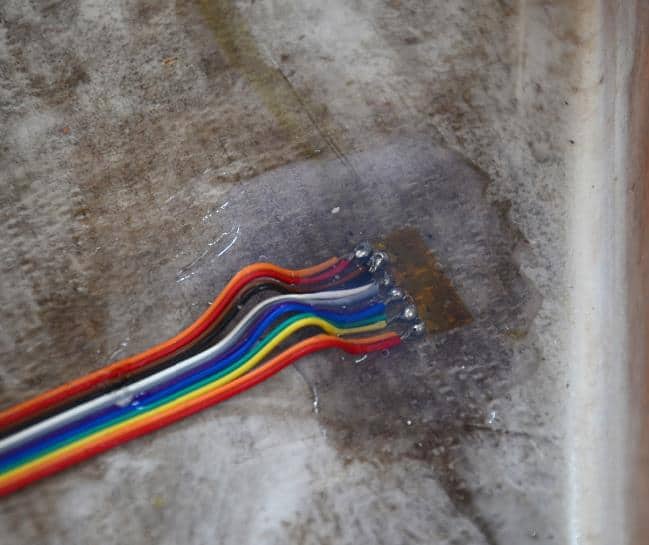
Strain components were measured on the internal skin of the hull, by means of four
three-grid rosettes HBM type
RY81-6/350, and a
thermal compensator rosette. The sites of
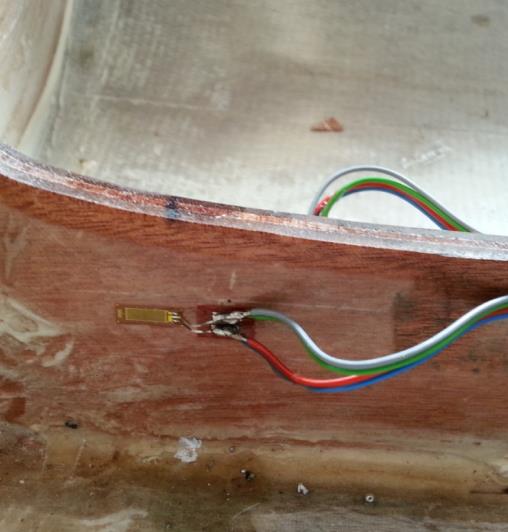
maximum normal strains on the transversal and longitudinal stiffeners of the yacht (made of marine plywood), were also considered, by installing four single-grid HBM
strain gauges, type
LY11-6/350 and a
thermal compensator strain gauge.