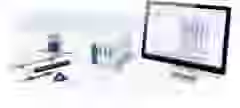

光纤解调仪
HBK 光纤解调仪适用于大规模传感网络,通过可靠的软件接口全天候提供精确且高分辨率的静态和动态测量。它们专门设计用于测量由光纤布拉格光栅(FBG)传感器产生的数据。
Read More

This is crucial, as all major structures – such as bridges, buildings, pipelines, and tunnels – are exposed to factors that cause strain and degradation. Without reliable and accurate monitoring of strain, temperature and other physical parameters, malfunctions and structural issues might not be detected, resulting in disasters.
In the following, we’ll discuss structural health monitoring (SHM) as a discipline, and we’ll show you how a typical optical Fiber Bragg Grating (FBG) based measurement chain – hosting several sensors in one optical fiber, interrogators, and PC software – can easily be designed.
Large and expensive structures, such as tunnels, bridges, and pipelines, need regular, cost-effective monitoring of their structural integrity. This ensures safety and reliability.
Structural health monitoring (SHM) plays a critical role here [1], because it takes a proactive approach to maintenance and monitoring, rather than waiting for damage to happen and then repairing it. This proactive method can save money and prevent unplanned downtime of the structure.
But the need for reliable and accurate SHM installation in major infrastructure is often ignored for reasons such as cost, confusion over which sensors to use, and difficulty interpreting strain data. This becomes a problem when strain-induced structural damage happens. And it does happen regularly, since civil infrastructure is exposed to constant loads and environmental agents that cause wear and degradation over time.
For instance, bridges suffer from structural deterioration due to rising traffic demands, as well as climate changes and adverse weather conditions [2-3]. Poor construction methods, seismic activity, and nearby construction also play a part [4]. And without consistent monitoring, malfunctions and structural issues cannot be detected or predicted, resulting in disasters. In fact, in the United States, every bridge is required to undergo a visual inspection once every two years to help prevent such structural issues from cropping up [5].
But according to the ASCE 2017 Infrastructure Report Card, nearly 10% of bridges in the United States have some sort of structural problem, which makes them vulnerable [6]. And in Canada, almost one third of the approximately 75,000 highway bridges have structural deficiencies [7]. Failure to identify and deal with these structural deficiencies can result in high maintenance costs, shut down of local infrastructure, and −worst-case scenario – structural collapse and fatalities. As a result, there is a huge market for technology that helps to easily and cost-effectively monitor infrastructural wear and tear [8].
Since the 1940s, the resistive strain gauge has been the benchmark for structural strain monitoring [9]. But certain limits come along with resistive strain gauges and sometimes hinder easy and reliable measurement.
For example, the number of electrical cables needed can be a challenge. This is because long cables are costly, and lots of them can become difficult to manage when used in large scale structures with many measurement spots [10], despite the existence of technical solutions for measuring electrical strain over distances up to several hundred metres, and to both technologies [4].
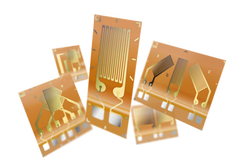
Optical sensors that are based on Fiber Bragg Grating (FBG) technology offer an attractive alternative to conventional electrical measurement chains.
This is because FBG technology has advantages such as multi sensors in a single optical fiber, overall lightweight passive design, and low attenuation, which allows long distance installation. This technology is also immune to electromagnetic interference (EMI), and sensors are more environmentally stable than electrical strain gauges (so they can withstand harsh conditions). They’re also competitively priced when it comes to a medium to high channel count and total cost of ownership [12, 13].
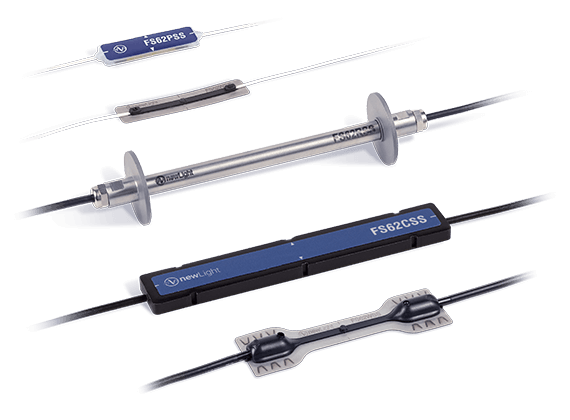
Thanks to the fact that it can be easily used with your supplier’s software, and is also integrated into any individual PC, FBG technology has acquired a large market share over time. It’s now used in a wide range of sensing applications [13].
For instance, it’s used in different health monitoring applications in civil engineering, including road and railway infrastructure, but also in geo-structures, oil and gas, hull monitoring of vessels in the marine industry, aerospace structures, and automotive temperature validation.
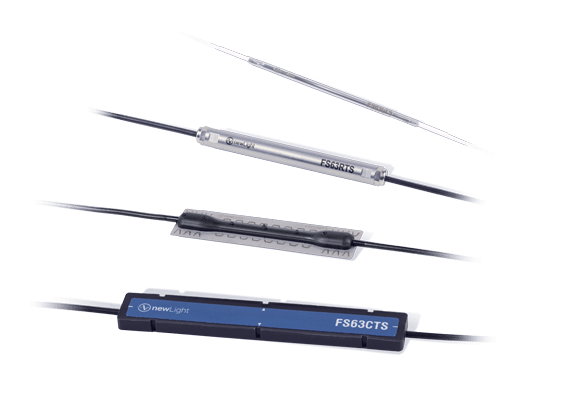
For a complete optical measurement chain, having the right sensor is only one third of the solution. You also need the right optical interrogator, and the right software in place to get overall reliable results.
And these three parts – sensor, interrogator, and software – complete your optical measurement chain.
In short, the sensor is what measures or ‘senses’ strain, temperature, acceleration, force or even tilt. The optical interrogator (the second component in the chain) is also known as a data acquisition system. It’s an optoelectronic instrument which ‘reads’ the FBG sensors. And the software is what allows you to view, record and analyse your measurement data.
 So what should you look for when choosing these components?
 Optical sensors based on Fiber Bragg Grating technology have many advantages over conventional resistive strain gauges. Both sensor types can also complement each other in various applications, from civil infrastructure and aerospace, to lab testing and energy.
But to make use of these advantages, you need to choose the right sensors, interrogators and software for your optical measurement chain. Our hope is that this brief primer can help engineers and system integrators make the right decisions when it comes to accurate and reliable strain measurements.
Engineers worldwide rely on accurate and reliable measurement data acquired using sensors, interrogators, and software from HBM.
For instance, our optical sensors from the newLight product line – based on FBG technology – allow large strain measurement ranges with long-term stability. These sensors are the best choice for SHM (Structural Health Monitoring) due to their fast and easy installation and suitability for harsh environments.
On the optical interrogator side, HBM instruments provide high-resolution static and dynamic measurements 24/7. For instance, we have developed the brand new MXFS model for structural health monitoring. Along with our optical sensors, this interrogator helps you ensure a seamless measurement chain.
Lastly, HBM’s software is the final link in your optical measurement chain. Our data acquisition software (such as catman) manages millions of datasets and helps you get your results quickly.
One key advantage of HBM products is the possibility to mix and match sensors, interrogators, and software to suit your needs. We offer a complete product portfolio for SHM, giving you everything you need for accurate and reliable strain measurements. Table 1 below shows the compatibility of HBM interrogators and software. For more information on these products and on how to choose the right components for your optical measurement chain, please contact us.
This will bring together HBM, Brüel & Kjær, nCode, ReliaSoft, MicroStrain and Discom brands, helping you innovate faster for a cleaner, healthier, and more productive world.