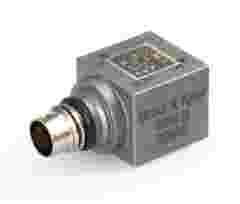

음향 트랜스듀서 | 센서
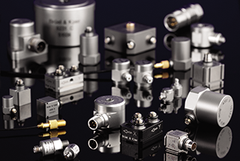
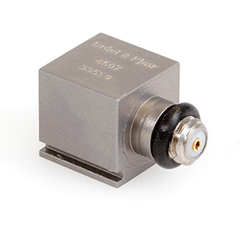
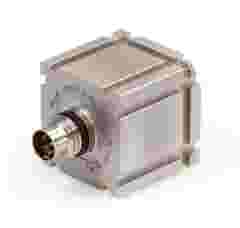
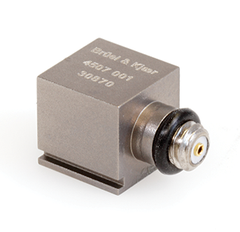
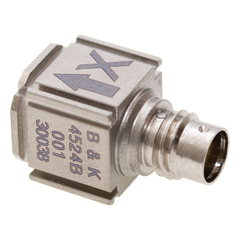
HBK는 다양한 종류의 하중 감지 센서, 변형률 게이지, 마이크로폰 및 변환기를 공급합니다. 당사 제품의 품질은 전 세계적으로 정평이 나 있으며, 이는 제품 생산 및 개발 분야에서 쌓아온 당사의 독보적인 경험과 노하우의 결실입니다. 당사의 모든 측정 솔루션을 확인해 보세요.
Read More

The World’s first commercial piezoelectric accelerometer was developed by Dr. Per V. Brüel in 1943. This was only the first of many innovations, that would shape the world of test and measurement, we know today.
It’s no exaggeration to say that the entire discipline of sound and vibration can be traced to these and other innovations developed by Per Brüel and his partner Viggo Kjær. Located in Nærum, Denmark, Brüel & Kjær started the sound and vibration journey in the distant 1942.
These early innovations created the foundation for the many sound and vibration measurement technologies used to develop and monitor everything from smartphones, cars, washing machines and aircrafts, we use today.
From a humble start with a small, voltmeter product line, Brüel & Kjær quickly expanded the product range over the years, which today consists of over 200 measuring instruments, transducers, and analysis software.
Type 4301 was only the first in a long line of world's first innovative technologies to be released, but before we get to how the first commercial accelerometer ever made, let's take a closer look at some of the many technology innovations, that Brüel & Kjær has developed.
The table below gives a complete overview of the ground-breaking technological inventions, which are still used in test and measurement applications world-wide.
In the year 1943, Per V. Brüel designed the world’s first commercial piezoelectric accelerometer called Type 4301. It was made from Rochelle salt crystals and featured a sensitivity of 35–50 mV/g and a resonant frequency of 2–3 kHz.
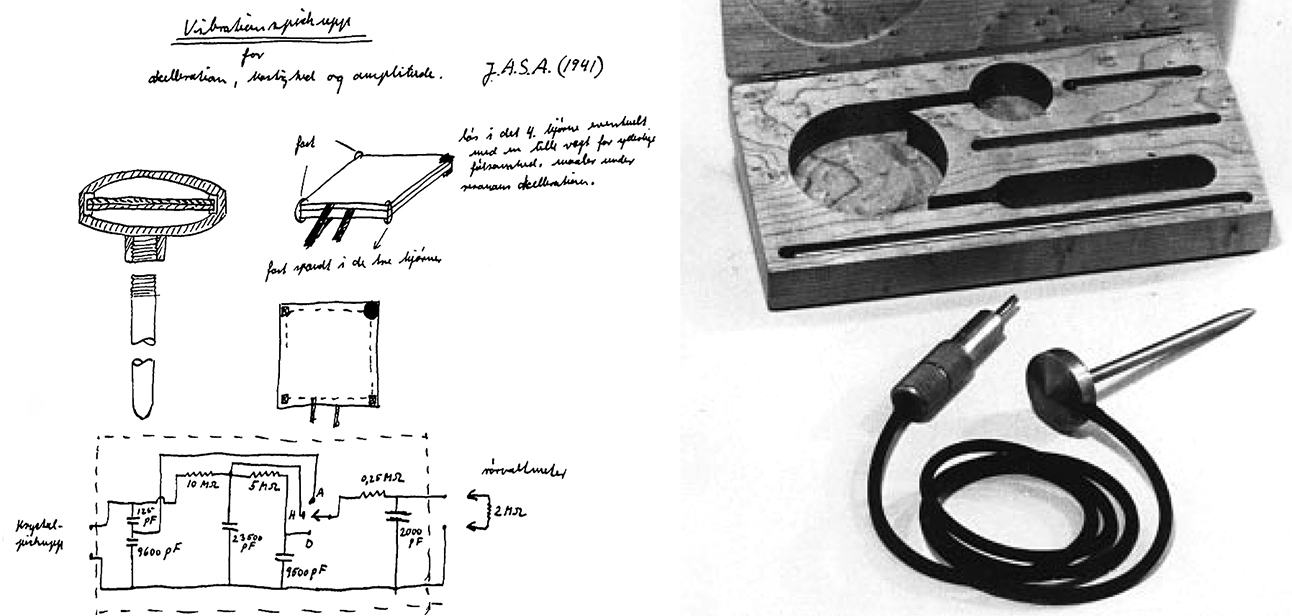
On the left: Prototype drawings of Type 4301. On the right: Photo of the actual accelerometer.
Throughout the 1950s the Rochelle salt crystals were replaced by ceramic elements. This resulted in a doubling of the accelerometer’s sensitivity and increased its resonance to 5kHz.
Later, Brüel & Kjær added compression type accelerometers to its product line, which were further modified in 1964. This resulted in the introduction of a new series with reduced susceptibility to case loading and base strain. Further improvements in the compression design were made from 1968 to 1975.
Transducer development and innovation is very much in the Brüel & Kjær DNA. Today, we lead the industry with our many patented technology and unrivalled accuracy.
In the early 50’s the Rochelle salt crystals were replaced by ceramic elements, which resulted in doubling the accelerometer’s sensitivity and increasing its resonance to 5kHz. Later that same decade, B&K included to its product line compression type accelerometers which were further modified in 1964, resulting in the introduction of a new series with reduced susceptibility to case loading and base strain. Further improvements in the compression design were made from 1968 to 1975.
B&K strengthened its U.S. presence in 1958 with the opening of its facility in Cleveland, OH. The company’s first shear accelerometer (Type 8307) advanced in 1972. In 1974 the DeltaShear R design was introduced, which was further standardized during the years and later in the 90s it included DeltaTron R integrated circuits.
Type 8309 is Brüel & Kjær’s 100 000 g accelerometer. The company’s continuous development of transducers for sound and vibration is increasingly focusing on complete systems. B&K currently is one of the few companies providing the most complete solutions for sound and vibration measurement, while also staying focused on accelerometer calibration systems.
HBK는 다양한 종류의 하중 감지 센서, 변형률 게이지, 마이크로폰 및 변환기를 공급합니다. 당사 제품의 품질은 전 세계적으로 정평이 나 있으며, 이는 제품 생산 및 개발 분야에서 쌓아온 당사의 독보적인 경험과 노하우의 결실입니다. 당사의 모든 측정 솔루션을 확인해 보세요.

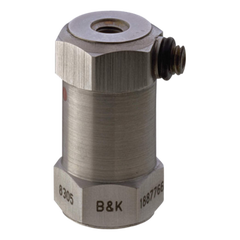
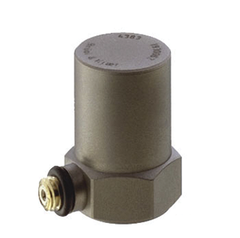
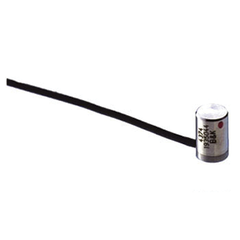
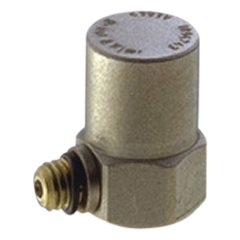
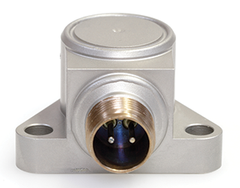
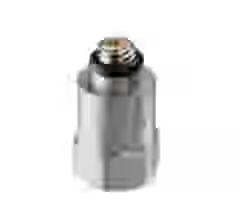
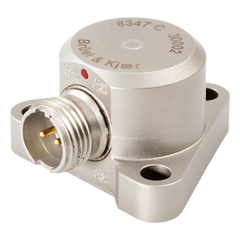
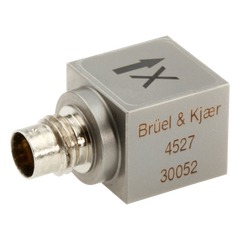
전하 출력형(Charge-type) 압전 가속도계는 내구성이 뛰어나며 고온 환경의 진동 측정을 위해 특수 설계되었습니다. 당사 전하 센서만의 독창적인 설계는 높은 동적 범위(Dynamic Range), 장기적인 안정성 및 뛰어난 견고성을 제공합니다.
