변형률
변형률 게이지(변형계)는 더 우수하고 안전한 제품을 만들기 위해 재료의 피로도를 측정하고 시험하는 데 있어 핵심적인 도구입니다. 구조적 내구성 테스트,구조 상태 모니터링, 또는 OEM 트랜스듀서 생산을 위해, HBK의 광학 및 전기 스트레인 게이지를 첫 번째로 선택해야합니다.
Read More

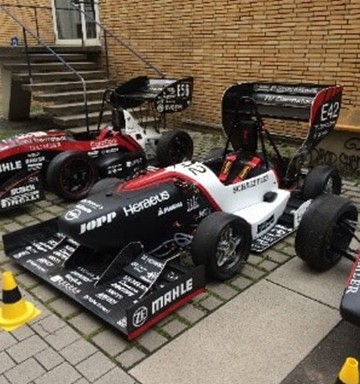
StarkStrom has so far determined chassis forces through calculations, simulations, and approximate reference values derived from the experience of the previous seasons. However, since reality can often differ from theory, we wanted to use strain gauges (SG) to determine the actual forces during several test drives. HBK has generously supported us in this process, with both the required components and specialist knowledge.
Over 20 strain gauges were installed on the individual chassis tubes. Due to the additional insulation layer, the weather caused no restrictions during the test runs. The results from the test runs are summarized below.
Real tie-rod load data during driving was required to be able to professionally design the autonomous steering of the autonomous UASA 1906-DV vehicle, "Fenja". Data was also required to validate the vehicle’s chassis design. This was achieved using the strain gauges provided by HBK.
The right half of the chassis was replaced by a measuring chassis. The aluminum chassis parts went through a calibration cycle on a tensile force machine before use. The cycle consisted of cyclic settling loads and subsequent loading in a step function to obtain a strain-force curve of the individual rods. The measured data obtained by the strain gauges and the tensile force machine were assigned using MATLAB.
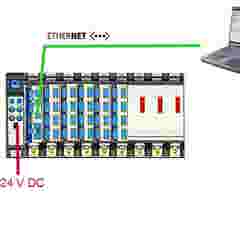
The chassis was subsequently installed, adjusted, and measured. Highly dynamic maneuvers at the upper-performance limits had to be carried out to obtain meaningful results. For this purpose, several tracks were set up to cover all driving situations. Acceleration (75m straight acceleration), brake test (emergency braking from approx. 50km/h), skidpad (a horizontal eight), and a longer circuit were tested. Using the mobile analysis unit, memory unit, and battery together provided the optimal solution. We were able to carry the complete measuring equipment in the vehicle and record everything. Thus, measurements could be carried out under real conditions, which made the results highly relevant.
The test results were also processed using MATLAB. Several scripts were written to scale the measurement results of the strain-gauge measurements with those of other sensors, such as the steering angle or the x and y accelerations. This enabled us to illustrate the behavior of the vehicle in different situations.
The results obtained from the measurements were used as the basis for the design of the new autonomous steering system and durability simulations of chassis components. Furthermore, strain gauges were attached to the rear spoiler to verify CFD simulations and obtain information about the behavior of the aerodynamic package. The recorded data is currently being prepared for the validation of the previous chassis design.
The next step is to equip our electric racing car with a measuring chassis and strain gauges as well. This and the data from future measurements with the autonomous vehicle will be used to validate and improve our overall vehicle simulation. We also hope to achieve significant improvements in the design of the new chassis based on the results of the tests and simulations. In the future, we will be able to optimally vary the tube diameters and thicknesses and draw on practically proven results in the design judging.
The StarkStrom team would like to thank HBK for their support.