

MAIN MENU

Reliable Weight Measurement for Faster Filling Cycles

Industrial filling and dosing machines must deliver consistent quantities as cycle times shorten and product characteristics vary. Vibration, fluid movement and irregular material flow can disturb weight signals, while excessive filtering may delay the information needed for filling cut-off.

The engineering challenge is not simply to measure weight accurately, but to obtain reliable data at the right moment. Final fill accuracy also depends on flow behaviour, valve response and material still in motion after cut-off.

HBK helps machine builders meet these challenges with dynamic load cells, weighing electronics and connected measurement architectures. By combining mechanical integration with signal processing and machine control, engineers can improve measurement reliability, achieve more repeatable filling and evaluate performance under real production conditions.

Reliable Measurement at High Speed

Obtain reliable weight information during short filling cycles by balancing dynamic response and signal stability for accurate filling control under real machine conditions.

Better Control of Filling Variability

Provide timely weight feedback for coarse and fine filling, enabling machine controllers to optimise cut-off, account for material in flight and reduce variations in final fill quantities.

Integration Built Around Your Machine

Choose integrated or modular weighing architectures with suitable industrial interfaces for standardised machine designs, efficient commissioning and easier diagnostics.

Solving Industrial Filling and Weighing Challenges

ChallengeSolution
Unstable weight signals during fast filling. Vibration, fluid movement and mechanical interactions can disturb the measurement signal. Strong filtering may improve stability but delay the weight information needed within short cycles. HBK dynamic load cells and weighing electronics provide responsive measurement with configurable signal processing. Engineers can balance filtering, stability and response time based on machine dynamics and filling requirements.
Inconsistent filling cut-off and product giveaway. Variable flow, delayed weight information and material still in motion after valve closure can affect final fill quantities, leading to overfill and reduced process repeatability.HBK provides timely weight data for the machine controller or supported filling functions. Combined with suitable flow control, cut-off logic and in-flight compensation, this can help reduce filling variability and product giveaway.
Complex integration into machine control. Different PLC platforms, communication cycles and machine layouts can complicate the measurement chain. High sampling rates alone do not guarantee that weight information is available when needed across the complete control loop.HBK offers digital load cells and modular electronics with industrial communication options. Engineers can select an architecture based on  data update rates, signal processing, PLC communication and the location of control functions.
Demanding hygienic production conditions. Frequent washdown, moisture and aggressive cleaning procedures place additional demands on weighing components, mounting arrangements and long-term measurement reliability.HBK offers hygienic load cells and compatible weighing electronics for demanding environments. Component selection can take into account materials, protection ratings, relevant certifications and mechanical integration within the complete machine.

From Dynamic Weight Measurement to Filling Control

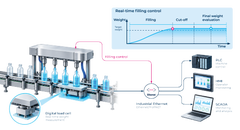
Accurate gravimetric filling depends on the complete measurement and control chain. From measuring changing loads to evaluating final fill quantities, each step plays a role in obtaining reliable weight information, managing filling decisions and validating performance under real production conditions.

chevron_left
chevron_right

Reliable measurement starts at the weighing point.

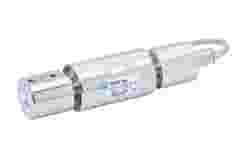
Measure changing container weight throughout the filling cycle, even when vibration, liquid movement and mechanical interactions affect the load. Choosing the right load cell and mounting arrangement helps minimise unwanted forces and establish a reliable basis for measurement. HBK offers analogue and digital load cells for different dynamic, capacity and environmental requirements.

Balance signal stability with response time.

Convert the load cell signal into weight information that can be used during fast filling cycles. Integrated or external weighing electronics process the measurement, with filtering and configuration helping to manage disturbances. The aim is not simply to achieve a stable reading, but to provide reliable weight data within the available measurement window without unnecessary processing delays.

Turn weight information into timely control decisions.

Deliver processed weight information to the machine controller or supported filling functions. The control system uses this feedback to coordinate coarse and fine filling, adjust flow and determine cut-off timing. Taking valve response and material still in motion into account can help reduce variation in final fill quantities. Where these functions are performed depends on the selected system architecture.

Use measured results to refine filling performance.

Evaluate final weight, cycle-to-cycle variation and measurement behaviour under representative production conditions. Compatible visualisation and diagnostic tools allow engineers to investigate disturbances, compare filling results and adjust supported parameters. The results can be used during commissioning and to assess process improvements.

Infographic - Filling and dosing weighing

Related Products