Early Industry 4.0 efforts focused mainly on connecting devices, but today’s AI, machine learning, and digital twin applications require high-quality, full-bandwidth data to reach IT systems – not just the control layer.
HBK supports this shift with edge-based measurement systems that provide parallel IT and OT connectivity, so real-time control and full-bandwidth measurement data can be used across both industrial and enterprise environments.
Traditional OT systems still receive data through industrial fieldbuses and analogue interfaces. At the same time, calculated values and full-bandwidth measurement data are sent in parallel to IT systems through open standard protocols such as MQTT, OPC-AU and openDAQ™.
This enables direct access to high-quality process data at the source. It can be used in IT environments such as cloud platforms, analytics tools, and MES systems, while also enabling real-time analysis, AI and ML model training, and digital twin applications – without disrupting control loops or adding integration complexity.
This architecture allows real‑time production data to be used at the same time for control, monitoring, optimisation, and long-term initiatives such as AI‑driven process improvement and digital factory integration.
Smart sensors and digital-ready devices generate high-resolution, full-bandwidth measurement data.
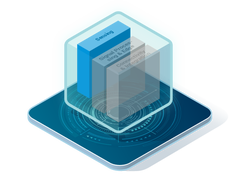
Edge electronics convert raw sensor signals into structured, real-time process data at the source.
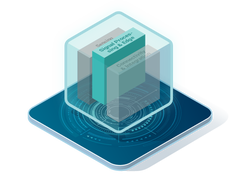
While edge systems provide full-bandwidth data and advanced processing, certain applications benefit from distributed intelligence inside the sensors themselves.
CAN‑MD-based smart sensors perform local data reduction and diagnostics before data reaches the edge layer. This approach complements traditional edge processing by optimising bandwidth usage and enabling scalable monitoring architectures, especially in distributed or mobile systems.
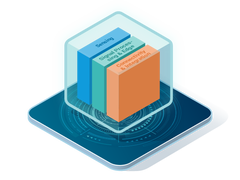
Open interfaces connect measurement data directly into industrial control systems.
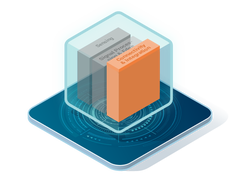
Measurement data extends into IT systems for visibility and optimisation.
This architecture allows real‑time production data to be used at the same time for control, monitoring, optimisation, and long-term initiatives such as AI‑driven process improvement and digital factory integration.
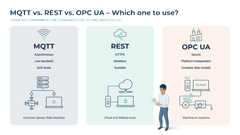
MQTT, REST or OPC-UA The protocol you choose shapes how effectively machines, sensors and IT systems work together. This white paper explains the strengths of each—and how to combine them for secure, scalable IT/OT connectivity from the shop floor to the cloud.

This will bring together HBM, Brüel & Kjær, nCode, ReliaSoft, MicroStrain and Discom brands, helping you innovate faster for a cleaner, healthier, and more productive world.