


GenHS
Genesis HighSpeed(GenHS)は、電気的および機械的パラメータを高速測定するためのモジュール式プラットフォームです。トランジェントレコーダー、データレコーダー、データ収集システムのすべてが1台に。メインフレーム、データ収集入力カード、Perceptionソフトウェアで構成される独自の構成を構築できます。
続きを読み取る

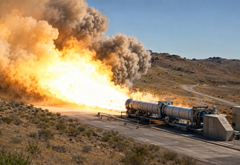
High-speed system tests are often destructive, non-repeatable, and expensive, making it absolutely crucial to capture accurate data on the first and only attempt.
Whether it's a helicopter crash landing, an explosion, or a rocket separation test, HBK solutions are designed to ensure you get the data you need, every time.
HBK offers high-speed data acquisition systems engineered for transient events. By combining hardware-based triggering, high sample rates, and secure local data storage, our solutions enable engineers to capture strain, acceleration, and pressure with complete confidence.
This proven approach provides the reliability needed for any high-energy, short-duration test where data integrity is paramount.
High-fidelity sensors capture the precise mechanical response of systems during short, high-energy load cases.
Transient-ready data acquisition systems capture and securely store every data point, with no need for a live PC connection.
Powerful software enables system setup, synchronised data review, and efficient reporting.

How do you measure and validate the effects of underwater blasting on critical infrastructure? Discover how HBK's high-speed data acquisition technology helped capture precise pressure and strain data during a major underwater blasting project on the Columbia River. Read the full case study now.
Evaluating the performance of complex structures requires accurate measurement data across the entire test setup. Discover how the University of Siegen used HBK technology to capture critical insights during large-scale structural and material testing for advanced research projects. Read the full case study now.
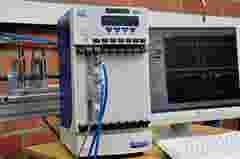
Genesis HighSpeed(GenHS)は、電気的および機械的パラメータを高速測定するためのモジュール式プラットフォームです。トランジェントレコーダー、データレコーダー、データ収集システムのすべてが1台に。メインフレーム、データ収集入力カード、Perceptionソフトウェアで構成される独自の構成を構築できます。

Genesis HighSpeed は、サンプリング速度 20 kS/s~250 MS/s のデータ収集カードを幅広く取り揃えています。
要件に応じて、用途に応じた入力ボードを選択し、組み合わせることができます
。

航空機の翼の疲労試験、プリント回路基板のひずみ解析、橋梁の構造モニタリング、残留応力測定など、HBKの実験応力解析用ひずみゲージは、材料の応力レベルを決定するために使用されます。
If the peak load or deformation is not captured, the test data may be incomplete or unusable for certification. Because these tests are destructive and cannot be easily repeated, reliable triggering and high-speed data capture are essential.
Our systems use hardware-based triggering, onboard memory, and secure local storage. This ensures data is captured and stored locally in the DAQ mainframe during the event, so data collection is not dependent on having a live PC or network connection during the moment of impact.
Accurate correlation between sensors and high-speed cameras requires precise time synchronisation and deterministic hardware triggers. This guarantees that all strain, accelerations, and video data can be reviewed together with confidence after the test.
The easiest way to achieve this today is with PTPv2 synching methods for both DAQ systems and high-speed cameras.
Alternatively, HBK DAQ systems can send a defined trigger to the camera.
Tests commonly involve strain, acceleration, speed, displacement, and pressure measurements. These measurements are crucial for helping engineers understand structural response and performance during dynamic events.
Yes, data from these tests is critical for supporting certification, design validation, and regulatory documentation. This requires traceable, high-quality data that can be clearly reviewed and justified after testing is complete.
If data quality or completeness cannot be demonstrated, costly additional testing may be required, delaying certification and development timelines. Reliable measurement systems are designed to reduce this risk by ensuring that data capture is deterministic, repeatable across setups, and clearly documented.
Sample rate always refers to the sampling of a single channel. However, in high-channel-count system tests, the DAQ system must also store data from all channels. The throughput rate specifies the maximum combined data rate from all individual channels that the DAQ system can store continuously.
This will bring together HBM, Brüel & Kjær, nCode, ReliaSoft, MicroStrain and Discom brands, helping you innovate faster for a cleaner, healthier, and more productive world.
