Analysing large volumes of machinery data was difficult due to inconsistent data quality, mixed data formats and fragmented analytical tools that lacked the engineering capabilities needed for reliable failure prediction.
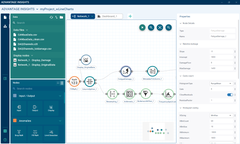
Advantage Insights by nCode enabled native machine data processing, engineering diagnostics and physics-based prognostics in a shared environment incorporating Python libraries and engineering algorithms.
The physics-based approach reduced false positives by 30%, while enabling engineers and data scientists to collaborate using a common platform for machine diagnostics and failure prediction.
Our customer, an industrial machinery operator, collects large volumes of sensor and control data from connected equipment to monitor operating conditions, investigate potential issues and predict machinery failures. The data includes a mixture of numerical measurements, text values and error codes, which engineers need to interpret to assess machine performance and identify potential failures. To make effective use of this information, the operator required a way to process large datasets consistently and apply engineering analysis to support both diagnostics and failure prediction.
Industrial machinery generates vast quantities of sensor and control data during operation. While this information can provide valuable insights into equipment condition and potential failures, processing it consistently presents significant challenges. For this operator, the collected data contained a mixture of numerical measurements, text values, error codes and inconsistencies, making it difficult for traditional engineering software to analyse effectively.
Existing workflows relied on bespoke Python-based scripts and different analytical approaches. However, these did not fully meet the organisation's requirements for performance, consistency of results, standardisation of analytical processes and data quality. A further limitation was the lack of physics-based engineering features needed to support machinery life prediction. The operator needed a more effective way to:
Addressing these challenges would enable the organisation to make better use of its machine data and improve the reliability of its failure predictions.
To address these challenges, the operator used Advantage Insights to process and analyse data from connected industrial machinery. Advantage Insights could be configured to natively read bus data from loggers connected to the machines, handling both the quality and quantity of data collected during operation.
The platform brought together data visualisation, engineering analysis and prognostic capabilities within a single environment, enabling engineers and data scientists to work with a common set of tools.
This approach enabled teams to:
By integrating diagnostic and prognostic capabilities, Advantage Insights enabled the operator to investigate multiple operating scenarios and apply consistent engineering analyses to large datasets.
Using Advantage Insights, the operator improved its ability to analyse machinery data and generate reliable engineering insights to support diagnostics and prognostics. Key results include:
By combining engineering diagnostics with physics-based prognostics, the operator could more effectively investigate equipment behaviour and identify potential failures. The ability to analyse abnormal sensor values, investigate error codes and estimate remaining useful life provided a more comprehensive approach to understanding machine condition.
Bringing these capabilities together in one environment also helped engineering and data science teams collaborate more effectively and apply consistent analytical methods.
Advantage Insights is really made for the engineer who needs to predict machinery failures. Finally a tool that can cope with our sort of data and that contains all the necessary engineering features for us to do our job.
By using Advantage Insights by nCode, the industrial machinery operator improved its ability to process complex machine data and apply engineering analysis to diagnostics and failure prediction.
The integration of Python libraries, engineering algorithms and physics-based prognostics in a single environment enabled closer collaboration between engineers and data scientists while supporting consistent analysis of machinery operating conditions.
With a 30% reduction in false positives, the operator demonstrated the value of combining high-performance data processing with physics-based engineering methods to generate more reliable predictions and support informed machinery maintenance decisions.