MAIN MENU

Our customer has been a pioneer in surgical innovations for more than a century. The company is a global leader in developing surgical technologies and solutions - including sutures, staplers, energy devices, and digital solutions - that are used to treat a wide range of medical conditions. Their mission is to shape the future of surgery and advance innovation to help address the world’s most pressing health issues, a commitment that demands the highest standards of quality, safety, and reliability for every product.

usp-icon

Our medical device customer faced variability in surgical device performance, with limited visibility into how real-world usage impacted reliability. Traditional testing was insufficient to predict long-term durability and identify root causes efficiently.

usp-icon

Our customer implemented an advanced reliability program using HBK’s ReliaSoft suite (Weibull++, ALTA PRO, BlockSim, RENO) to analyse life data, simulate system risk, and model complex, real-world operational scenarios.

usp-icon

This data-driven approach delivered deep insights into product performance drivers, enabled targeted design improvements, reduced risk, and provided objective evidence to ensure robust device reliability for surgeons and patients.

Understanding the Factors That Drive Device Reliability

For medical device leaders, the reliability of a surgical device is paramount. Surgeons expect flawless, consistent performance every time, as patient outcomes depend on it. Our customer’s engineering teams faced a significant challenge: variability in the performance and durability of a complex surgical device.


The core issues were:

1. Limited Visibility into Real-World Usage: A device may be used differently by various surgeons, in different types of procedures, and on different patient populations. This variability in "stress" conditions made it incredibly difficult to predict long-term performance based on standard lab tests alone. 

2. Insufficient Traditional Testing: While benchtop testing is crucial, it could not efficiently replicate the wide spectrum of real-world scenarios or predict the likelihood of rare but critical failure events over the product's entire life. 

3. Understanding System-Level Risk: The device was a complex system of mechanical, electrical, and software components. A failure in one minor part could have a significant impact, but it was difficult to quantify how individual component reliability contributed to the overall system risk. 

4. Inefficient Root Cause Analysis: When failures did occur in testing or in the field, pinpointing the true root cause, whether it was a design weakness, a material issue, or a specific usage pattern - was a time-consuming and often inconclusive process.

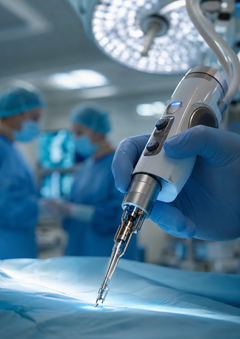
Real time surgical reliability analysis

A Digital Approach to Reliability Prediction and Risk Analysis

To move beyond the limitations of traditional testing, we worked with the reliability engineering team to implement a sophisticated, data-driven strategy using a powerful combination of tools from the HBK ReliaSoft suite. This allowed them to simulate, predict, and understand reliability in ways previously impossible.


1. Characterizing Failure with Weibull++ Life Data Analysis: The first step was to analyze existing data from development testing and post-market surveillance. Using Weibull++, engineers could model the failure patterns, understand the "infant mortality" or "wear-out" characteristics of the device, and establish a statistical baseline for its current reliability.

2. Predicting Life Under Variable Stress with Weibull++ Accelerated Life Testing: To understand the impact of real-world usage, the team used the Accelerated Life Testing module in Weibull++. They designed experiments that subjected the device to varying levels of key stresses, such as actuation frequency, tissue thickness, and sterilization cycles. Accelerated Life Testing analyzed the resulting data to create a predictive model showing how device life would change under different combinations of these real-world conditions.

3. Modeling System-Level Risk with BlockSim: The device was modeled as a system in BlockSim. Each critical component was represented as a "block" with its own reliability characteristics derived from Weibull++ and Accelerated Life Testing analysis.


This system-level simulation allowed engineers to:  

  • Identify which components were the biggest contributors to overall system failure.
  • Run "what-if" analyses to see the impact of improving a single component's reliability. 
  • Quantify the probability of system success for an entire surgical procedure.

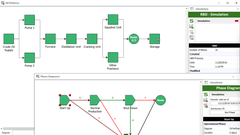
4. Simulating Complex Scenarios with BlockSim Event Analysis: For even more complex questions, the team used BlockSim Event Analysis, a flowchart-based simulation tool. This allowed them to model dynamic, probabilistic scenarios that were difficult to capture in BlockSim alone, such as the financial impact of unreliability, the effect of different maintenance strategies for reusable devices, or the probability of multiple, dependent failures occurring during a complex procedure.

Enabling Safer Devices Through Reliability Insight

This integrated reliability modeling approach provided profound insights and delivered significant value to our customer.

1. Data-Driven Design Improvements: Instead of relying on intuition, engineers could pinpoint the weakest links in the design. The insights from ALTA and BlockSim guided them to make targeted improvements that delivered the greatest increase in overall reliability.

2. Deep Understanding of Performance Drivers: our customer gained a scientific understanding of which real-world usage factors most impacted the device's life, allowing them to refine user training, instructions for use (IFU), and future design specifications. 

3. Reduced Risk and Increased Confidence: By simulating thousands of possible outcomes, our customer could identify and mitigate low-probability but high-consequence failure modes, significantly reducing patient risk and increasing internal confidence before regulatory submissions and product launch. 

4. More Efficient Testing: The predictive models allowed for more focused and efficient physical testing. Instead of testing everything, they could concentrate on validating the highest-risk areas identified by the software, saving time and resources.

Conclusion

In the MedTech industry, patient safety and clinical confidence are non-negotiable. For our surgical customer, ensuring device reliability is a core part of this promise. By leveraging the advanced analytical capabilities of the HBK ReliaSoft suite, our customer was able to move beyond the constraints of physical testing alone. They embraced a proactive, predictive approach to reliability, allowing them to understand product performance at a fundamental level and engineer the unwavering dependability that surgeons and patients deserve.

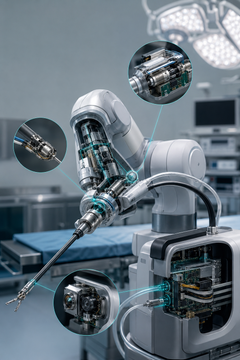
Integrated surgical device systems

Technology Used