MAIN MENU
usp-icon

A mid-sized Indian pharmaceutical manufacturer in India was relying on periodic manual sampling to verify carton weights, checking only five to ten units per production batch. Underweight cartons were slipping through to dispatch, triggering regulatory queries and costly batch recalls. Line stoppages for manual checks were cutting into throughput and creating unrecorded downtime.

usp-icon

Kevision deployed the Checkweigher 350, a high-speed, stand-alone dynamic checkweigher powered by HBK’s FIT7A load cell technology. The system weighs every carton in real-time at speeds of up to 350 products per minute while maintaining an accuracy of ±0.5g. Cartons that fall outside predefined weight limits are automatically rejected.

usp-icon

From the first production batch following installation, the manufacturer achieved 100% inline weight verification, eliminating manual sampling while ensuring that no non-compliant cartons reached dispatch. False rejection rates dropped below 0.05%, while automated reporting transformed batch documentation from a manual, paper-based process into a one-click PDF export. The site’s next regulatory inspection resulted in zero weight-related observations, marking the first clean inspection in this category in four years.

Background: A plant that had outgrown its quality process

The plant, a mid-sized oral solid dosage (OSD) manufacturer supplying domestic retail and institutional markets across India, operates six packaging lines running tablet strips, blister packs, and secondary cartons. With more than 400 employees and production volumes reaching tens of thousands of units per shift, the facility had grown significantly over the years.


Yet, despite its scale, weight verification on secondary cartons was still being performed exactly as it had been when the plant first opened. Production supervisors manually sampled from each batch, weighed them on benchtop scales, recorded the values in paper logbooks, and signed off the results. Typically, only five to ten cartons were checked from batches of several thousand.


For many years, this approach had been considered sufficient under standard operating procedures. That changed during a routine regulatory inspection when inspectors requested historical weight distribution data.


The inspection highlighted a significant gap between growing regulatory expectations and the plant’s existing quality assurance process.

Head of quality assurance

The challenge: Five data points across thousands of cartons

The regulatory observation was a critical wake-up call, exposing deeper operational vulnerabilities and hidden costs that had been quietly accumulating for years:


Undetected underweight units:
With only a handful of cartons sampled from each batch, there was little confidence that weight-related defects would be identified before products left the facility. Missing leaflets, incorrect fills and packaging errors could easily go undetected.


Lost production time:
Manual weight checks required operators to stop the packaging line. Each physical check took eight to 12 minutes including sample collection, weighing, logging, and restarting production. Across six lines operating multiple shifts, this added up to more than 90 minutes of lost production time every day.


Batch recall exposure:
The manufacturer had previously initiated voluntary batch recalls following customer complaints about underweight products. These incidents not only incurred direct costs but also increased workload for quality teams and attracted additional regulatory scrutiny.


Poor audit readiness:
Paper-based records offered only limited evidence during inspections. Producing detailed analyses such as mean weight, standard deviation or process capability index (Cpk) required extensive manual effort and could not be generated quickly when demanded by auditors.


The manufacturer needed a solution that could verify every carton automatically while providing the traceability and statistical evidence required for modern pharmaceutical manufacturing.

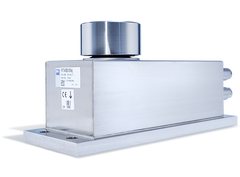
FIT7A Digital Load Cell

The solution: Checkweigher 350

Following a comprehensive site audit and line-speed analysis, Kevision recommended installing Checkweigher 350 on the plant’s highest-volume production lines, with a phased rollout planned for the remaining lines.


Delivering high-speed accuracy with HBK’s FIT7A digital load cell technology


To meet the plant’s rigorous accuracy and throughput requirements, Kevision selected HBK’s FIT7A digital load cell as the foundation of the Checkweigher 350 platform.


The FIT7A enables the system to weigh every carton in real time at speeds of up to 350 products per minute while maintaining an accuracy of ±0.5 g. Unlike traditional analogue strain-gauge systems that can be affected by thermal drift and signal noise, the FIT7A combines integrated electronics directly adjacent to the sensor with active temperature compensation. This delivers highly stable, repeatable performance throughout full production shifts without requiring frequent, time-consuming recalibration.


Its exceptionally rigid mechanical design delivers fast signal response and short filter times, making it possible to perform precise measurements at high conveyor speeds without compromising reliability. As each carton passes through the weighing station, its weight is verified within milliseconds. Products that fall outside predefined upper or lower weight limits are automatically rejected, ensuring that only compliant cartons proceed further down the line.


Beyond accurate weighing, the system provides complete production visibility and traceability. Electronic batch reports are generated automatically, full 21 CFR Part 11-compliant audit trails are maintained, and seamless communication with upstream and downstream equipment is achieved via Ethernet/IP integration. Together, these capabilities eliminate the need for manual sampling while giving operators and quality teams access to comprehensive compliance and performance data for every batch produced.


Head of quality assurance

How the system works

The Checkweigher 350 uses a three-belt conveyor design comprising infeed, weighing, and outfeed sections.


The infeed conveyor spaces cartons so that only one product occupies the weighing platform at any one time. As each carton passes through the weighing zone, a precise weight measurement is captured within milliseconds.


Any carton that falls outside preset tolerance limits is automatically diverted into a lockable stainless-steel rejection bin. An optional rejection verification sensor confirms successful removal, providing additional assurance that non-compliant products cannot proceed downstream.


A transparent acrylic wind tunnel protects the weighing section from airflow disturbances generated by HVAC systems, helping maintain weighing stability even in demanding production environments.

Kevision checkweigher 350

Results at a glance: Every carton. Every batch. No exceptions

The Checkweigher 350 was commissioned and validated within five working days, including IQ/OQ execution and the first batch production trial. From the first commercial batch, the results were immediate and unambiguous.
 

  • Zero non-compliant batches dispatched since go-live • False rejection rate below 0.05%
  • 100% of cartons weighed inline
  • One-click automated PDF batch reporting 


Beyond the headline numbers, the quality team reported a fundamental shift in how weight compliance is managed. Statistical process control metrics such as mean weight, standard deviation and Cpk are now available on demand through the HMI or can be exported as PDF reports at batch close. The plant’s next scheduled regulatory inspection resulted in zero weight-related observations – the first clean inspection in this category in four years.

By combining Kevision’s dynamic checkweighing expertise with HBK’s FIT7A digital load cell technology, the manufacturer transformed weight verification from a manual sampling process into a fully automated quality control operation. Today, every carton is weighed, every batch is fully traceable, and quality teams have complete confidence in the accuracy, compliance and integrity of their production data. For the manufacturer, weight compliance has shifted from a potential risk to a proven strength, supporting both operational efficiency and regulatory readiness.

Related content