


3DM-GV7-INS 是一款坚固耐用的战术级惯性导航系统,它集成了完全校准的 MEMS IMU 和自适应扩展 Kalman 滤波,可接收外部 GNSS 输入,从而在 GNSS 受限环境中提高导航精度。它采用低漂移陀螺仪、高精度加速度计和紧凑的 IP68 防护等级铝制外壳,使其成为在恶劣环境下运行的机器人、国防和自主系统的理想选择。

3DM-GV7-INS
3DM-GV7-INS 为集成商提供了一种灵活的导航解决方案,弥合了基本 AHRS 和完整 GNSS/INS 系统之间的差距。无论部署在自动驾驶车辆、机器人平台还是国防资产上,它都能在 GPS 信号不佳的环境中提供可靠的性能,而且无需像高端系统那样昂贵的成本或复杂的配置。
战术级陀螺仪(不稳定性偏差为 1.5°/小时)
用于姿态估计的机载扩展 Kalman 滤波
坚固型:IP68 封装
| Document | Type | Language |
|---|---|---|
| 3DM-GV7 Series Data Sheet | 數據表 | English |
| Product Comparison: 3DM-GV7 Series vs. 3DM-GX5 Series Inertial Sensors | Buyers Guide | English |
| 3DM-CV7 Aiding Source Comparison: MIP vs. NMEA | Tech Notes | English |
| 3DM-GV7-INS User Manual (Online) | 操作說明 | English |
| 3DM-GV7 Mechanical Drawing (PDF) | Technical Drawing | English |
| GV7-CV7 Firmware Change Log | Release Note | English |
Certificates and Approvals
| Document | Type | Language |
|---|---|---|
| 3DM-GV7 Declaration of Conformity (EU) | 符合性聲明 | English |
| 3DM-GV7 Declaration of Conformity (UK) | 符合性聲明 | English |
| 3DM-GV7-INS User Manual (Online) | 操作說明 | English |
| Document | Type |
|---|---|
| 3DM-GV7 CAD File | CAD Step Files |
| 3DM-GV7 CAD File with Cable | CAD Step Files |
| MicroStrain 7-Series Inertial Sensor Firmware | Firmware |
| Property | Value |
|---|---|
| Type | Inertial Navigation (INS) |
| Performance Grade | Tactical Grade |
| Features | Accelerometer, Gyroscope, Magnetometer |
| Random Walk | Accel: 31 µg/√Hz, Gyro: 0.2 °/√hr |
| Bias Instability (Gyroscope) | 1.5 °/hr |
| Bias Instability (Accelerometer) | 20 μg |
| Hysteresis | Accel bias: 0.9 mg, Accel gain: 318 PPM, Gyro bias: 0.066 °/s, Gyro gain: 1000 PPM |
| Communication Port Type | Micro D9 |
| Communication Interface | RS-232, USB |
| Update Rate | IMU: 1000 Hz, EKF: 1000 Hz |
| Inputs/Outputs | 2xGPIO |
| Weight | 17.7 g |
| Weight | 0.624 oz |
| Size | 36.2 mm x 36.6 mm x 10.2 mm |
| Size | 1.43 in x 1.44 in x 0.40 in |
| Power Consumption | 0.32 W |
| Input Voltage | 4.6 V to 36 V |
| Minimum Operating Temperature | -40 °C |
| Maximum Operating Temperature | 85 °C |
| Minimum Operating Temperature | -40 °F |
| Maximum Operating Temperature | 185 °F |
| MTBF | 2058917 h |
| GNSS Input(s) | External Input(s) |
| Sensing Range (Accelerometer) | 4 g |
| Sensing Range (Gyroscope) | 250 °/s |
| Sensing Range (Magnetometer) | 8 Gauss |
| Sensing Range (Pressure) | 1260 mbar |
| Accuracy | Roll/Pitch (dynamic): 0.5 °, Roll/Pitch (static): 0.25 °, Heading (static): 0.5 °, Heading (dynamic): 2 ° |
| Ingress Protection Rating | Not Rated |
| Housing Material | Aluminum |
| Software | MSCL, ROS, SensorConnect |
| Mounting Style | Screw Down, Precision Alignment |
| Product Code | Description |
|---|---|
 6212-0031
|
IP68 CABLE KIT, RS232 |
 6212-0032
|
IP68 CABLE KIT, USB |
|
6212-1200
|
IP68 FLYING LEADS |

Access your sensor's comprehensive online user manual. Find detailed setup instructions, calibration procedures, troubleshooting guides, and technical specifications all in one convenient location.
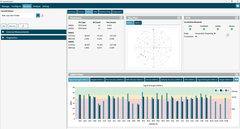
InertialConnect is the latest software solution for MicroStrain inertial sensors. With InertialConnect, you can easily configure your sensors, adjust parameters, upgrade firmware, and deploy preconfigured parameter files. You can also verify sensor outputs with intuitive visualizations, including times eries data, position data, and statuses.
InertialConnect is compatible with both PC desktop and Linux operating systems, making it your go-to solution for precision and efficiency in inertial sensor management.

SensorConnect is the next generation in desktop sensing software.
From configuration of nodes and starting networks, to collecting and analyzing data in real-time, SensorConnect provides a modern, powerful experience with our Wireless, Inertial, and Displacement products.
Using our intelligent data collection and graphing algorithms, you are able to visualize massive amounts of data instantly, and then zoom in on points of interest just as fast.
Built in MathEngine functionality allows for both real-time and post-processed math, such as generating FFTs, averages, RMS, etc.

SensorCloud is a unique sensor data storage, visualization, and remote management platform that leverages powerful Cloud computing technologies to provide excellent data scalability, rapid visualization, and user programmable analysis.
MicroStrain sensors can instantly upload their data to SensorCloud via an ethernet-connected WSDA-2000. Once uploaded, your data is securely stored in the Cloud and can be accessed from anywhere, or downloaded for offline use.
Configurable alerts can be set to help notify you of real-time event in your data.
MathEngine allows you to perform analytics on your data, all in the Cloud. Pre-built functions are available for ease of use, while IPython Notebooks allow advanced users to write custom scripts to be run on their data once, or on a schedule.

The MicroStrain Communication Library (MSCL) is our open-sourced API that simplifies writing code to interact with our sensors. MIP SDK is a lightweight C/C++ library for interacting with MicroStrain G and C-series products via baremetal and resource constrained microcontrollers.
Both APIs are readily available and fully-documented on GitHub, featuring valuable tools such as full documentation, example code, and a quick start guide.
Robot Operating System (ROS) is an open-source, meta-operating system for your robot. It provides the services you would expect from an operating system, including hardware abstraction, low-level device control, implementation of commonly-used functionality, message-passing between processes, and package management. ROS can be used in building and simulating robotics applications, as well as unmanned ground vehicles and simultaneous localization and mapping (SLAM). MicroStrain has an open source License free (MIT License) series of drivers specifically designed and tested for ROS.

The 3DM-GV7-INS is a tactical-grade ruggedized Inertial Navigation System (INS) that provides precise position, velocity, and attitude measurements. It features IP68 rating for harsh environments and accepts external position and velocity inputs to maintain robust navigation during GNSS outages.
Absolutely. The IP68-rated precision-machined aluminum enclosure provides exceptional protection against water, dust, shock, and vibration. The tactical-grade performance and full temperature calibration ensure reliable operation in the most demanding industrial conditions.
The 3DM-GV7-INS features user-selectable accelerometer and gyroscope ranges to optimize performance for specific applications. The system is fully calibrated and temperature-compensated to maintain accuracy across all selectable ranges.
The 3DM-GV7-INS accepts multiple external aiding measurements including GNSS position and velocity data, external position sources, and industry-standard NMEA input over the AUX port. This flexibility improves GNSS-denied performance and maintains navigation accuracy during outages.
Yes, the 3DM-GV7-INS is defense-ready and accepts encrypted GNSS receivers, making it suitable for military and sensitive government applications where secure positioning is required.
NMEA (National Marine Electronics Association) input allows the 3DM-GV7-INS to receive standardized navigation data from external GNSS receivers and other positioning sources through the AUX port, providing flexibility in system integration and compatibility with existing hardware.
The 3DM-GV7-INS is ideal for:
The advanced Extended Kalman Filter (EKF) in the 3DM-GV7-INS provides sophisticated sensor fusion, combining inertial measurements with external aiding sources for optimal navigation accuracy. It automatically adapts to changing conditions and provides robust anomaly rejection for reliable performance.
The 3DM-GV7-INS features advanced time management and event triggering systems designed specifically for robotics and automation timing requirements. It supports adjustable sampling rates up to 1 kHz with precise timing synchronization capabilities.
Yes, MicroStrain provides open-source, MIT-licensed ROS drivers specifically designed for the GV7 series, including the 3DM-GV7-INS. Enhanced GNSS capabilities and ROS standards compliance are included in the latest driver versions.
Yes, the 3DM-GV7-INS includes an integrated magnetometer for absolute heading tracking. This provides magnetic heading reference when GNSS heading is unavailable, though the system can also operate with external heading sources.
The 3DM-GV7-INS is ruggedized with IP68 rating for harsh environments, while the 3DM-CV7-INS is optimized for size and weight in OEM applications. Both offer tactical-grade performance, but GV7 provides superior environmental protection and the CV7 offers the smallest package size.
Yes, as part of the MicroStrain by HBK product line, the 3DM-GV7-INS is NDAA compliant, making it suitable for U.S. government, defense, and critical infrastructure applications.

This will bring together HBM, Brüel & Kjær, nCode, ReliaSoft, MicroStrain and Discom brands, helping you innovate faster for a cleaner, healthier, and more productive world.
