


Das 3DM-GV7-INS ist ein robustes, taktisches Trägheitsnavigationssystem, das eine vollständig kalibrierte MEMS-IMU mit einem adaptiven erweiterten Kalman-Filter integriert und externe GNSS-Eingaben für eine verbesserte Navigationsgenauigkeit in GNSS-freien Umgebungen akzeptiert. Es verfügt über driftarme Gyroskope, präzise Beschleunigungsmesser und ein kompaktes, nach IP68 zertifiziertes Aluminiumgehäuse und eignet sich daher ideal für Robotik, Verteidigung und autonome Systeme, die unter rauen Bedingungen eingesetzt werden.

3DM-GV7-INS
Das 3DM-GV7-INS bietet Systemintegratoren eine flexible Navigationslösung, die die Lücke zwischen einfachen AHRS- und vollständigen GNSS/INS-Systemen schließt. Ob auf autonomen Fahrzeugen, Roboterplattformen oder Verteidigungsanlagen eingesetzt, es bietet zuverlässige Leistung in GPS-schwierigen Umgebungen – ohne die Kosten und Komplexität von High-End-Systemen.
Taktisches Gyroskop (1,5°/h Bias-Instabilität)
Integrierter Extended-Kalman-Filter zur Lagebestimmung
Robustes IP68-geschütztes Gehäuse
| Document | Typ | Sprache |
|---|---|---|
| 3DM-GV7 Series Data Sheet | Datenblätter | English |
| Product Comparison: 3DM-GV7 Series vs. 3DM-GX5 Series Inertial Sensors | Einkaufsführer | English |
| 3DM-CV7 Aiding Source Comparison: MIP vs. NMEA | Technische Hinweise | English |
| 3DM-GV7-INS User Manual (Online) | Bedienungsanleitung | English |
| 3DM-GV7 Mechanical Drawing (PDF) | Technische Zeichnung | English |
| GV7-CV7 Firmware Change Log | Versionshinweise | English |
Certificates and Approvals
| Document | Typ | Sprache |
|---|---|---|
| 3DM-GV7 Declaration of Conformity (EU) | Konformitätserklärung | English |
| 3DM-GV7 Declaration of Conformity (UK) | Konformitätserklärung | English |
| 3DM-GV7-INS User Manual (Online) | Bedienungsanleitung | English |
| Document | Typ |
|---|---|
| 3DM-GV7 CAD File | CAD-Dateien (STEP) |
| 3DM-GV7 CAD File with Cable | CAD-Dateien (STEP) |
| MicroStrain 7-Series Inertial Sensor Firmware | Firmware |
| Eigenschaft | Wert |
|---|---|
| Type | Inertial Navigation (INS) |
| Performance Grade | Tactical Grade |
| Features | Accelerometer, Gyroscope, Magnetometer |
| Random Walk | Accel: 31 µg/√Hz, Gyro: 0.2 °/√hr |
| Bias Instability (Gyroscope) | 1.5 °/hr |
| Bias Instability (Accelerometer) | 20 μg |
| Hysteresis | Accel bias: 0.9 mg, Accel gain: 318 PPM, Gyro bias: 0.066 °/s, Gyro gain: 1000 PPM |
| Communication Port Type | Micro D9 |
| Communication Interface | RS-232, USB |
| Update Rate | IMU: 1000 Hz, EKF: 1000 Hz |
| Inputs/Outputs | 2xGPIO |
| Weight | 17.7 g |
| Weight | 0.624 oz |
| Size | 36.2 mm x 36.6 mm x 10.2 mm |
| Size | 1.43 in x 1.44 in x 0.40 in |
| Power Consumption | 0.32 W |
| Input Voltage | 4.6 V to 36 V |
| Minimum Operating Temperature | -40 °C |
| Maximum Operating Temperature | 85 °C |
| Minimum Operating Temperature | -40 °F |
| Maximum Operating Temperature | 185 °F |
| MTBF | 2058917 h |
| GNSS Input(s) | External Input(s) |
| Sensing Range (Accelerometer) | 4 g |
| Sensing Range (Gyroscope) | 250 °/s |
| Sensing Range (Magnetometer) | 8 Gauss |
| Sensing Range (Pressure) | 1260 mbar |
| Accuracy | Roll/Pitch (dynamic): 0.5 °, Roll/Pitch (static): 0.25 °, Heading (static): 0.5 °, Heading (dynamic): 2 ° |
| Ingress Protection Rating | Not Rated |
| Housing Material | Aluminum |
| Software | MSCL, ROS, SensorConnect |
| Mounting Style | Screw Down, Precision Alignment |
| Product Code | Beschreibung |
|---|---|
 6212-0031
|
CONNECTIVITY KIT,RS232,GNSS |
 6212-0032
|
CONNECTIVITY KIT,RS232,GNSS |
|
6212-1200
|
GV7,CABLE,MIL-DTL-83513,FLYING LEAD,8 |

Access your sensor's comprehensive online user manual. Find detailed setup instructions, calibration procedures, troubleshooting guides, and technical specifications all in one convenient location.
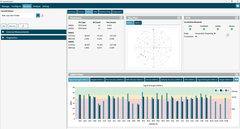
InertialConnect is the latest software solution for MicroStrain inertial sensors. With InertialConnect, you can easily configure your sensors, adjust parameters, upgrade firmware, and deploy preconfigured parameter files. You can also verify sensor outputs with intuitive visualizations, including times eries data, position data, and statuses.
InertialConnect is compatible with both PC desktop and Linux operating systems, making it your go-to solution for precision and efficiency in inertial sensor management.

SensorConnect is the next generation in desktop sensing software.
From configuration of nodes and starting networks, to collecting and analyzing data in real-time, SensorConnect provides a modern, powerful experience with our Wireless, Inertial, and Displacement products.
Using our intelligent data collection and graphing algorithms, you are able to visualize massive amounts of data instantly, and then zoom in on points of interest just as fast.
Built in MathEngine functionality allows for both real-time and post-processed math, such as generating FFTs, averages, RMS, etc.
SensorCloud is a unique sensor data storage, visualization, and remote management platform that leverages powerful Cloud computing technologies to provide excellent data scalability, rapid visualization, and user programmable analysis.
MicroStrain sensors can instantly upload their data to SensorCloud via an ethernet-connected WSDA-2000. Once uploaded, your data is securely stored in the Cloud and can be accessed from anywhere, or downloaded for offline use.
Configurable alerts can be set to help notify you of real-time event in your data.
MathEngine allows you to perform analytics on your data, all in the Cloud. Pre-built functions are available for ease of use, while IPython Notebooks allow advanced users to write custom scripts to be run on their data once, or on a schedule.
The MicroStrain Communication Library (MSCL) is our open-sourced API that simplifies writing code to interact with our sensors. MIP SDK is a lightweight C/C++ library for interacting with MicroStrain G and C-series products via baremetal and resource constrained microcontrollers.
Both APIs are readily available and fully-documented on GitHub, featuring valuable tools such as full documentation, example code, and a quick start guide.
Robot Operating System (ROS) is an open-source, meta-operating system for your robot. It provides the services you would expect from an operating system, including hardware abstraction, low-level device control, implementation of commonly-used functionality, message-passing between processes, and package management. ROS can be used in building and simulating robotics applications, as well as unmanned ground vehicles and simultaneous localization and mapping (SLAM). MicroStrain has an open source License free (MIT License) series of drivers specifically designed and tested for ROS.


Dies vereint die Marken HBM, Brüel & Kjær, nCode, ReliaSoft und Discom und ermöglicht es Ihnen, schneller Innovationen für eine sauberere, gesündere und produktivere Welt zu schaffen.

Dies vereint die Marken HBM, Brüel & Kjær, nCode, ReliaSoft und Discom und ermöglicht es Ihnen, schneller Innovationen für eine sauberere, gesündere und produktivere Welt zu schaffen.

Dies vereint die Marken HBM, Brüel & Kjær, nCode, ReliaSoft und Discom und ermöglicht es Ihnen, schneller Innovationen für eine sauberere, gesündere und produktivere Welt zu schaffen.

Dies vereint die Marken HBM, Brüel & Kjær, nCode, ReliaSoft und Discom und ermöglicht es Ihnen, schneller Innovationen für eine sauberere, gesündere und produktivere Welt zu schaffen.

Dies vereint die Marken HBM, Brüel & Kjær, nCode, ReliaSoft und Discom und ermöglicht es Ihnen, schneller Innovationen für eine sauberere, gesündere und produktivere Welt zu schaffen.