


Das 3DM-GQ7-GNSS/INS ist ein taktisches, zweiantennengestütztes GNSS-gestütztes Trägheitsnavigationssystem, das mithilfe von RTK-Korrekturen und eng gekoppelter Sensorfusion über einen fortschrittlichen erweiterten Kalman-Filter eine Positionsgenauigkeit im Zentimeterbereich erreicht.
Es verfügt über duale Multiband GNSS-Empfänger, driftarme MEMS-Trägheitssensoren und eine robuste, gegenüber magnetischen Störungen unempfindliche Kursgenauigkeit, wodurch es sich ideal für autonome Systeme und Robotik in anspruchsvollen Umgebungen eignet.

3DM-GQ7-GNSS/INS
Das MicroStrain 3DM-GQ7-GNSS/INS ist eine All-in-One-Navigationslösung mit zentimetergenauer Positionsbestimmung. Es handelt sich um unser erstes INS mit zwei Antennen und RTK-Funktion, das für herausragende Leistung auch unter unvorhersehbaren Bedingungen entwickelt wurde. Es ist mit dualen Multiband GNSS-Empfänger, rauscharmen und geringe Drift MEMS-Trägheitssensoren sowie einem robusten adaptiven Kalman-Filter ausgestattet.
In Kombination mit unserem 3DM-RTK- Modem und dem SensorCloud RTK-Korrekturdienst ist das 3DM-GQ7-GNSS/INS die beste verfügbare RTK-Navigationslösung eines einzelnen Herstellers.
Bis zu 1 cm + 1 ppm Positionsgenauigkeit mit RTK
Akzeptiert standardmäßige RTCM-Echtzeitkinematik-Korrekturen (RTK)
Eloxiertes Aluminium
Certificates and Approvals
| Document | Typ | Sprache |
|---|---|---|
| 3DM-GQ7 Declaration of Conformity (EU) | Konformitätserklärung | English |
| 3DM-GQ7 Declaration of Conformity (UK) | Konformitätserklärung | English |
| Document | Typ |
|---|---|
| 3DM-GQ7-GNSS/INS CAD File | CAD-Dateien (STEP) |
| 3DM-GQ7-GNSS/INS Firmware | Firmware |
| Eigenschaft | Wert |
|---|---|
| Type | Inertial Navigation (INS) |
| Performance Grade | Tactical Grade |
| Features | Accelerometer, Gyroscope, Magnetometer |
| Random Walk | Accel: 20 µg/√/Hz, Gyro: 0.15 °/√hr |
| Bias Instability (Gyroscope) | 1.5 °/hr |
| Bias Instability (Accelerometer) | 5 μg |
| Hysteresis | Accel bias: 0.4 mg, Accel gain: 600 PPM, Gyro bias: 0.3 °/s, Gyro gain: 1000 PPM |
| Communication Port Type | 2 x Micro D9 |
| Communication Interface | RS-232, USB |
| Update Rate | IMU: 1000 Hz, EKF: 1000 Hz, GNSS: 2 Hz |
| Inputs/Outputs | 4xGPIO |
| Weight | 78 g |
| Weight | 2.751 oz |
| Size | 76 mm x 68.6 mm x 13.3 mm |
| Size | 2.99 in x 2.70 in x 0.52 in |
| Power Consumption | 2.2 W |
| Input Voltage | 4.2 V to 16 V |
| Minimum Operating Temperature | -40 °C |
| Maximum Operating Temperature | 85 °C |
| Minimum Operating Temperature | -40 °F |
| Maximum Operating Temperature | 185 °F |
| MTBF | 389237 h |
| GNSS Constellations | GPS/QZSS, GLONASS, Galileo, BeiDou |
| GNSS Frequency Bands | L1C/A, L2C, L10F, LSOF, E1B/C, E5B, B1, B2 |
| GNSS Input(s) | Onboard Receiver(s) |
| Sensing Range (Accelerometer) | 8 g |
| Sensing Range (Gyroscope) | 300 °/s |
| Sensing Range (Magnetometer) | 8 Gauss |
| Sensing Range (Pressure) | 1260 mbar |
| Accuracy | Horizontal Position (single point): 1.25 m, Vertical Position (single point): 2 m, Horizontal Position (RTK): 0.02 m, Vertical Position (RTK): 0.02 m, Velocity accuracy (single point): 0.1 m/s, Velocity accuracy (RTK): 0.05 m/s, Roll/Pitch: 0.05 °, Heading (dual antenna): 0.25 ° |
| Ingress Protection Rating | Not Rated |
| Housing Material | Aluminum |
| Software | MSCL, ROS, SensorConnect |
| Mounting Style | Screw Down, Precision Alignment |

Access your sensor's comprehensive online user manual. Find detailed setup instructions, calibration procedures, troubleshooting guides, and technical specifications all in one convenient location.
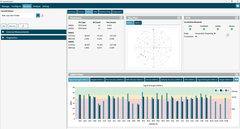
InertialConnect is the latest software solution for MicroStrain inertial sensors. With InertialConnect, you can easily configure your sensors, adjust parameters, upgrade firmware, and deploy preconfigured parameter files. You can also verify sensor outputs with intuitive visualizations, including times eries data, position data, and statuses.
InertialConnect is compatible with both PC desktop and Linux operating systems, making it your go-to solution for precision and efficiency in inertial sensor management.

SensorConnect is the next generation in desktop sensing software.
From configuration of nodes and starting networks, to collecting and analyzing data in real-time, SensorConnect provides a modern, powerful experience with our Wireless, Inertial, and Displacement products.
Using our intelligent data collection and graphing algorithms, you are able to visualize massive amounts of data instantly, and then zoom in on points of interest just as fast.
Built in MathEngine functionality allows for both real-time and post-processed math, such as generating FFTs, averages, RMS, etc.

SensorCloud is a unique sensor data storage, visualization, and remote management platform that leverages powerful Cloud computing technologies to provide excellent data scalability, rapid visualization, and user programmable analysis.
MicroStrain sensors can instantly upload their data to SensorCloud via an ethernet-connected WSDA-2000. Once uploaded, your data is securely stored in the Cloud and can be accessed from anywhere, or downloaded for offline use.
Configurable alerts can be set to help notify you of real-time event in your data.
MathEngine allows you to perform analytics on your data, all in the Cloud. Pre-built functions are available for ease of use, while IPython Notebooks allow advanced users to write custom scripts to be run on their data once, or on a schedule.

SensorCloud RTK is a multi-continent, IP-based RTK cloud network that delivers centimeter-level position accuracy from day one without complex setup, featuring network coverage across the U.S., Europe and beyond.
When paired with compatible MicroStrain navigation systems, it offers seamless scalability from development to production with professional technical support throughout.
The MicroStrain Communication Library (MSCL) is our open-sourced API that simplifies writing code to interact with our sensors. MIP SDK is a lightweight C/C++ library for interacting with MicroStrain G and C-series products via baremetal and resource constrained microcontrollers.
Both APIs are readily available and fully-documented on GitHub, featuring valuable tools such as full documentation, example code, and a quick start guide.



Dies vereint die Marken HBM, Brüel & Kjær, nCode, ReliaSoft und Discom und ermöglicht es Ihnen, schneller Innovationen für eine sauberere, gesündere und produktivere Welt zu schaffen.

Dies vereint die Marken HBM, Brüel & Kjær, nCode, ReliaSoft und Discom und ermöglicht es Ihnen, schneller Innovationen für eine sauberere, gesündere und produktivere Welt zu schaffen.

Dies vereint die Marken HBM, Brüel & Kjær, nCode, ReliaSoft und Discom und ermöglicht es Ihnen, schneller Innovationen für eine sauberere, gesündere und produktivere Welt zu schaffen.

Dies vereint die Marken HBM, Brüel & Kjær, nCode, ReliaSoft und Discom und ermöglicht es Ihnen, schneller Innovationen für eine sauberere, gesündere und produktivere Welt zu schaffen.

Dies vereint die Marken HBM, Brüel & Kjær, nCode, ReliaSoft und Discom und ermöglicht es Ihnen, schneller Innovationen für eine sauberere, gesündere und produktivere Welt zu schaffen.
 6285-0100
 6212-3018
 6212-3020
 6212-3021
 6212-3022
 6224-0100