

La unidad de medición inercial (IMU) y el sistema de referencia de actitud y orientación (AHRS) 3DM-CV7-AHRS ofrecen un rendimiento grado táctico en el paquete OEM más pequeño y ligero hasta ahora. Cada sensor se calibra individualmente para un rendimiento óptimo en una amplia gama de condiciones de funcionamiento.
Nuestro Filtro de Kalman extendido de adaptación automática ha sido diseñado desde cero para ofrecer mediciones consistentemente confiables incluso en los entornos más desafiantes. Algoritmos de orientación de vanguardia, gestión avanzada del tiempo interno y un sistema flexible de activación de eventos ponen al 3DM-CV7-AHRS en una liga propia en lo que respecta al precio y el rendimiento.

3DM-CV7-AHRS
Girogiro de grado táctico (1,5°/h de inestabilidad de sesgo)
Totalmente calibrado en todo el rango de temperatura
Precisión estática de rodadura / lanzamiento: 0,25°, precisión dinámica: 0.5°
Imantómetro integrado para el seguimiento absoluto del rumbo
Filtro Kalman extendido a bordo para estimación de actitud
Acelerómetro y rango de giroscopio seleccionables por el usuario
Tasa de datos de salida de 1 KHz para todos los canales
Controlador ROS1 y ROS2 soportado de fábrica
Conductor de piloto automático PX4 para drones, rovers, robots y más
SensorConnect Software para configuración, control, visualización, y registro
MSCL API open source para una fácil integración
Base de montaje de aluminio anodizado
Características de alineación de precisión
Compacto y de bajo perfil
38mm x 24mm x 8.6mm
8.3 gramos
18% más delgada que la serie 3DM-CV5
20% más ligero que la serie 3DM-CV5
Interfaz USB y UART (TTL)
La huella idéntica a la serie 3DM-CV5 facilita las actualizaciones
–40 a +85°C rango de temperatura de operación
| Document | tipo | language |
|---|---|---|
| 3DM-CV7 Series Data Sheet | Hoja de características | English |
| Micro-D to RS232 Communication and Power Cable | Accessory Guide | English |
| 6212-3010 DEVELOPMENT KIT, RS232, INERTIAL C-SERIES | Accessory Guide | English |
| 6212-3009 DEVELOPMENT KIT, USB, INERTIAL C-SERIES | Accessory Guide | English |
| Craft Cable with Micro DB9 and Flying Leads | Accessory Guide | English |
| Micro D-to-USB Communication and Power Cable | Accessory Guide | English |
| 3DM-CV7 - Manual de empleo (online) | Manual de empleo | English |
| C-Series Connectivity Board Interface Control Document | Instrucciones de monaje | English |
| GV7-CV7 Firmware Change Log | Release Note | English |
Certificates and Approvals
| Document | tipo | language |
|---|---|---|
| 3DM-CV7 Declaration of Conformity (EU) | Declaración de Conformidad | English |
| 3DM-CV7 Declaration of Conformity (UK) | Declaración de Conformidad | English |
| Document | tipo |
|---|---|
| 3DM-CV7 CAD Model | CAD Step Files |
| MicroStrain 7-Series Inertial Sensor Firmware | Firmware |
| propiedad | valor |
|---|---|
| Type | Attitude & Heading (AHRS) |
| Performance Grade | Tactical Grade |
| Features | Accelerometer, Gyroscope, Magnetometer |
| Random Walk | Accel: 20 µg/√Hz, Gyro: 0.3 °/√hr |
| Bias Instability (Gyroscope) | 1.5 °/hr |
| Bias Instability (Accelerometer) | 18 μg |
| Hysteresis | Accel bias: 0.6 mg, Accel gain: 125 PPM, Gyro bias: 0.04 °/s, Gyro gain: 1000 PPM |
| Communication Port Type | Samtec FTSH series |
| Communication Interface | TTL serial, USB |
| Update Rate | IMU: 1000 Hz, EKF: 1000 Hz |
| Inputs/Outputs | 4xGPIO |
| Weight | 8.3 g |
| Weight | 0.293 oz |
| Size | 38 mm x 24 mm x 8.6 mm |
| Size | 1.50 in x 0.94 in x 0.34 in |
| Power Consumption | 0.23 W |
| Input Voltage | 3.2 V to 5.2 V |
| Minimum Operating Temperature | -40 °C |
| Maximum Operating Temperature | 85 °C |
| Minimum Operating Temperature | -40 °F |
| Maximum Operating Temperature | 185 °F |
| MTBF | 2002026 h |
| Sensing Range (Accelerometer) | 4 g |
| Sensing Range (Gyroscope) | 250 °/s |
| Sensing Range (Magnetometer) | 8 Gauss |
| Sensing Range (Pressure) | 1260 mbar |
| Accuracy | Roll/Pitch (dynamic): 0.5 °, Roll/Pitch (static): 0.25 °, Heading (static): 0.5 °, Heading (dynamic): 2 ° |
| Ingress Protection Rating | Not Rated |
| Housing Material | Aluminum |
| Software | MSCL, ROS, SensorConnect |
| Mounting Style | Embeddable, Screw Down, Precision Alignment |
| Product Code | Descripción |
|---|---|
 6212-3006
|
OEM CABLE KIT |
 6212-3009
|
C-Series Development Kit, USB |
 6212-3010
|
C-Series Development Kit, RS232 |
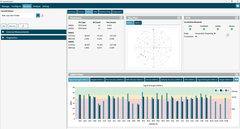
InertialConnect is the latest software solution for MicroStrain inertial sensors. With InertialConnect, you can easily configure your sensors, adjust parameters, upgrade firmware, and deploy preconfigured parameter files. You can also verify sensor outputs with intuitive visualizations, including times eries data, position data, and statuses.
InertialConnect is compatible with both PC desktop and Linux operating systems, making it your go-to solution for precision and efficiency in inertial sensor management.

SensorConnect is the next generation in desktop sensing software.
From configuration of nodes and starting networks, to collecting and analyzing data in real-time, SensorConnect provides a modern, powerful experience with our Wireless, Inertial, and Displacement products.
Using our intelligent data collection and graphing algorithms, you are able to visualize massive amounts of data instantly, and then zoom in on points of interest just as fast.
Built in MathEngine functionality allows for both real-time and post-processed math, such as generating FFTs, averages, RMS, etc.

SensorCloud is a unique sensor data storage, visualization, and remote management platform that leverages powerful Cloud computing technologies to provide excellent data scalability, rapid visualization, and user programmable analysis.
MicroStrain sensors can instantly upload their data to SensorCloud via an ethernet-connected WSDA-2000. Once uploaded, your data is securely stored in the Cloud and can be accessed from anywhere, or downloaded for offline use.
Configurable alerts can be set to help notify you of real-time event in your data.
MathEngine allows you to perform analytics on your data, all in the Cloud. Pre-built functions are available for ease of use, while IPython Notebooks allow advanced users to write custom scripts to be run on their data once, or on a schedule.
The MicroStrain Communication Library (MSCL) is our open-sourced API that simplifies writing code to interact with our sensors. MIP SDK is a lightweight C/C++ library for interacting with MicroStrain G and C-series products via baremetal and resource constrained microcontrollers.
Both APIs are readily available and fully-documented on GitHub, featuring valuable tools such as full documentation, example code, and a quick start guide.
Robot Operating System (ROS) is an open-source, meta-operating system for your robot. It provides the services you would expect from an operating system, including hardware abstraction, low-level device control, implementation of commonly-used functionality, message-passing between processes, and package management. ROS can be used in building and simulating robotics applications, as well as unmanned ground vehicles and simultaneous localization and mapping (SLAM). MicroStrain has an open source License free (MIT License) series of drivers specifically designed and tested for ROS.
PX4 is an open source flight control software for drones and other unmanned vehicles. The project provides a flexible set of tools for drone developers to share technologies to create tailored solutions for drone applications. PX4 provides a standard to deliver drone hardware support and software stack, allowing an ecosystem to build and maintain hardware and software in a scalable way. PX4 is fully supported on MicroStrain’s 3DM-CV7 family of inertial sensors.
El 3DM-CV7-AHRS es un sistema de referencia de actitud y rumbo (AHRS) que combina una unidad de medición inercial (IMU), un magnetómetro y algoritmos avanzados de fusión de sensores. Ofrece un rendimiento de nivel táctico para medir la orientación (cabeceo, alabeo y guiñada), las velocidades angulares y la aceleración lineal en el paquete OEM más pequeño y ligero disponible.
El 3DM-CV7-AHRS es un sistema de referencia de actitud y rumbo que incluye rumbo asistido por magnetómetro, mientras que el 3DM-CV7-AR es un sistema de referencia de actitud (también denominado VRU, unidad de referencia vertical) que proporciona datos de orientación de alta precisión sin referencia de rumbo magnético.
El 3DM-CV7-AHRS cuenta con un filtro Kalman extendido autoadaptativo diseñado específicamente para ofrecer un rendimiento constante en entornos difíciles, calibración individual para una precisión óptima, algoritmos de orientación de última generación, gestión avanzada del tiempo y sistemas flexibles de activación de eventos, todo ello en un paquete ultracompacto de grado táctico.
Grado industrial:
El 3DM-CV7-AHRS es ideal para:
Sí, el 3DM-CV7-AHRS está preparado para ROS y dispone de controladores ROS específicos. MicroStrain de HBK proporciona controladores ROS actualizados que garantizan el cumplimiento de los estándares y mejoran las capacidades de integración para aplicaciones robóticas.
Sí, HBK ha lanzado controladores PX4 específicos para el 3DM-CV7-AHRS, lo que permite una integración perfecta con los sistemas de control de vuelo PX4 para UAV y aplicaciones de vuelo autónomo.
El filtro de Kalman extendido autoadaptativo es un algoritmo avanzado de fusión de sensores que se ajusta automáticamente a las condiciones y dinámicas cambiantes del entorno. Esto garantiza mediciones fiables y uniformes incluso en entornos difíciles con alta aceleración, vibración o interferencias.
Cada unidad 3DM-CV7-AHRS se calibra individualmente en fábrica para garantizar un rendimiento óptimo en amplios rangos de temperatura de funcionamiento. El sensor también cuenta con funciones de prueba continuas integradas y compensación total de temperatura para mantener la precisión durante toda su vida útil.
Sí, el 3DM-CV7-AHRS permite la configuración independiente de las salidas sin procesar del IMU (aceleración y velocidad angular) y las salidas filtradas del AHRS (estimaciones de actitud y rumbo), lo que proporciona flexibilidad para diferentes requisitos de aplicación.
Sí, el 3DM-CV7-AHRS y todos los productos MicroStrain de HBK cumplen con la NDAA. Esto significa que son adecuados para su uso en: